
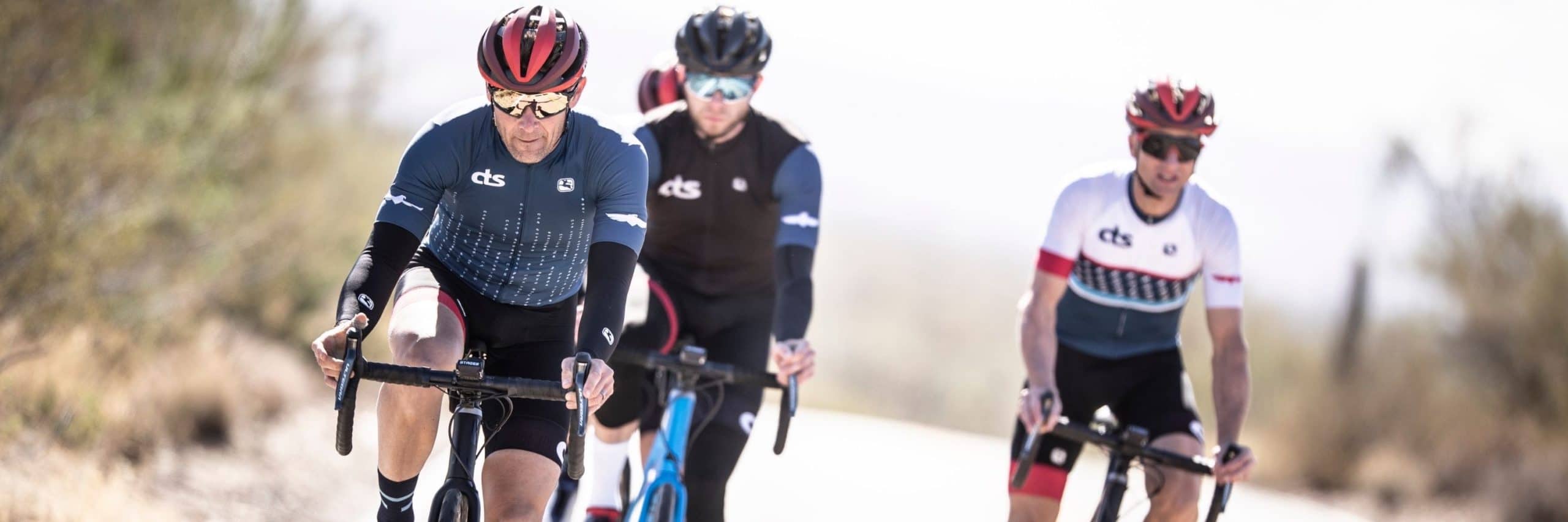
Press Release: CTS Announces Club and Team Coaching Packages

For Immediate Release

CTS Announces Club/Team Coaching Package

(April 17, 2013 – Colorado Springs, CO) – In response to the needs and requests of endurance athletes, Carmichael Training Systems today announced a new addition to its service offerings: CTS Club/Team Coaching

By taking advantage of video conferencing and online coaching software, CTS has developed a coaching package designed to coordinate training for 6-20 members of a cycling or triathlon club, or 4-10 members of a competitive race team. “We’ve created a blend of individualization and standardization so each athlete makes significant progress, and the club or team can train effectively as a group,” said CTS Founder and Head Coach Chris Carmichael.

Each athlete gets his/her own TrainingPeaks account to log workouts and upload training files, and the group’s coach analyzes field test data to establish each rider’s individual training intensity ranges. The group’s goals drive the creation of the monthly built-from-scratch training plan, and the group comes together for monthly video-conference coaching consults.

This new coaching option offers tremendous advantages for athletes. At $65/month (Club) or $90/month (Team) per athlete, individual cyclists or triathletes save $100/month or more compared to CTS’s traditional one-on-one coaching packages.  And CTS will reinvest in participating clubs and teams by cutting them each a check for 5% of their total annual coaching fees. CTS can accommodate large clubs or teams by utilizing multiple coaches.

Click here or below for a quick video synopsis of CTS Club/Team Coaching.

Landing Page for CTS Club/Team Coaching

CTS Senior Coach Adam Pulford boiled down the promise of CTS Club/Team Coaching succinctly when he said, “You’re already training together. Now it’s time to start winning together!”

About CTS:

A pioneering company in the endurance coaching industry, Carmichael Training Systems (CTS) has improved the performance of more than 10,000 athletes since 2000. Founded by renowned coach and author Chris Carmichael, and home to more than 40 full-time, professional coaches, CTS inspires and empowers the athlete in EVERY BODY to perform at their best. The company provides personal coaching, training camps, and Endurance Bucket List experiences to athletes of all ability levels. For more information, visit www.trainright.com

Media contact: Jim Rutberg, jrutberg at trainrightcom, 719-635-0645

Posted in Press Releases | Tagged , , , , , | Leave a comment

Weekend Reading: How to Turn Lame Accelerations into Full-Throttle Attacks! Plus info on Summer CTS Camps

Last week I wrote about “The Key to Being Extraordinary”, and I was really happy to see that over the past week it sparked a lot of great conversations between athletes and their coaches, and between readers and me. Those conversations are what coaching is all about. Yes, sure, power file analysis and custom training schedules are important, but there’s more to coaching than files and schedules. The bigger goal is to teach athletes how to be better at BEING athletes, so they can tap into changes in lifestyle, training, nutrition, tactics, and mindset to improve PERFORMANCE. An athlete is not a math problem; you have to improve more than their data set for them to reach their full potential.

One of the CTS Coaches who really understands this blend of science and guidance is Daniel Matheny. He works in our Colorado Springs facility and definitely embodies #walkitlikewetalkit. He’s out racing nearly every weekend, when he’s not working training camps or leading his top-level athletes on epic trail rides. In the coming months, keep an eye out for some great content from Daniel on the power output demands and training requirements for MTB Enduro racing. But today, be sure to check out his impassioned plea for bike racers to learn how to launch a proper attack!

Here’s an excerpt:

“I have to be honest here, folks. I’ve been out at the early-season races, both as a competitor and as a coach, and I’m seeing a lot of really poor attempts at attacking the peloton. I love the enthusiasm, but that’s about all I’m seeing and enthusiasm doesn’t bring home prize money.

The key is creating separation, which is the only thing that differentiates attacking from taking a hard pull at the front. You have to snap everyone off your back wheel and immediately create a gap big enough to give your pursuers a moment of pause. When you launch, you want them to ask, “Can I match that acceleration?” and “Can I make it across that gap?”. When attacks are weak and indiscernible from pulling through, everyone just latches onto your wheel. But when attacks are sharp and explosive, physically they create space between you and the chasers and psychologically they create indecision. To win you need to exploit both.

Let me show you an example of what a sharp acceleration looks like, at least from a performance standpoint. This is important, because explosive accelerations are something you need to train if you want to execute them in competition.”

READ MORE: Turning a Lame Acceleration into a Full-Throttle Attack >>

As we get closer to the summer, I also want to remind everyone of the CTS Camp Schedule for the summer. We have some great new programming, including the Hors Categorie Climbing Camp in the Colorado Rockies (July 9-14), during which we’ll climb both of Colorado’s 14,000-foot road climbs: Mount Evans and Pikes Peak! There’s also the Epic Mountain Bike Training Camp in Breckenridge, Colorado (June 27-29), which is perfect preparation for big summer off-road goals like the Breck Epic, Leadville 100, and many others. On the East Coast we have the 6 Gap Century Recon Camp in Dahlonega, GA (Aug 8-10), which includes an entry into this classic and extremely difficult event! And those are in addition to our excellent slate of classic CTS Climbing Camps in Colorado Springs, Brevard, and Santa Ynez.

FEATURED LINKS

  • Free Raceweight Weight Loss Program! All you have to do is use our newly-re-launched online signup process to sign up for a CTS Coaching Package by 4/15.
  • Power Meter Payment Plans: Sign up for 12-months of CTS Coaching and purchase an SRM or Powertap, and take advantage of 12-month, no-interest financing.
  • Mt. Mitchell Recon Camp: April 17-19 in Brevard, NC. Tackle some of the most iconic climbs in the Southeast, including those on the course of The Assault on Mt. Mitchell.
  • PR*Bar and Recovery: As Dirty Kanza approaches and we’re putting in bigger and bigger mileage, the coaches and I are relying even more on PR Bars for recovery!

Have a Great Weekend!
Chris Carmichael
CEO/Head Coach
Carmichael Training Systems

Posted in Blogs, Chris Carmichael, Cycling, Training | Tagged , , , , , , , , , , | Leave a comment

Attack the Pack: Turning Lame Accelerations into Winning Attacks!

By CTS Senior Coach Daniel Matheny

I have to be honest here, folks. I’ve been out at the early-season races, both as a competitor and as a coach, and I’m seeing a lot of really poor attempts at attacking the peloton. I love the enthusiasm, but that’s about all I’m seeing and enthusiasm doesn’t bring home prize money.

Really, though, who’s going to tell you that your last “attack” was a lame effort? If I’m racing with you I’m certainly not going to stop you from wasting your energy. But as a coach, what I want to see is greater commitment and more snap!

I mean if you are going to do it, light up that asphalt and make me work to catch you. Otherwise, you are just ramping up the pace and dumping valuable energy into towing everyone around!

The key is creating separation, which is the only thing that differentiates attacking from taking a hard pull at the front. You have to snap everyone off your back wheel and immediately create a gap big enough to give your pursuers a moment of pause. When you launch, you want them to ask, “Can I match that acceleration?” and “Can I make it across that gap?”. When attacks are weak and indiscernible from pulling through, everyone just latches onto your wheel. But when attacks are sharp and explosive, physically they create space between you and the chasers and psychologically they create indecision. To win you need to exploit both.

Let me show you an example of what a sharp acceleration looks like, at least from a performance standpoint. This is important, because explosive accelerations are something you need to train if you want to execute them in competition.

Here's an example from a ride this week with an athlete who has the same power at lactate threshold as I do, and weighs just about the same. And to make this example even more like a race situation, we threw in these accelerations after climbing 3000 feet up from Colorado Springs, so we’d both have some fatigue to fight against.

The first file is a portion of my SRM file and I initiated the first attack (marked 13sec attack).  I was out of the saddle and giving it a pretty good go. Notice the cadence is high with a 115rpm spike and a 105rpm average for the 13sec, and the peak power was over 1000watts. The second file is from the other rider, and I’ve highlighted his reaction with “Thought about it…”.   His reaction was quick, but as you can see from the data, he only mounted a small surge before giving up. He's competitive, so he thought about getting onto my wheel, but I created a big enough gap, quickly enough to make him think twice.

danielmathenyattackfile

A few minutes later, after cresting another small hill, you can see he surged twice, which I'd quantify as different than an all-out attack. Don't get me wrong, his surges at 500w and 780w were respectable and I had to work to stay with him, but he stayed in the saddle and ramped up his speed too slowly. He didn't commit to creating separation. That allowed me to get in the slipstream with efforts noted in my file with "Cover" and "Match" highlights.  

jattackfile
Here are some quick tips I’ve been using to help my athletes become better attackers:

  1. Attack with momentum:

Look for ways to get free speed before you stick your nose into the wind. You can drop a few feet off the back of the wheel in front of you to give yourself some space to accelerate in the draft. Or you can accelerate – or at least not brake – through a corner when everyone else is braking. You can even let someone going for a prime sprint be a leadout for your attack.

  1. Attack from the sweet spot:

If you launch an attack from too far back in the group, the guys at the front will have plenty of time to accelerate before you get by them. If you’re already on the front, it’s hard to use the element of surprise or gain free speed from drafting. Often, the sweet spot is from 2nd through 5th places, maybe down to 10th place. You need to be near the front, or have a way to use terrain or the course to gain a ton of speed if you’re going to go from further back.

  1. Get your feet moving fast:

Chris likes to say that when you’re feet are going fast you’ll go fast. You can increase power output by pedaling harder (force) or faster (angular velocity). Force X Angular Velocity = Watts. We know you’ll attack with a lot of force, but if you also have a higher cadence (100-120rpm) to go along with that force you’ll see even higher power numbers and quicker accelerations.

  1. Understand what you’ve signed up for:

The attack and the 1-2 minutes after it are the hardest part. What we see from power files is that once you’re away, either with a group or solo, the pace and necessary power outputs in both the breakaway and the front of the pack come back down to more sustainable levels. In other words, you have to produce extreme power outputs to make the selection, but you won’t have to maintain those extremes all the way to the finish.

  1. Know when to cut your losses:

Not all attacks work, even if they’re perfectly executed. To avoid being blown out the back of the pack as they catch you, don’t keep fighting to stay off the front when it’s clear you’re going to get caught. The exception is when you’ve made a late-race move to win; that’s an all-or-nothing move so you have to dig in right until the final meter. But if you’re farther out from the finish and you want the chance to get back into the pack to have another shot at victory, sit up once you know you’re getting caught. Giving yourself even 10-15 seconds to catch your breath and grab a quick drink may give you the slight recovery you need to accelerate hard to get into the pack’s draft. Just don’t slow down so much that they’re streaming by you at Mach 1.

Attacking is the best way to take your fate into your own hands in a race. It can whittle down the size of the field, create a breakaway group, set up a counterattack from a teammate, or set you up for a solo win. But for any of those scenarios to play out, you have to execute a snappy, explosive attack and create separation. Now, go get ‘em!

FEATURED LINKS

  • Hors Categorie Climbing Camp: July 9-14 in the Colorado Rockies. Come climb both of Colorado's 14,000 foot paved road climbs: Mount Evans and Pikes Peak!
  • Epic Mountain Bike Training Camp in Breckenridge, Colorado (June 27-29) is perfect preparation for big summer off-road goals like the Breck Epic, Leadville 100, and many others.
  • 6 Gap Century Recon Camp in Dahlonega, GA (Aug 8-10) includes an entry into this classic and extremely difficult event!
  • Free Raceweight Weight Loss Program! All you have to do is use our newly-re-launched online signup process to sign up for a CTS Coaching Package by 4/15.
  • Mt. Mitchell Recon Camp: April 17-19 in Brevard, NC. Tackle some of the most iconic climbs in the Southeast, including those on the course of The Assault on Mt. Mitchell.
  • PR*Bar and Recovery: As Dirty Kanza approaches and we’re putting in bigger and bigger mileage, the coaches and I are relying even more on PR Bars for recovery!

Daniel Matheny is a Senior Coach for CTS, a Category 2 road racer, and a pro mountain bike racer. He coaches pro riders Sonya Looney and Tammy Sadle and is one of the top skills coaches at CTS. For information on CTS Coaching and Training Camps, visit www.trainright.com.

Posted in Cycling, Training | Tagged , , , , , , , , , , | Leave a comment

Weekend Reading: The Key to being Extraordinary

By Chris Carmichael

We’re in the heart of the Classics Season. Fabian Cancellara won the Tour of Flanders last weekend with a huge display of strength on the final ascent of the Oude Kwaremont and tomorrow is the ultimate cobbled classic: Paris-Roubaix. As sports fans we’re accustomed to witnessing extraordinary performances across the entire spectrum of sports. But all those highlight reels are a double-edged sword.

On one hand, highlight reels are inspirational. Many riders went out after watching Cancellara win Flanders and had storming rides of their own. How many young basketball players watch March Madness games and go out onto the court themselves to play and practice?

On the other hand, highlight reels can make the extraordinary seem ordinary. They can delude amateur athletes into thinking that extraordinary performances happen on average days, from average athletes. The truth is, you have to train specifically for extraordinary performances. The extraordinary doesn’t just happen because you’re fit. It happens because you’ve planned to be extraordinary.

What does that mean? When you have a very specific competition goal, be it the local criterium, a State Championship, a World Championship, or a trip to Ironman Kona, you have to realize that you’re average performance – a “good” day – isn’t going to cut it. You need to have a great day, and that means you have to come into the event in great shape and with a toolbox of tactics and strategies.

Going from a good day to an extraordinary day is often less about fitness than it is about tactics. It’s in your head. Fitness is important, and you want to be optimally fit and rested going into a goal event; but your power at threshold or your sustainable running pace isn’t the thing that’s going to separate you from the competition (they’re fit too). To win on the big day, you need to be prepared to do something extraordinary – and that preparation comes from inside your head.

How do you prepare to be extraordinary?

1. Learn more about yourself as a competitor

Blithely telling yourself, “I’m going to attack and win!” is like saying, “I’m going to be rich!” What have you done that gives you any indication that you’ll be successful, especially when the pressure is high? What I do with the athletes I work with, and what I teach the coaches who work at CTS, is to design a series of progressive challenges for an athlete.

Not everything that a coach does to improve performance results in improved power or pace numbers. A lot of what we do is teach athletes to succeed by helping them discover both their strengths and the depths of their reserves. I remember once telling Jim Rutberg, now a CTS Coach and my co-author on seven training and nutrition books, to attack until he either won or got dropped. I didn’t care so much about the result of that particular race; I needed him to learn how many times he could attack, and how deep he could dig and still keep going. That day, he turned himself inside out and attacked himself right out the back of the pack, but he learned he had the strength to race aggressively. From there it was a matter of additional steps to learn how to gauge the timing, conditions, and frequency of those efforts.


FEATURED LINKS

  • Interview with Road Bike Action: I’m now writing a column for RBA. Check out this interview they posted earlier this week with me.
  • Free Raceweight Weight Loss Program! All you have to do is use our newly-re-launched online signup process to sign up for a CTS Coaching Package by 4/15.
  • Power Meter Payment Plans: Sign up for 12-months of CTS Coaching and purchase an SRM or Powertap, and take advantage of 12-month, no-interest financing.
  • Mt. Mitchell Recon Camp: April 17-19 in Brevard, NC. Tackle some of the most iconic climbs in the Southeast, including those on the course of The Assault on Mt. Mitchell.
  • 6-Gap Century Recon Camp: August 8-10 in Dahlonega, GA. Get an entry to the sold-out 6-Gap Century and learn skills and techniques to conquer six of the hardest climbs in the Southeast.

2. Choose your weapon.

Those performances you see on highlight reels are purposeful, especially when they come from endurance events. You have to start the event with a plan. Going into a race with the attitude of, “Well, I’ll see what happens,” means nothing is going to happen; or at least nothing you’re involved in. When I say ‘choose your weapon’, I mean know what you’re going to do to make the final, decisive move that wins the race. Are you going for the solo attack? The last-lap flyer? The field sprint? Are you going to run from the front or ride conservatively to run the competition down in a triathlon? Even when you know the plan is likely to change, you’re still better off having a plan to start with. I like athletes to stand on the start line thinking something along the lines of, “With 20km to go, I’m going to leave you all behind on the final climb and solo in for the win.” That’s a more productive starting point than, “I wonder what’s going to happen today?”

3. Be opportunistic

How many times have you heard an endurance athlete answer the question, “Why did you make your move when you did?” with, “I just knew it was the right time to go”? Look back to the Tour of Flanders last weekend. Fabian Cancellara knew the Oude Kwaremont was a good place to attack. It’s the final hard, cobbled climb before the finish. It doesn’t take a genius to realize it’s a good place to attack. But if he attacked Sagan and it didn’t work, the effort could have drained him of the power necessary to win if they came to the final kilometer together. So, how did Cancellara know it was time to go? On the previous climb, Sagan had struggled but managed to get back to Cancellara’s wheel. At the end of the 250+ kilometer Classic, that’s a tell. Rest or no rest before the next climb, you’re not going to get stronger. So Cancellara pushed the pace at the bottom of the Oude Kwaremont and waited until Sagan showed signs of struggle, and that’s when Cancellara pounced.

Most likely, that was the plan and the plan worked perfectly. But either way, Cancellara was prepared to do something extraordinary at the Tour of Flanders. He wasn’t out to have an average ride with the hopes it would be good enough to win. He set out knowing something extraordinary had to happen, that he had the ability to do something extraordinary, and that he just needed to find or create the right opportunity.

All athletes have the ability to do the extraordinary, but very few take the time to learn and prepare to be extraordinary. Winning is a skill that doesn’t always come automatically with increased fitness. And if you have the passion for winning, you owe it to yourself to learn how to win.

Have a great weekend!

Chris Carmichael
CEO/Head Coach
Carmichael Training Systems

Posted in Blogs, Chris Carmichael, Training | Tagged , , , , , | Leave a comment

Weekend Reading: Lessons and Memories from the Tour of Flanders

By Chris Carmichael

Tomorrow morning, I strongly suggest you find a live video feed of the Tour of Flanders. It’s always a race worth watching, and if watching the Ronde van Vlaanderen doesn’t inspire you to get out there and put in a storming Sunday ride, I don’t know what will. I raced Flanders with 7-Eleven, and it was brutally hard. It still is, and it always will be. But as you watch the Tour of Flanders, there are some lessons you can take away and use for your own performance.

Let the distance and terrain take their toll

The Tour of Flanders is 256 kilometers this year, including 17 climbs and seven sections of cobblestones. Even if you’re the strongest rider in the race, you don’t have to be the strongest rider in every kilometer. Don’t waste your energy trying to split the field in the first 50km when the climbs and cobblestones will do it for you by the 150th. Even in local and regional racing, riders make the mistake of attacking when everyone is still fresh. That’s like trying to break a green branch. Wait until those branches are dry and brittle, and then break them with a single strike.

The better you’re feeling, the less you should do

When you have great legs it can be hard to resist the urge to let everyone else know about it, but that’s what you have to do in order to win hard races. To win you’ll need to initiate or respond to the move that creates a selection, and then you’ll have to attack or sprint to finish it off. If you’re a strong rider you might be able to make the selection and be in contention for the win on a normal day. But on the days when strong riders have great legs, they save their best effort for their last effort – the one that gets them to the line first.


FEATURED LINKS


Don’t telegraph your punches

Every time you make a move, you’re providing information to your opponents. If you sprint across a gap like it’s nothing, they’ll know you have the strength to be dangerous later on. If you’re attacking or constantly going to the front to push the pace, you’ll become someone to watch. It’s better to be anonymous, so when you attack no one knows whether you’re worth chasing.

In long events, the final hour separates the men from the boys

Out of 208 riders at the start line of the Tour of Flanders, there may be 30 capable of winning a hard 200-kilometer race. Of them, perhaps 20 could win at 220. But you can count on two hands the number capable of winning at 250-260 kilometers. It’s a difficult phenomenon to describe, but riders have a point – whether it’s kilojoules or time in the saddle or a mental barrier – where the lights go out. It takes time and experience to gain the inner strength to keep the motor going strong all the way to the line. And extending that range is a big part of your training. When you know you have what it takes to go the distance, don’t worry so much about the riders who don’t. In the final 40km, when it really counts, they’ll be gone.

What I remember most about the Tour of Flanders was the energy. You know how a wide river speeds up and turns violent as it enters a narrow gorge? That’s what it’s like to race toward the narrow, steep, cobbled climbs in the Tour of Flanders. As the roads get narrower, the fighting for position gets more intense. When you hit the climbs the intensity goes through the roof and the race fans are loud enough to wake the dead. And at Flanders, it’s as if the river keeps getting narrower and the rapids keep getting bigger, and one by one riders go under to be dashed against the rocks.

Chris Carmichael
CEO/Head Coach
Carmichael Training Systems

Posted in Blogs, Chris Carmichael, Training | Tagged , , , , , , , , , | Leave a comment