

Marathon to Ultramarathon Training: How Olympic Marathon Medalist Molly Seidel Made the Transition
Updated On
May 27, 2026
CHOOSE YOUR FORMAT
►WATCH THE VIDEO
►LISTEN TO THE PODCAST
►READ THE ARTICLE
Marathon to Ultramarathon Training: How Olympic Marathon Medalist Molly Seidel Made the Transition
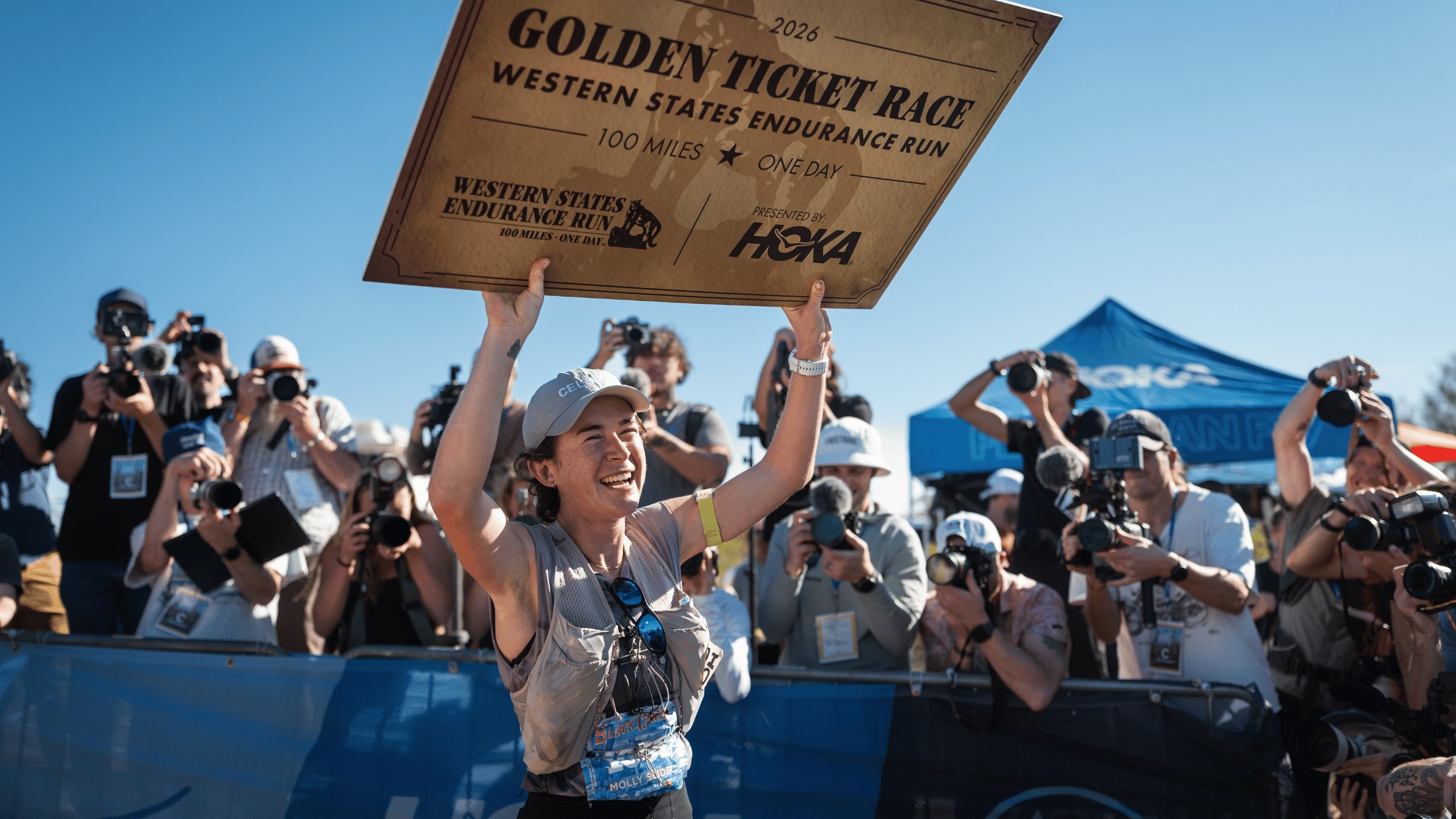
More marathon runners than ever are stepping up to longer distance events, including 50K, 50-mile, 100K, and 100-mile ultramarathons. Olympic marathon bronze medalist Molly Seidel is just one of the elite runners making this transition, and so far her results show that marathon runners can successfully compete in ultras. She won and set a new course record at the Bandera 50K, earned a Golden Ticket to the Western States Endurance Race with a fourth-place finish at Black Canyon 100K, and finished a strong third place at Canyons 50K. Those performances reflect her talent, preparation, and willingness to adapt. But the framework we used to guide her marathon-to-ultra transition applies to any marathoner considering their first ultra.
To help you successfully navigate these differences, here’s a guide to making the jump from marathon to ultramarathon training.
Ultramarathons Are Not Just Longer Marathons
Road marathons are remarkably flat compared to most trail ultras — and even hilly road marathons don’t prepare you for the biomechanical demands of sustained climbing, technical descending, and variable surfaces that define trail ultra running. In a single ultra, you might cover single track trail, forest service roads, jeep tracks, and pavement, sometimes within the same race. You might cross water, run through snow, or move through multiple microclimates as elevation changes dramatically. Western States, for example, climbs above 9,000 feet in the Sierra Nevada with snow on the trail in June, then descends into canyons with triple-digit heat later in the same race. Your preparation has to match that reality.
Ultramarathon Pacing: Minutes-Per-Mile Doesn’t Work Anymore
Minutes-per-mile pacing stops being a reliable gauge for intensity for trail and ultramarathons. As running distances increase, so do the variables that affect your pace. It’s pretty obvious that pace slows as distance increases. What’s less obvious is that ultramarathon pacing is heavily influenced by variables such elevation, ascent/descent, trail surface, significant temperature swings. As a result, you can’t always put a minutes-per-mile pace target in different sections of a race, like you would do for a road marathon.
The best approach for ultrarunning is to pace based on effort or Rate of Perceived Exertion (RPE). Running through a rock garden is slower than running on a nicely groomed gravel road, even when the effort level is the same. Regardless of the conditions, with RPE you can stay within your physiological capacities for a given duration.
Learning to pace based on RPE is an essential part of ultramarathon training. You’ll want to use data during training runs so you can learn how to race when the data may be less accurate or relevant.
Ultramarathon Gear: Sacrificing Running Economy for Improved Durability
In road marathon running, economy is a critical performance variable. You can predict marathon finish times quite accurately if you know a runner’s VO2 max, the maximum percentage of that VO2 max they can sustain, and their running economy (oxygen cost of running). For the elites, where VO2 max and fractional utilization are maxxed out, better running economy makes the winning difference. For age groupers, it can also make you much faster.
In ultra running, we consciously trade some running economy for durability and comfort. These trade-offs include gear decisions, like heavier trail shoes with more protection, a hydration vest that changes how you carry weight, and sometimes even trekking poles that alter your gait and redistribute load across your upper body. These biomechanical changes affect how your body loads and recovers over many hours of movement, which is critical for minimizing muscle damage and prolonging your time-to-exhaustion.
Ultramarathon training must prepare you to use the gear that’s going to see you through your goal events. This may mean learning to run with poles, a hydration vest, lights, and extra clothing. Likewise, downhill trail running and running at night are technical skills you should hone in training.
Ultramarathon Nutrition: Gut Training is Required to Prevent GI Distress
In a marathon, aid stations are frequent, carbohydrate is your primary fuel, and you can get away with imperfect fueling without catastrophic consequences. In an ultra, the margin for error narrows significantly as hours accumulate. Aid stations can be hours apart, you’re carrying your own fluids, and you need to consume carbohydrates at rates that can exceed 60 to 90 grams per hour — for many hours at a time. Thankfully, the lower average intensity during an ultramarathon also means you can consume a variety of solid foods, drinks, and sports nutrition products. The overall nutritional approach is drastically different than a road marathon, where you rely entirely on carbohydrates, often in liquid or gel form only.
The key to mastering ultramarathon nutrition is determining which foods work for you as the hours go by. That means finding foods that will provide energy and not cause gastrointestinal distress. Just as important, you need foods you’ll actually eat after running for 12+ hours. Your tastes, cravings, and tolerance for foods change during long runs. Fueling for ultras is a trainable skill, but you have to practice it in training — deliberately and consistently — the same way you practice pacing or terrain.
Ultramarathon Hydration: Dehydration Risks Are Much Greater In Ultramarathons
Hydration guidelines area also different for marathoners vs. ultrarunners. Runners who finish marathons in 3-4.5 hours can get away with some level of dehydration without terrible consequences. As the duration increases with ultras, the ramifications of dehydration increase significantly. Although hyponatremia (dangerously low blood sodium concentration) is possible during a marathon, it is more likely during an ultramarathon. And long before you reach the point of hyponatremia, there are many other ways your hydration status can get out of whack.
Part of training for ultramarathons is learning to align your fluid intake with your intensity level, nutrition strategy, and the environmental conditions (heat, humidity). There is also the challenge of carrying your own fluids. In marathons, there are typically water stations every mile. In ultras, aid stations can be hours apart.
Ultramarathon Navigation: Staying On Course Is Not As Easy As You Think
Most ultramarathon courses are well marked, but runners it’s not uncommon for runners to take wrong turns run a few bonus miles. 50Ks can easily turn into 55Ks. And sometimes the course itself is not exactly the advertised distance. While this isn’t acceptable in road marathoning, it’s just part of ultrarunning culture.
Marathon runners may study the course to understand where the hills are, but there’s very little route finding in road marathons. As you transition to running ultramarathons, you’ll need to pay more attention to course maps. During races, you can’t turn your brain off and just follow the crowd!
Ultramarathon Mental Toughness: Decision Making Gets Harder As Races Get Longer
A marathon is a hard effort sustained for two to five hours. An ultra demands that you to keep moving, making decisions, managing your body, and maintaining an effort for 8, 12, 20, or even more hours. The mental demands are different in both type and degree. Success in ultra running requires knowing how to keep moving when you think you have absolutely nothing left, how to problem-solve when things go wrong and you’re exhausted, and how to stay patient when everything in you wants to either speed up or quit. These are skills developed in training, and they matter as much as fitness when the race gets really long.
► Free Ultrarunning Training Assessment Quiz
Take our free 2-minute quiz to discover how effective your training is and get recommendations for how you can improve.
Coaching Example: Molly Seidel and The Minimum Effective Change Model
The most important framing principle behind successfully transitioning from marathon to ultra is what I call the minimum effective change model. When an athlete changes disciplines, the temptation is to change everything at once: more mileage, more vertical, more long runs, more intensity, more stressors, all at the same time. The minimum effective change model resists that impulse. It asks a simpler question: What already works, and what is truly missing?
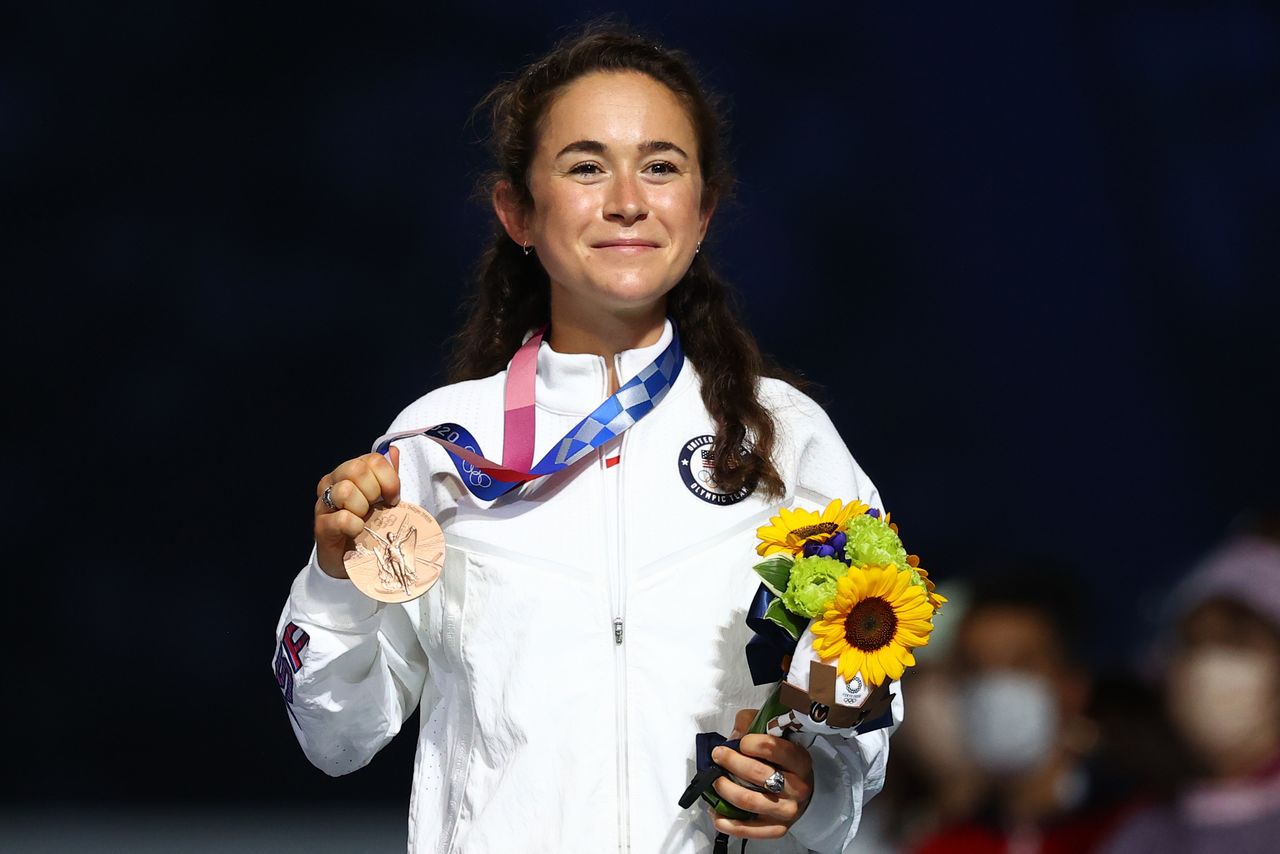
I had the opportunity to apply this framework with Molly Seidel, an Olympic bronze medalist in the marathon and one of the most talented distance runners this country has produced. Molly won her first ultramarathon at Bandera 50k, setting the course record. And earned a Golden Ticket to Western States with a fourth-place finish at Black Canyon 100k in just her second ever ultra.
For Molly, the answer to “what already works” was almost everything, at least on the fitness side. She had elite aerobic capacity, world-class lactate threshold, exceptional running economy, and years of high-volume training history. My job was to preserve her established strengths while helping her training evolve so she could absorb the additional stress and meet the additional demands of ultramarathon competitions.
What was missing was the ability to express her world-class fitness under the specific demands of an ultramarathon: durability over harsher terrain and longer durations, fueling for longer training sessions and races, and familiarity with gear and trail biomechanics without causing injury.
Key Takeaway: We changed the architecture of Molly’s training, not the volume.
Instead of adding more total mileage, we redistributed the stress. Back-to-back long runs became intentional tools, and we carefully introduced the accumulation of fatigue across consecutive training days. A 20-mile long run on the road stresses the body very differently than a 15-mile trail run followed by a 10-mile trail run the next day.
We also maintained structured threshold work. Performance at lactate threshold remains one of the strongest determinants of long-duration performance. Success in distance running depends on the ability to sustain a high percentage of VO2 max, whether the race lasts two hours or eight.
As we moved toward race-specific preparation for Black Canyon, the timing for interval workouts shifted toward the later portions of long runs. Durability was the goal, and the idea was to train the body to run at quality effort when glycogen is already depleted and mental fatigue has set in. She needed to become really good at running while tired.
And fueling became its own training goal. Long runs were fueling rehearsals. Carbohydrate targets were practiced repeatedly until gastrointestinal tolerance improved. We worked with sports dietitian Stephanie Howe, PhD to translate fueling science into simple, actionable behaviors. Simplicity improved compliance. Compliance improved consistency. Consistency improved performance.
On race day at Black Canyon, nothing about Molly’s physiology had been reinvented. She had acquired new skills, learned new strategies for managing her efforts and fueling, and she applied her fitness to the new demands of ultramarathon racing. As a result, she earned her Golden Ticket to the 2026 Western States Endurance Race.
Enjoying This Article? Get More Free Running Training Tips
Get our coaches' best training advice, delivered straight to your inbox weekly.
Training Tips for Transitioning from Marathons to Ultramarathons
Fitness Still Matters Most.
It’s a common misconception that ultramarathon training is just a lot of long, slow runs and hikes. Your pace during an ultramarathon may be relatively slow, compared to a marathon, but ultramarathon training incorporates the full spectrum of intensities. This is because maximizing fitness enables you to capitalize on opportunities as well as cope with adversity.
Ultramarathon training typically starts by focusing on aspects of your fitness that are least event specific. As your event approaches, your training would get more specific to the demands of the event. For example, if you have 12 months to prepare for a 100-mile ultra, you can spend the first period working on hard VO2 max interval workouts. Then you might transition to longer, more sustainable lactate threshold workouts for a few months. In the months leading up to the event, you’ll spend more time at a moderate endurance pace, but with more climbing and descending and long runs and hikes
Train by Time, Not Distance
Prescribing training volume by daily or weekly distance doesn’t make much sense for marathon, and it’s essentially useless for ultramarathons. The distance you travel doesn’t matter as much as the time you spend at specific intensity levels. For example, a 10-mile run on the track can create a very different stress than a 10-mile run in the mountains. When you consider climbs and descents, rough surfaces, and technical terrain, 10 miles in the mountains can take twice as long as 10 miles on a flat track. A mile does not always equal a mile, but an hour equals an hour. If you’re training in difficult environments or over challenging terrain, trying to hit a mileage mark that you’re used to hitting on flat roads may be a recipe for disaster.
Train Your Gut
The amount of food and fluid your gut can take in and process is trainable. As you train your gut to take in lots of calories on the move, you increase your ability to fuel long runs and reduce your risk of gastric distress. It’s important to push the limits in training to build a resilient gut. This means practicing with various foods you anticipate eating on race day. A good place to start is 200-250 Calories per hour, mostly from carbohydrates and in small portions. Carbohydrates are 4 Calories per gram, so 200-250 Calories is approximately 50-60 grams/hr. Once you’re comfortable with this, gradually increase to 300 Calories/hour and beyond.
Keep in mind, you don’t need to always consume the maximum Calories you can tolerate. When running slowly, you might only need 50 grams of carbohydrate per hour, but training your gut makes even that level of consumption less likely to cause GI distress.
What To Do Next
If you’ve read this far and still want to transition from marathons to ultramarathons, here are a few things you can do next:
-
Plug into your local community:
Ultra/Trail running is growing at a rapid pace and most areas have a good community of ultra-fanatics. Inclusivity is one of the best things about our sport. So, jump into a local group run, connect with other runners, and learn from their experiences.
-
Get a coach.
Of course, I’m biased because I am an ultramarathon coach. There are plenty of training plans available out there, and some can even use machine learning and artificial intelligence to adjust future workouts based on recent performances. Particularly for ultramarathons, the training plan is just one component of your preparation. A coach is important for integrating the context of your life (e.g. relationships, career stress, travel, illnesses, motivations) and for teaching you how to handle the variables you’ll encounter in training and competition, like weather, nutrition challenges, gastric distress, equipment issues, etc.
-
Start building a support network that is invested in your success.
If you have a spouse or partner, start there! You can also consider working with a coach to help guide you through a sound approach to training. I encourage my athletes to have a physical therapist in their corner. Even if you’re not injured, a good PT can help you focus on injury prevention and make sure you’re moving well in general. Other professionals to consider for your support team include a Registered Dietitian and Sports Psychologist. These professionals are valuable assets to help you become the best version of yourself, athletically and personally.
-
Show up!
The single best thing you can do to have a good race day experience is show up for yourself every day of the training process. Hard work compounds over time and consistent efforts trump any single workout or long run.
The Bottom Line
The marathon-to-ultra transition is not about becoming a completely different athlete. It’s about extending your existing strengths into a new environment with new demands. Most marathoners already possess much of the fitness required to succeed in ultrarunning. The challenge is learning how to apply that fitness over longer durations, rougher terrain, and more complex race conditions. Start where you are. Change only what truly needs to change. And give the process enough time to work.
About the Author
Cliff Pittman
CTS Pro Ultrarunning Coach
Cliff Pittman is the Coaching Development Director for CTS, where he expertly leads the Ultrarunning and Cycling Coaching teams. A passionate ultrarunner and active competitor, Cliff specializes in simplifying complex training concepts into actionable strategies, ensuring athletes at all levels—from beginners to elite competitors—can achieve their goals in prestigious events like the Western States 100 and Leadville 100.
Comments 2
Sounds like great advice. I’m looking at doing my first 50k in 2024, so this is a timely read. Thanks!
Great article. Thanks for sharing. The days of running a sub 7hr trail 50k seem to be slipping away. Although I never did do a sub 3hr road marathon! I hope the newbies can take some of your wisdom to heart. Maybe these days there is too much information? Ahh where are the LISTSERVs if yester year?;-)