
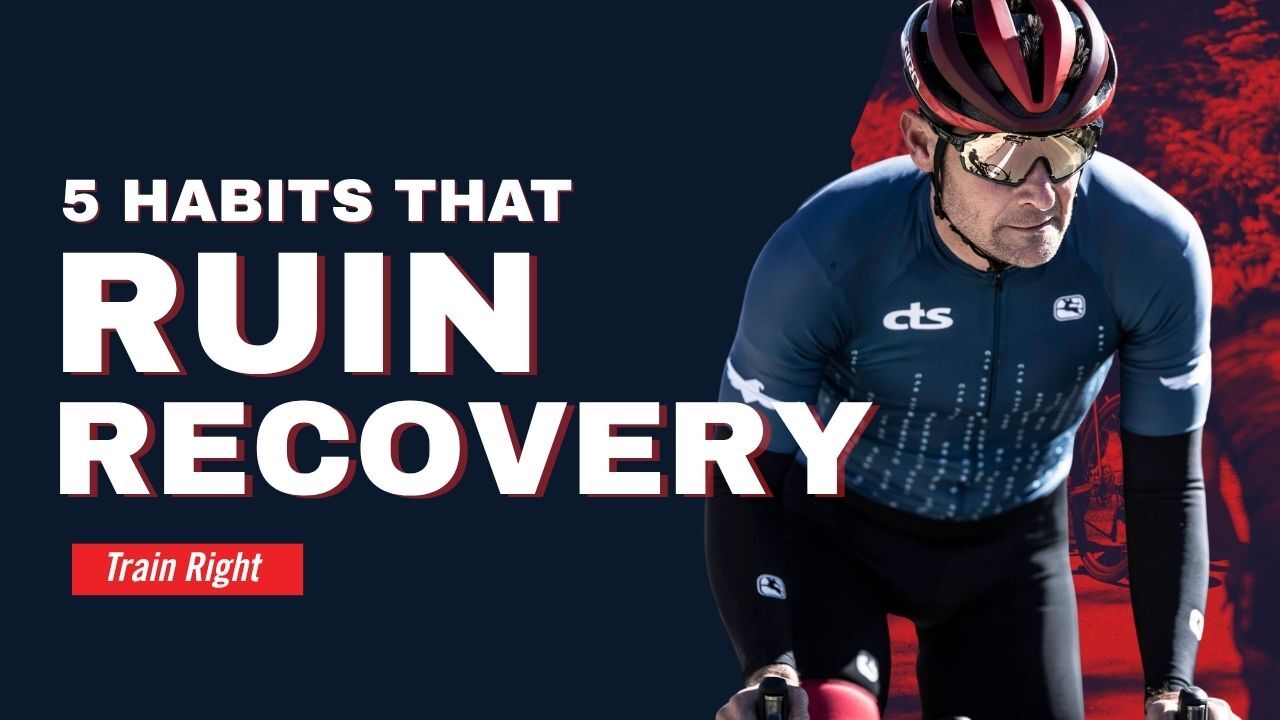
Five Recovery Mistakes That Quietly Kill Your Cycling Gains
Updated On
May 18, 2026
CHOOSE YOUR FORMAT
►WATCH THE VIDEO
►LISTEN TO THE PODCAST
►READ THE ARTICLE
Five Recovery Mistakes That Quietly Kill Your Cycling Gains
What athletes do between training sessions matters more than any workout I give them. In the 20-plus years I’ve coached cyclists, I’ve seen athletes who hit every target power and nail every interval and still fell short of their goals because their recovery habits were a mess. On the flip side, every champion I’ve ever coached was fanatical about recovery, especially once they understood that’s when all the adaptations and gains were being created. If you’re investing hours of hard work into your training sessions, don’t shortchange your progress with the following five recovery mistakes.

Recovery Mistake #1. Doom Scrolling Before Bed
If you’re looking for it, there’s plenty of doom and gloom to capture your undying attention. I’m not suggesting you bury your head in the sand and disengage from the world, but doomscrolling is killing your sleep quality.
Sleep is king when it comes to recovery and promoting endurance performance. More than just the backlit screens and blue light exposure, social media stimulation and rage bait content are designed to keep you scrolling longer than you intended. You might be in your bed, but scrolling isn’t sleeping.
Sacrificing sleep for the socials isn’t just a bad habit; it’s actively making you slower. The negative impacts of poor sleep compound quickly by reducing recovery between workouts, worsening your mood, increasing feelings of fatigue, reducing quality of subsequent training sessions, decreasing motivation to continue training, and so on.
What to do instead:
Almost anything, to be honest. From a practical standpoint, here are guidelines I use with the athletes I coach:
- No screens 30-60 minutes before bedtime (longer if possible).
- Include reading and/or listening to music in your pre-sleep routine.
- If meditation, journaling, or breathwork are appealing, incorporate them before sleep.
- Create an environment conducive to deep, restorative sleep:
- Cool: Aim for 64-67 degrees Fahrenheit.
- Dark: minimize light from windows, alarm clocks, chargers, etc.
- Quiet: Silence is best for restorative sleep, but white noise is a good choice for unavoidably loud environments and can help some people calm their active minds.
- Aim for about eight hours of uninterrupted sleep. If you normally wake to use the bathroom during the night (read more on Nocturia and the Aging Athlete), minimize exposure to light or loud noises in hopes of getting back to sleep quickly.
Recovery Mistake #2. Not Relaxing After Hard Workouts
This can be a hard habit to break, particularly for busy people trying to fit workouts into demanding lifestyles. It’s tempting, and sometimes feels necessary, to jump straight back into your day after a hard workout. If you can find 20-30 minutes to decompress from the intensity of a hard workout, you’ll see a measurable difference in how well you recover.
What counts as a “hard” workout?
This is often a “know it when you see it” self-evident kind of thing. You know when the ride was hard. But, it’s important to remember you could be shattered by a hard 90-minute interval session or feel pretty fresh after a 3-hour easy spin. A more objective way to evaluate the “hardness” of a ride is by comparing the daily Training Stress Score (TSS) to your current Chronic Training Load (CTL), which is a weighted average of your daily TSS over the past six weeks.
You can categorize workouts by TSS using the following guidelines:
- Easy: TSS 10-25% BELOW CTL
- Moderate: TSS 25% ABOVE CTL
- Hard: TSS 50-100% ABOVE CTL
For example, if your CTL is currently 80, then a 60 TSS ride is easy, an 80-100 TSS ride is moderate, and 120+ TSS ride today counts as “Hard”.
Practical Tips for Acute Post-Workout Rest
- Weekday rides: Block 30 minutes post-ride on your calendar, or schedule your ride time to be 30 minutes longer than your actual ride. Use this time to eat, cool down, realign yourself with the rest of your day.
- Evening training sessions: Time your post-workout meal at least 90 minutes before bedtime so you’re not going to bed feeling full. Take extra measures to cool your body temperature after warm weather evening workouts. Lowering core temperature is a natural part of falling asleep, and being overheated makes sleeping difficult.
- Weekend rides: Negotiate with your family/friends to have 30-60 minutes or more after your ride to cool down, eat, or even take a short nap. Yes, you’ve been gone a while and there are things to do, but if you can communicate your needs and accommodate their needs afterward, everyone wins (usually…).
Recovery Mistake #3. Skipping Your Post-Workout Meal
This is the easiest part of post-workout recovery to get right, so don’t screw it up. The post-workout recovery window is real. The short and essential message is: your body is primed to replenish carbohydrate stores and put protein to good use when you consume a balanced meal within about 60 minutes after exercise.
► Free Cycling Training Assessment Quiz
Take our free 2-minute quiz to discover how effective your training is and get recommendations for how you can improve.
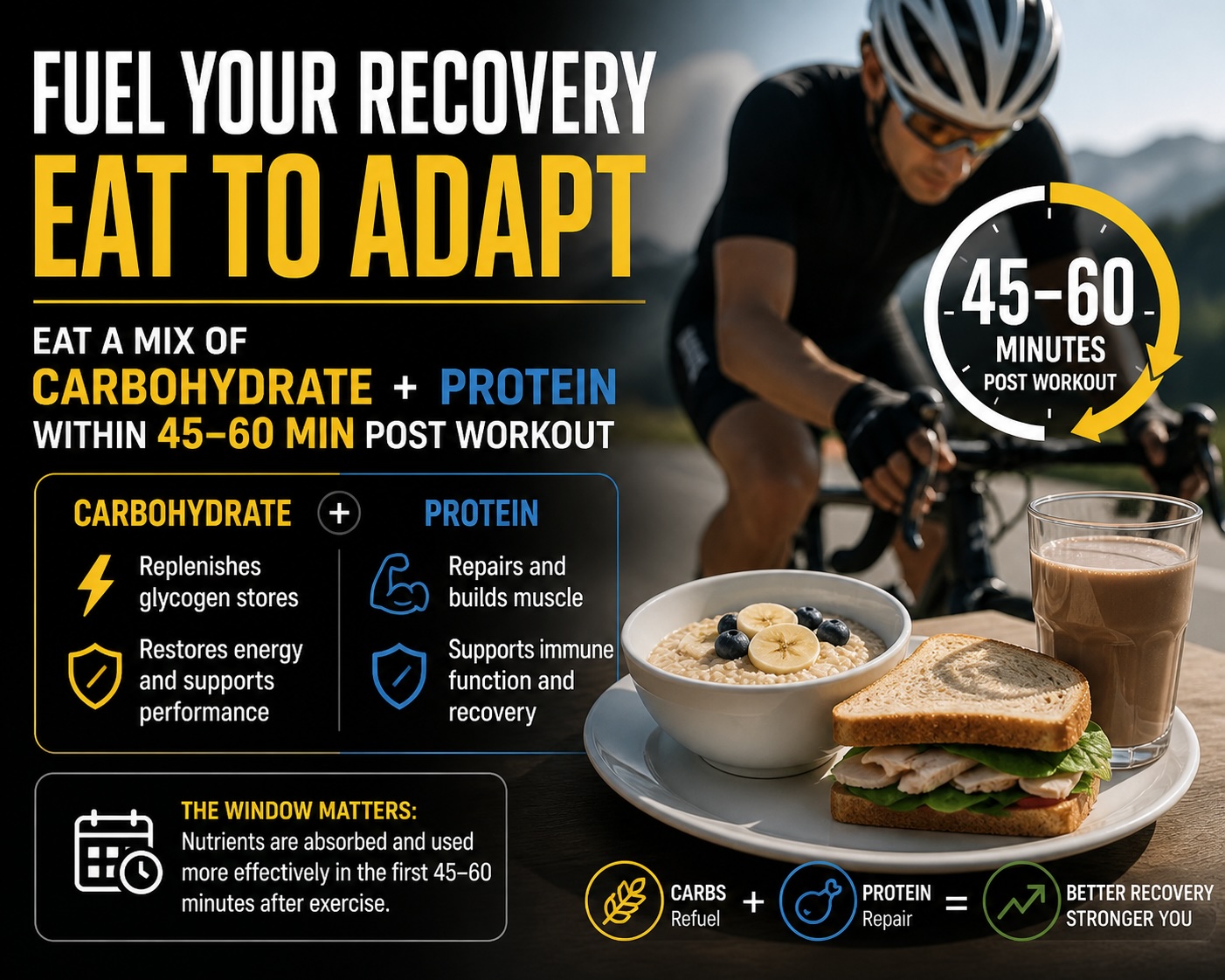
The more nuanced story is that, for athletes consuming adequate total energy and a varied diet, full glycogen replenishment will happen naturally over about 24 hours whether you consume a post-workout meal or not. If you are training again within 24 hours (e.g., evening group ride tonight and morning ride tomorrow), then the post-workout recovery window is more important. Either way, the recovery window is an opportunity to replenish quicker and get protein to work building and maintaining muscles and your immune system. So, stop splitting hairs and make it a habit to eat within an hour after training.
Practical Tips for Post-Workout Nutrition
- Pack a cooler for race days and group rides: I see it at races and group rides every week. Riders show up with all their pre-race bottles and gels but have nothing for after the finish. Bike race tailgate parties are after the race! Make sure you have some food and drinks so you can socialize and share stories while also accomplishing your recovery nutrition goals.
- Keep a healthy snack stash handy: Riders who train in the morning or at lunch are especially vulnerable to office birthday cake, donuts in the breakroom, and mid-afternoon candy runs. Anticipate the need for snacks and stock your office or desk drawer accordingly.
- Meal prep and cook in batches: Sounds like more trouble than it’s worth until you try it. Cook large batches of food on the weekends (or whenever you’re cooking) so you have leftovers or pre-portioned meals to grab when time is tight. This can also be more economical when your weekly energy expenditure and food prices are both high.
- Consider smoothies: Frozen fruit and yogurt are easy to keep on hand, can be purchased in large containers, and don’t spoil quickly. There are thousands of recipes to choose from, but a smoothie based on fruit and yogurt starts out rich in carbohydrate and protein, and then you can adjust the ingredients to fit almost any nutritional profile or calorie target you want.
Recovery Mistake #4. Going Too Hard On Easy Days
I’ve covered this many times over the past few months, in articles about training zones and TK. Training too hard is a common mistake, particularly from athletes who feel they don’t have enough time to train effectively. There is some merit to increasing training intensity to compensate for limited training availability, but that intensity is still limited by your ability to recover. Athletes who go too hard too often, which almost always means going too hard on days that should be easy, creates too much fatigue and creates a pattern that never allows for enough rest – over a long enough period of time – for training adaptations to occur.
What should “easy” look like:
- Effort: 1–2 out of 10 RPE.
- Power: below 55% of FTP. (For a 250W FTP rider, that’s 140 watts or below.)
- Heart rate: below 68% of threshold heart rate. (For a 165 bpm threshold, that’s around 112 bpm.)
- Duration: For a recovery ride, 45–60 minutes is plenty for most riders. Up to 90 minutes for high-volume athletes. Recovery rides less than 45 minutes should probably just be replaced with passive rest or a neighborhood stroll.
Recovery Mistake #5. Mismanaging Lifestyle Stress
I am not a psychologist, but coaching is about working with the entire person, including their mind, and I’ve worked with enough athletes to know mental and emotional stress affects recovery and athletic performance. Your body understands stress but does not distinguish its source, meaning stress from work or relationships takes a toll on you in similar ways that training stress does. All stress must be balanced by recovery, so the more lifestyle stress you have the less training stress you can absorb.
I’m not naïve enough to presume any of us can eliminate all work and family stress from our lives, live like monks or gurus, and only avail ourselves of training stress. But, the best athletes I work with actively work to reduce lifestyle stress because it gives them more energy and positivity to direct to training.
Practical strategies for stress reduction include:
- Audit your life for unnecessary negative stressors. Find the sources of stress, eliminate those that bring no positive value (if possible), and commit to dealing with the ones that remain.
- Practice keeping thoughts at arm’s reach. Instead of internalizing “I’m angry”, redirect the thought to “I’m feeling anger”. The anger is a thought, a thing, and you can let it drift by or decide to engage with.
- Build a daily mindfulness or meditation practice. If you don’t know where to start, consider apps like Calm or Headspace.
- Work with a therapist. There’s no one-size-fits-all solution, and different athletes I coach have benefited from mental health professionals, mental performance specialists, and sports psychologists.
A Word on Recovery Gadgets
You may have noticed I haven’t mentioned infrared saunas, cold plunges, cryotherapy, or neuromuscular stim devices. That’s intentional. Most recovery gadgets don’t meaningfully speed up recovery for endurance athletes. The biggest benefit often comes from the fact the gadgets and treatments make you sit still or lay still for a prolonged period.
Here’s the harder truth: you can’t really accelerate recovery. The timelines are set by your physiology and the best thing you can do is get out of the way – stop doing the five things mentioned above – and let the recovery happen.
The Bottom Line
We are, to a large degree, the sum of our habits. Good habits compound in your favor, bad ones erode your results. Most athletes have reasonably good training and nutrition habits because those get a lot of attention. Recovery happens in the background, but it’s just as important. So, make it work for you instead of allowing poor recovery habits to whittle away at your hard-earned gains.
► FREE Mini-Course: Learn How to Maximize Your Limited Training Time
Learn step-by-step how to overcome limited training time and get faster. Walk away with a personalized plan to increase your performance.
"*" indicates required fields
About the Author
Adam Pulford
CTS Head Cycling Coach
Adam Pulford is a dedicated coach at CTS with a passion for elevating athletic performance through tailored, measurable strategies and a deep understanding of the “why” behind each athlete's goals. With nearly two decades of experience, a degree in Exercise Physiology, and a successful track record managing professional cycling teams, Adam also shares his expertise as the host of the Time-Crunched Cyclist podcast, providing actionable insights for endurance athletes.