
Social Facilitation: The Scientific Reason Group Training Makes You Faster
Updated On
April 27, 2026
CHOOSE YOUR FORMAT
►WATCH THE VIDEO
►LISTEN TO THE PODCAST
►READ THE ARTICLE
Social Facilitation: The Scientific Reason Group Training Makes You Faster
You’ve heard it before and likely suspected it’s true from your own experience: training with other people makes you a faster cyclist. The science of social facilitation shows it’s true and reveals the mechanisms behind the improvements you’ll see in training rides, group rides, and events.
What is Social Facilitation?
The concept of social facilitation has been around since psychologist Norman Triplett first observed the phenomenon in 1898 during a study involving cyclists. He documented that individual cyclists performed better working together than when riding alone against the clock. Floyd Allport later coined the term social facilitation, which describes how performance changes in the presence of others.
Two types of social facilitation
Subsequent researchers identified two distinct types of social facilitation:
- Co-action effects: Performance improvements that come from working alongside others toward a common goal. This is your training partner pushing the pace on the climb or riding hard next to you (or even in another location connected by video or voice or avatar) during an indoor training session.
- Audience effects: Performance improvements that come from being watched or cheered on. This is the effect from spectators at a criterium, gravel, or MTB race. Virtual audiences (e.g., esport races) count, too.
How Social Facilitation Improves Performance
Although social facilitation was initially studied in athletes, it applies throughout our lives. The presence of others – in person or in mind – can change how we act. Whether you’re applying it to sport or life, social facilitation can provide motivation, accountability, the desire to perform at your best or at least up to the level of your peers. It can help you stick with a hard task longer, show up when you don’t want to, and stay engaged to match your peers’ level of commitment.
Specific to cycling performance, here are some of the positive effects of social facilitation:
- You often ride harder: With a training partner or in a group you can often hold the wheel longer, climb with more power, and sprint faster. Most of my athletes’ best power outputs (of all durations) come from rides and races in groups.
- Long rides pass faster: Miles click by faster when the conversation flows and you’re trading pulls seamlessly.
- Cycling skills improve rapidly: Riding with one or more training partners teaches skills you can’t learn solo, including drafting, pack positioning, cornering with a group, responding to pace changes, sprint timing, eating in a group, etc.
- You show up more consistently: When the group or your buddy expects you to show up, you’re more likely to prioritize your time appropriately and get there.
- You have more fun: If you’re training with the right people (more on that later), riding at any intensity is going to be more fun than that same route or workout on your own.
When Social Facilitation Works Against You
On the negative side, social facilitation can lead to the “spotlight effect”, where you experience anxiety because you feel like everyone’s watching you. More specific to cycling, here’s how I’ve seen social facilitation destroy performance in training and competition:
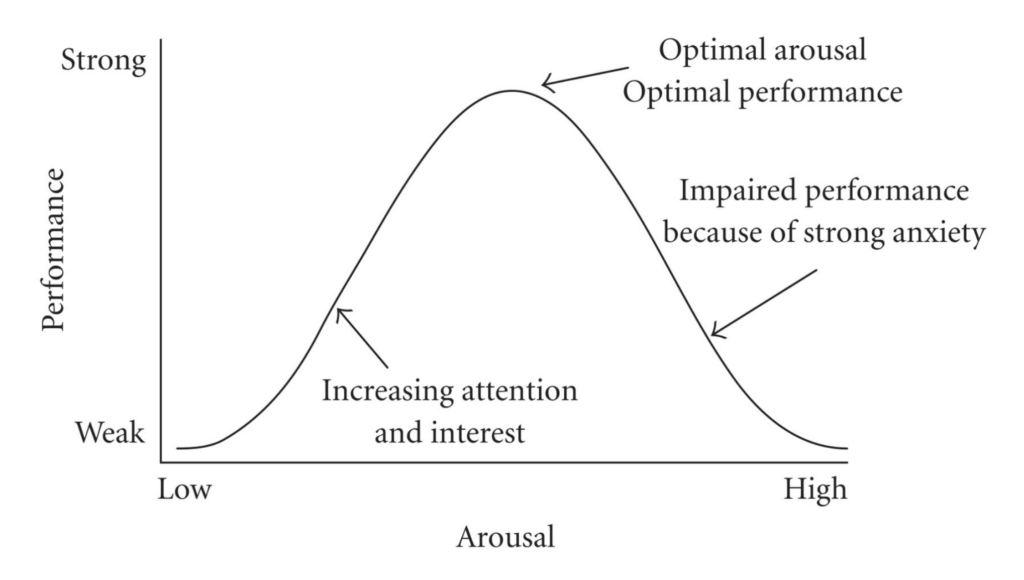
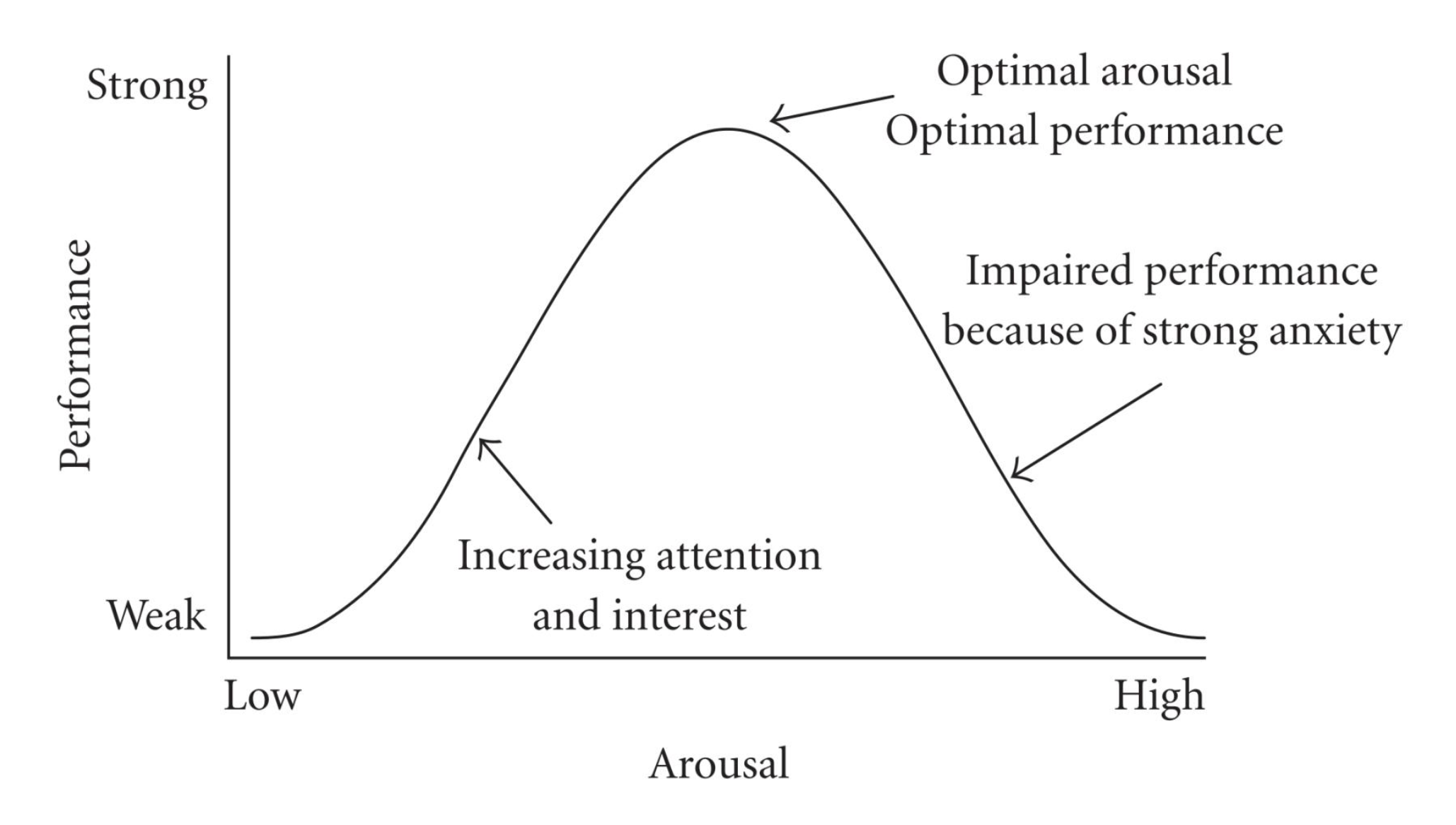
- Over-arousal: The environment can be overwhelming and create too much anxiety. This happens if you’re in over your head, the ride’s too long, too fast, the course is above your skillset, and the riders around you are either sketchy or way out of your league. The graphic below illustrates the Yerkes-Dodson Law, which describes the relationship between arousal (stress) and performance.
- Skill breakdown: If the pace is too fast for your fitness level or the course is beyond your skillset, you end up riding beyond the limits of fitness and skill, which leads to mistakes.
- Mismatched partners: Training partnerships must be two-way streets, like any relationship. Fast can train with slow, and vice versa, so long as there’s good communication and compromises that make the rides work for everyone.
- Social inhibition: Challenging athletic environments can worsen anxiety and feelings of being alone in a big group. Some even interpret being outperformed as hostility or rejection, even when no words are exchanged. The key here is finding the right environment — and that environment absolutely exists, even for beginners. I’ve coached athletes who were convinced group riding wasn’t for them, and once they found a safe, supportive group, they couldn’t get enough of it.
How to Schedule Solo and Group Training for Best Results
Group training is good for you, but solo training is also important. Always training with partners and groups is usually disastrous for individual performance. This is because solo training provides better control of pacing, improved execution of structured workouts, greater schedule flexibility, and some much-needed time with your own thoughts.
► Free Cycling Training Assessment Quiz
Take our free 2-minute quiz to discover how effective your training is and get recommendations for how you can improve.
So, how can you schedule solo and group training sessions for best performance? For an athlete training five to six days per week, here’s a simple starting framework:
- One endurance ride with your training partner. Keep this a Zone 2 ride where both athletes agree on pacing before the ride starts and keep each other accountable.
- One interval session with a partner. This could be threshold repeats on the same climb, or sprint workout on the same structure. You’re doing your own work, but the presence of your partner sharpens focus and execution.
- One weekly group ride. Here’s where you practice skills, like sitting in the wheels, reading the bunch, launching attacks, contesting sprints. Playing on bikes, as I like to call it.
The remaining two to three days are solo: easy spins, recovery rides, and unstructured aerobic work.
Ramp up Group Training for Race-Specific Performance
When you’re six to eight weeks out from a target event, the calculus shifts toward race specificity. For this phase, I recommend two group rides per week and one hard individual training session. A sample week might look like this:
- Monday: Rest
- Tuesday: Group ride (hard)
- Wednesday: Endurance ride
- Thursday: Intervals (individual)
- Friday: Optional easy spin or rest
- Saturday: Group ride (hard)
- Sunday: Endurance ride
How To Choose The Best Training Partner
Picking a training partner should feel like choosing a collaborator for an important project, not necessarily your best friend or soulmate (although that sometimes works). Here’s what to look for:
- Someone stronger than you in some areas, but not all. You both want to improve, so it’s best if you can push each other to address weaknesses. If you’re a solid sprinter but a mediocre climber, find someone who climbs well. They’ll challenge you up hills, you’ll return the favor in sprints.
- Compatible schedules. Not just days of the week, but duration of rides for long days or interval days.
- Someone you like. There’s a lot of conversational time on endurance rides and in between intervals. Someone interesting and likeable will always be a more appealing training partner (and that applies to you, too).
- Reasonably similar fitness levels. At a certain point, a huge disparity in fitness just doesn’t work for interval or endurance rides, even for the best-intentioned partnership. A big disparity can work if it keeps a very fit rider from going too hard on recovery days, though.
- Compatible training plans. Most coaches — me included — are happy to coordinate key training days so you can train together without compromising the structure of either program. We know it improves results!
- Commitment to keeping it fun. I mean, in the end, that’s the point.
How to Find a Great Group Ride
This is one of the questions I get from people who are new to cycling or new to the area. Here are some practical resources:
- Your local bike shop. They usually know every ride in the area and can match you with the right ability group.
- USA Cycling’s club and team locator. Here’s a tool from USA Cycling. Enter your location and find affiliated clubs with organized rides at various ability levels.
- Training camps. Athletes who attend CTS Camps frequently stay in touch and continue to ride and race together long after the camp ends. It’s one of the most reliable ways to find like-minded people.
- Ask your coach. If you work with a coach, they likely know athletes in your area training at a similar level, and can make introductions.
- Community ambassadors and local influencers. Use social media to find people in your region who are actively building cycling communities, not just posting for likes, but genuinely connecting riders with other riders. Project Dudeman in Tulsa, Oklahoma, is a great example and run by my friend and former US Pro Criterium Champion, Brad Huff.
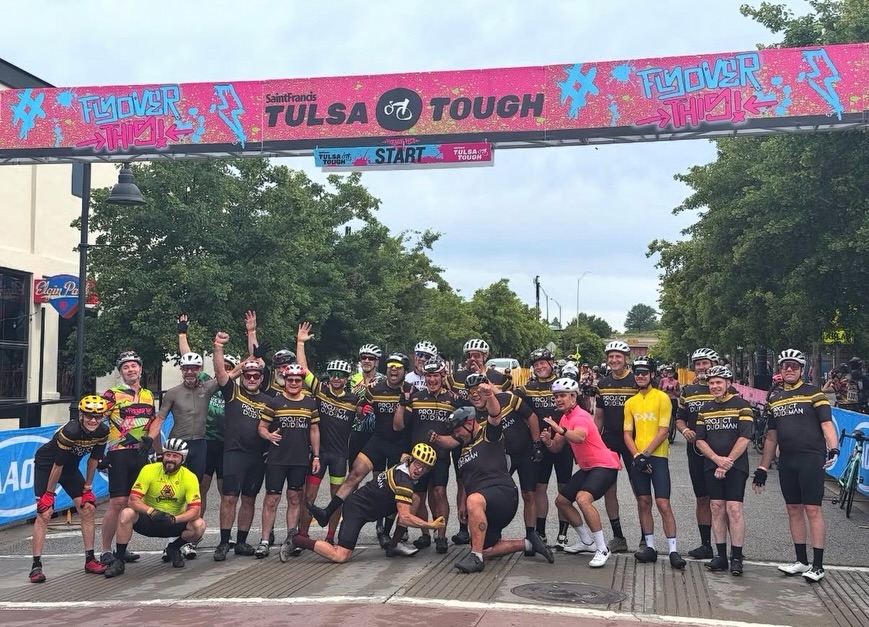
Coach Insight: Group training benefits go way beyond physical performance.
I’ve been a coach long enough to know there are benefits to training with others that no data can fully capture. Recently, I rode at a team camp with DC Velo, a club in the Washington DC area I ride with and coach for. Some riders were in peak fitness, others were just getting back to training. It was three days of shared miles and rich conversations, hours that passed like minutes. New friendships formed and old friendships were reconnected.
There’s a lot of talk these days about the demise of “third spaces”, greater isolation in adulthood, and a lack of social connection (especially among adult men). We are social beings and I believe we are at our best when we are around people who share our values and encourage us to maintain high standards. That’s the real power of social facilitation, and it’s available to every one of us.
The Bottom Line
There is a lot of truth to the African proverb, “If you want to go fast, go alone. If you want to go far, go together.” But for endurance athletes, we need to change it a bit because social facilitation can make you faster. Perhaps the athletes’ version should be, “If you want to go faster and farther, train together.”
► FREE Mini-Course: Learn How to Maximize Your Limited Training Time
Learn step-by-step how to overcome limited training time and get faster. Walk away with a personalized plan to increase your performance.

About the Author
Adam Pulford
CTS Head Cycling Coach
Adam Pulford is a dedicated coach at CTS with a passion for elevating athletic performance through tailored, measurable strategies and a deep understanding of the “why” behind each athlete's goals. With nearly two decades of experience, a degree in Exercise Physiology, and a successful track record managing professional cycling teams, Adam also shares his expertise as the host of the Time-Crunched Cyclist podcast, providing actionable insights for endurance athletes.