
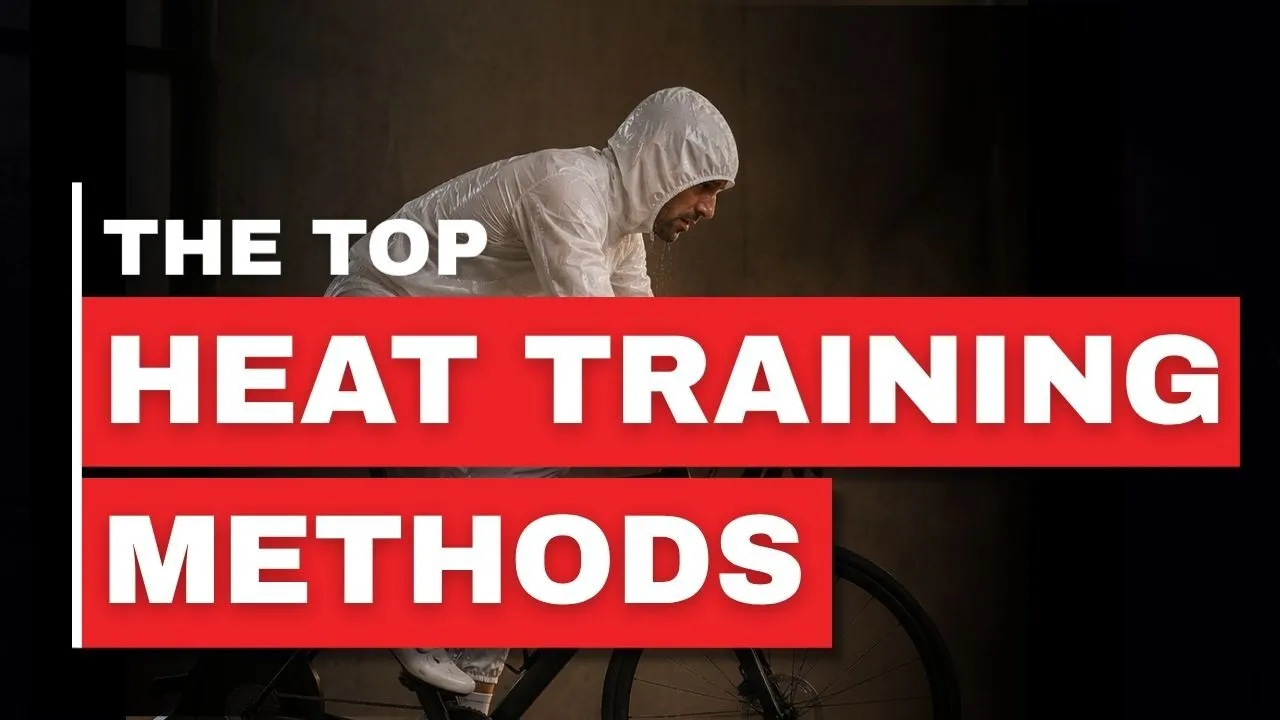
Passive vs. Active Heat Acclimation for Cyclists
Updated On
June 8, 2026
CHOOSE YOUR FORMAT
►WATCH THE VIDEO
►LISTEN TO THE PODCAST
►READ THE ARTICLE
Passive vs. Active Heat Acclimation for Cyclists
Heat acclimation is one of the most accessible performance enhancing activities cyclists can add to their existing training programs. The science overwhelmingly supports the idea that repeated heat exposures, over enough consecutive days, improves an athlete’s heat tolerance, improves cycling performance in hot conditions as well as cooler conditions, and can even lead to increased red blood cell production similar to altitude training. One of the biggest debates is between passive vs. active heat acclimation. Passive methods include hot water immersion or sauna, as opposed to active methods, which include exercising in hot environment or wearing extra clothing. Which yields better results? Here’s what the science says and the framework I use with pro and age-group cyclists I coach.
Benefits of Heat Acclimation
What adaptations are we trying to achieve with heat acclimation? Well, you can read more about preparing for exercise in heat in this article, but as a short synopsis, the benefits include:
- Increase plasma volume: Your blood is what’s transporting heat from your core to your skin for radiant cooling as well as evaporative cooling. Increased plasma volume increases your capacity for heat transfer and provides fluid for sweat. It also enhances oxygen delivery and can trigger an increase in red blood cell production, similar to the effect of altitude training.
- Start sweating sooner: To stay ahead of rising core temperature, your body kicks your primary cooling system (sweat) into action earlier than when not heat acclimated.
- Sweat more profusely: Your body learns to open the floodgates to get more fluid onto the skin surface for evaporative cooling.
- Sweat more evenly: You have sweat glands all over, and your body needs to increase evaporative cooling you’ll start sweating from everywhere.
- Lower Core Temperature: Adapted athletes maintain lower resting and exercising core temperatures, allowing them to perform longer before heat becomes a limiting factor.
- Retain more sodium: Your sweat glands adapt to retain more sodium and electrolytes even as sweat rate and fluid losses increase. This, along with regulation from your kidneys, helps maintain sodium concentrations in the body.
Best Practices for Active Heat Acclimation
Active heat acclimation means exercising in a heated environment and/or wearing additional or thermal layers to minimize evaporative cooling. Practically, this can mean riding outdoors in the heat of the day, overdressing for warm-weather rides, or training indoors with no fans and a heated room.
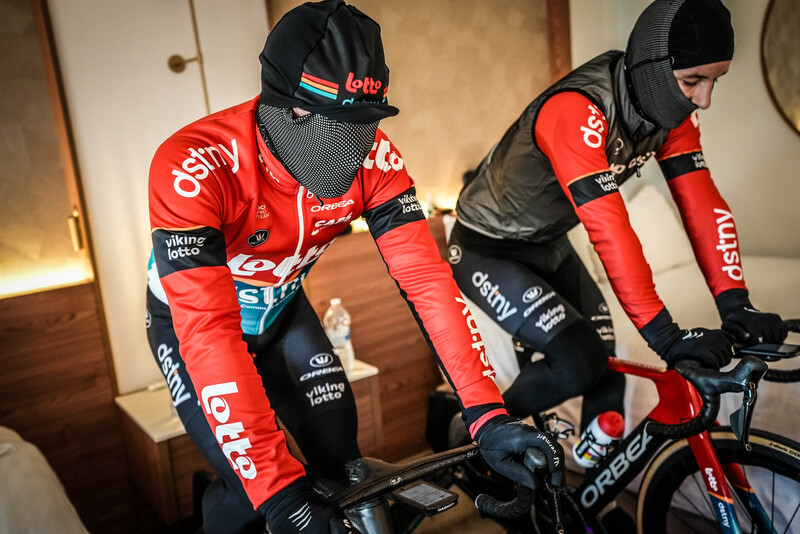
You can ride indoors or outdoors for active heat acclimation. For outdoor rides, dress in thermal cycling gear or a puffy jacket, and leg warmers. For indoor rides, dress warmly and don’t use a fan. Intensity should be light, Zone 1 and Low Zone 2. This is critical! Combining intensity with thermal stress is one of the biggest mistakes I see with active heat training! When you add stress with additional heat, you must reduce the training stress from the ride itself. But keep in mind, this is only temporary: it’s a 1-2 weeks change in intensity distribution for greater gains in the long run. More on this later…
Rating of perceived exertion should start about 2-4, which corresponds with Zone 1-2. As you ride, your heart rate will increase into Zone 3 and RPE will increase, too. These are responses to the thermal stress. Keep the power output low.
Ideally, your active heat training rides should be 60 minutes, maybe up to 90 minutes for more adapted or high-level athletes. As you’ll see, these are longer than the hot water immersion or sauna sessions, but that’s because it takes more time to increase core temperature this way. If you only have 30 minutes for these rides, they may not be worth the effort.
Don’t confuse heat training with cutting weight or purposely causing dehydration. You want to consume as much or more fluid than normal during the heated ride! That means 500-700 ml or about 20-30oz per hour of sport drink with electrolytes and water as a minimum. It could mean up to 1L or ~40oz per hour if needed. Drink plenty of fluids afterward, and if you lost weight during the ride, you want to replenish fluids equal to about about 1.5x the amount of weight you lost. So, if you lost 1kg, which is roughly 1L of fluid, you’d replenish 1.5L in the hours after exercise.
Best Practices for Passive Heat Acclimation
Passive heat acclimation is exposure to a heated environment while you are at rest. At its simplest, it’s living in a hot place. For our purposes, the best methods for passive heat acclimation are hot water immersion (hot bath, 102-104 degrees Fahrenheit), or a sauna (160-200 degrees Fahrenheit).
For either hot water immersion or sauna, start with 10-15 minutes immediately after exercise, and build up to 20-30 minutes in the sauna and up to 40 minutes in a hot bath. Longer is not better, this 20- to 40-minute timeframe seems to be the point of diminishing returns. But sooner is better! You want to take advantage of your elevated core temperature from exercise, so start the bath as soon as you get off the bike, then get undressed, and then get in as soon as possible.
Even though you’re using passive heat exposure immediately after a workout, don’t start replenishing food or fluids until after the bath or sauna session. You want to maximize thermal stress and use the conditions to elevate core temperature, raise your heart rate, and increase sweating. However, you still want to replenish 1.5x the fluids lost in the combined workout and heat session afterwards.
► Free Cycling Training Assessment Quiz
Take our free 2-minute quiz to discover how effective your training is and get recommendations for how you can improve.
The benefit of passive heat acclimation is that you don’t need to change your training or decrease intensity of your rides. You can do your training program, heat yourself afterward, and move on. The thermal stress must be accounted for in your overall recovery balance, but passive heat acclimation is less disruptive to your day-to-day training.
The Timeline for Heat Acclimation
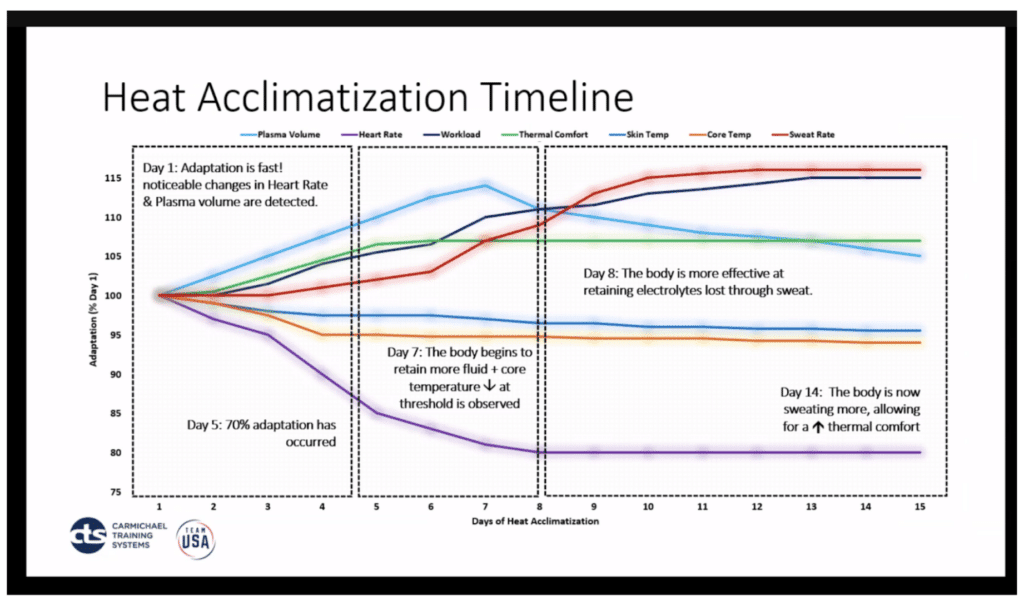
Time-in-heat and frequency of heat exposures are two of the most important determinants of whether you achieve meaningful adaptations from heat acclimation activities.
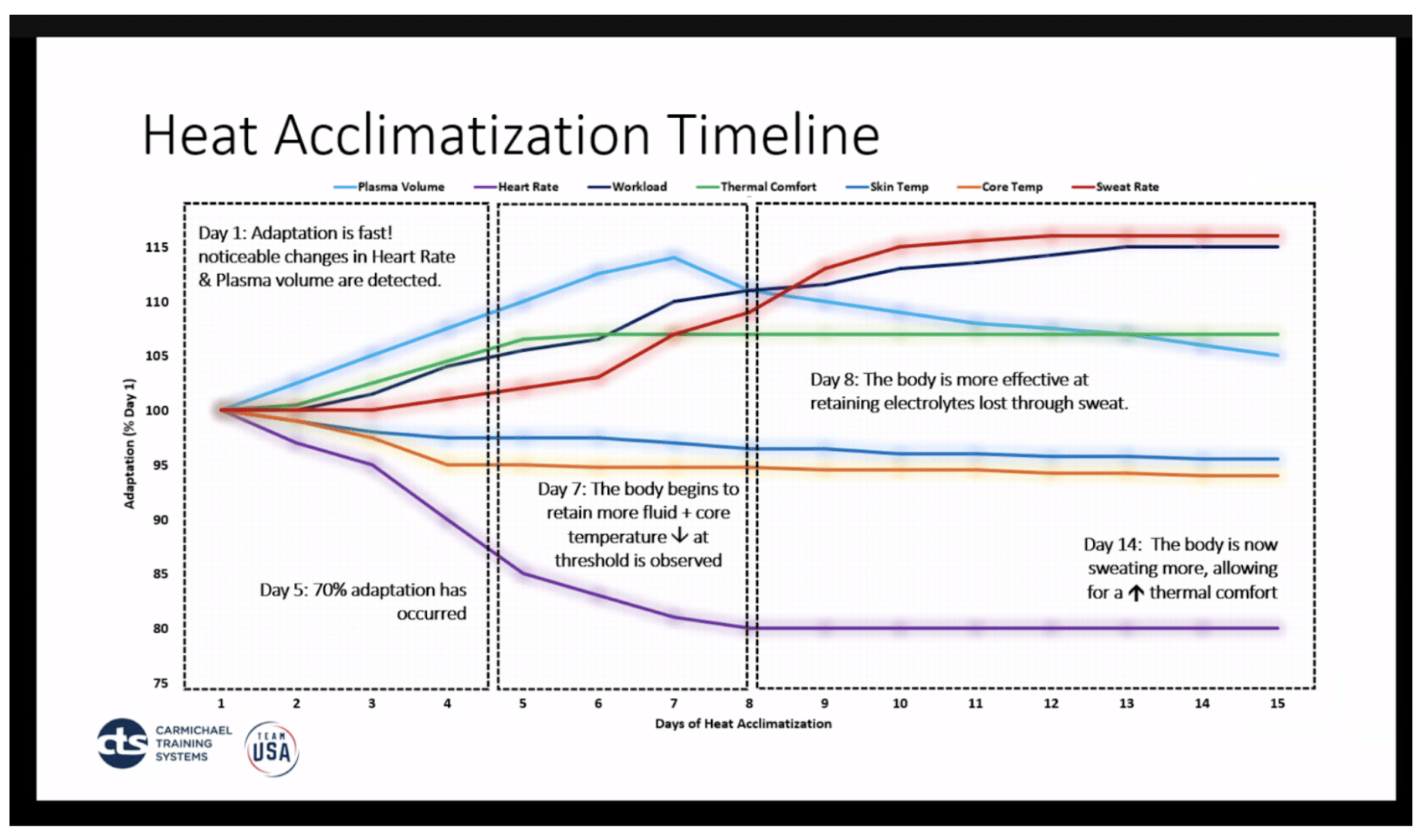
- Initial heat acclimation phase: Minimum 7 consecutive days, up to 14. Ideally, you want to schedule daily heat exposures 10-14 days. The graph below illustrates how specific adaptations develop over time. The sweet spot, where you get the most adaptations for the fewest heat exposures, is about 7-10 days. Extending to 14 days is kind of an insurance policy to make sure the heat stimulus has done its job.
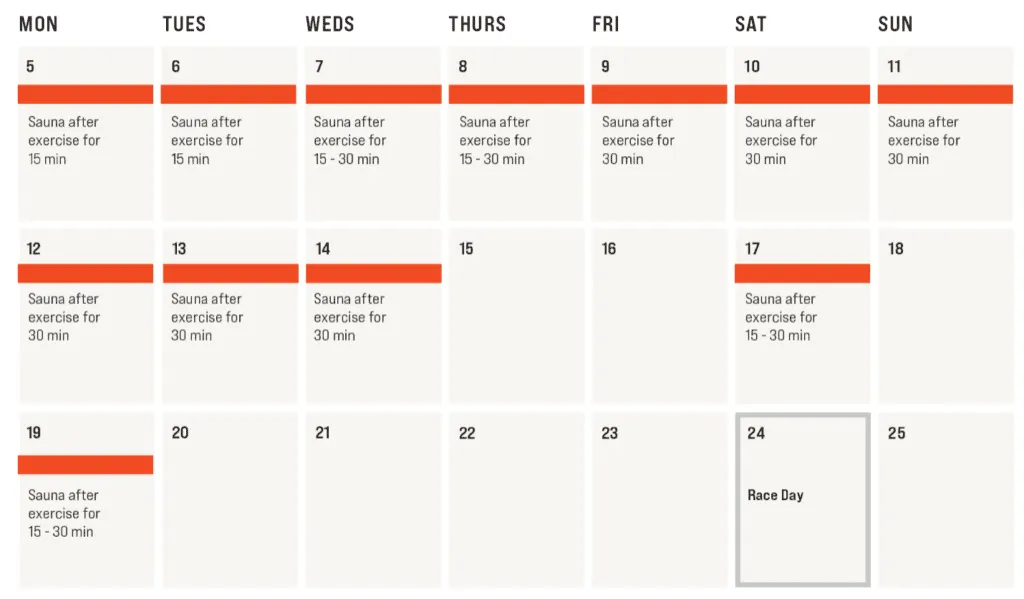
- Single vs. Double Exposure Protocols: If you only have time or resources to complete one heat acclimation protocol, you want to start about three weeks before your event (view chart below). This allows you to complete the consecutive heat exposures about 10 days before your event and gives you time for a few “maintenance” exposures while you taper for your race.
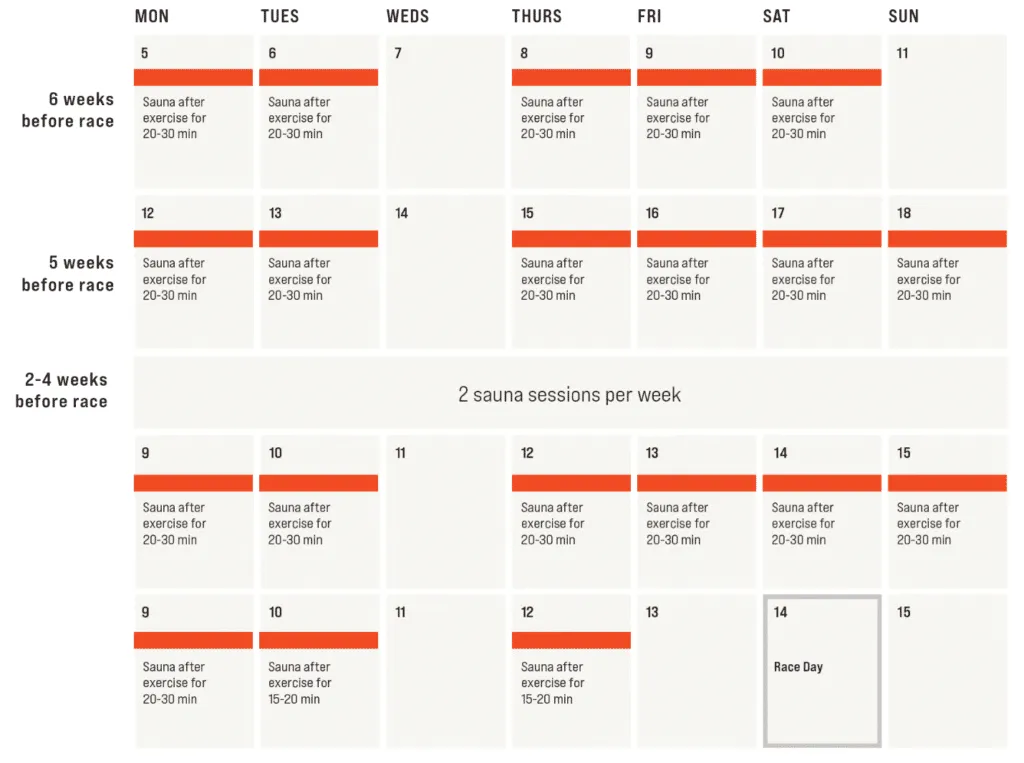
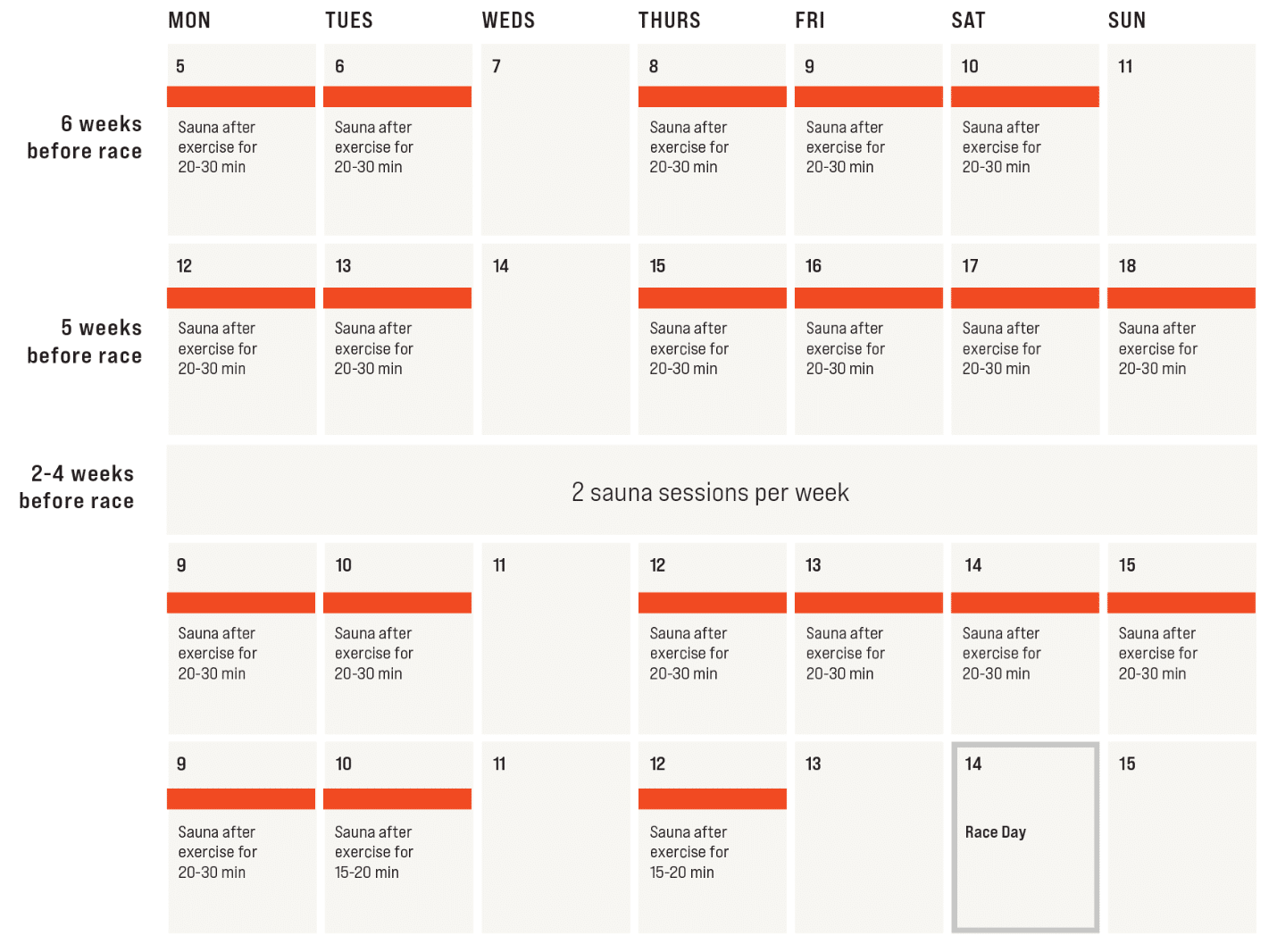
- A double-exposure protocol starts about six weeks pre-race and gives you two opportunities to experience heat training (see chart below). The first run-through can help improve your capacity for training with enough time to take advantage of it. It can also be a learning experience, allowing you to make adjustments as your race approaches.
- Maintenance Heat Exposures: The adaptations to heat training decay when daily heat sessions stop. Fortunately, research shows that “maintenance heat sessions” every 3-ish days can preserve adaptations to heat training. As you can see in the single exposure protocol chart, there are two maintenance sessions between the initial 10-day block of heat training and the athlete’s event.
- Decay Timelines for Heat Acclimation: If you complete a 10-14 day initial phase of heat acclimation and then do nothing, the positive adaptations last about two weeks. You can extend this timeline and delay this decay with maintenance sessions, but heat training should not be a year-round part of your program. For maintenance sessions, you need one active heat training session every 4-5 days to maintain the adaptations. If you’re using passive heat acclimation, I prefer one 20- to 30-minute session every 3-4 days for maintenance.

Choosing Passive vs. Active Heat Acclimation
The timelines for the development and decay of the adaptations to heat training are consistent whether you choose passive heat training, active heat training, or a combination of both. So which method should you choose, and can you do both?
If you’re choosing one versus the other, it often comes down to access and convenience. If you have access to a sauna or hot tub, use them! If you only have a shower and live in a cool climate, indoor rides in winter cycling gear or a hot room might be the most practical solution. The keys to success are: committing to two weeks of daily heat acclimation activities, ensuring the environment is hot enough to elevate core temperature, and sustaining the activity long enough (60-90 minutes for active, 20-40 minutes passive).
In my experience with athletes I coach, I find combining active and passive acclimation is the best strategy. You still only want one heat exposure per day, but you can combine methods. So, if you have Tuesday and Thursday interval days, those are days for sauna sessions after your rides. On days that would be easy rides, they can be heated trainer rides.
For athletes who are preparing to race in the heat, I want them to train in the heat for experience as well as the physiological adaptations. So, while the passive strategy helps in keeping their training intensity up, I still want to expose them to what it really feels like to ride and push in the heat. Nevertheless, I still keep the intensity low for the first week of active heat training. I may increase the intensity to normal training sessions the second week, but reduce the duration of those sessions if I have one cycle of heat training. If I have more than one, I’ll generally keep intensity lower in the two weeks of the first block of heat training, then introduce heat + intensity in the second block, getting more specific heading toward the key race.
The Bottom Line
The end results of passive and active heat acclimation are comparable. The choice comes down to the equipment and time you have available, and whether active heat training rides will disrupt your event-specific training. Ideally, a mixture of both active and passive heat acclimation provides real-world experience of exercising with elevated core temperature and the benefits of heat exposure without additional exercise stress that you get from hot water immersion or a sauna. Just remember to always replenish fluids! Dehydration is not the goal and does not improve adaptation to heat exposures.
References:
McIntyre, R. D., Zurawlew, M. J., Mee, J. A., Walsh, N. P., & Oliver, S. J. (2022). A comparison of medium-term heat acclimation by post-exercise hot water immersion or exercise in the heat: adaptations, overreaching, and thyroid hormones. American journal of physiology. Regulatory, integrative and comparative physiology, 323(5), R601–R615. https://doi.org/10.1152/ajpregu.00315.2021
Périard, Julien D et al. “Exercise under heat stress: thermoregulation, hydration, performance implications, and mitigation strategies.” Physiological reviews vol. 101,4 (2021): 1873-1979. doi:10.1152/physrev.00038.2020
Scoon, G. S., Hopkins, W. G., Mayhew, S., & Cotter, J. D. (2007). Effect of post-exercise sauna bathing on the endurance performance of competitive male runners. Journal of science and medicine in sport, 10(4), 259–262. https://doi.org/10.1016/j.jsams.2006.06.009
Zurawlew, M. J., Walsh, N. P., Fortes, M. B., & Potter, C. (2016). Post-exercise hot water immersion induces heat acclimation and improves endurance exercise performance in the heat. Scandinavian journal of medicine & science in sports, 26(7), 745–754. https://doi.org/10.1111/sms.12638
Zurawlew, M. J., Mee, J. A., & Walsh, N. P. (2019). Post-exercise Hot Water Immersion Elicits Heat Acclimation Adaptations That Are Retained for at Least Two Weeks. Frontiers in physiology, 10, 1080. https://doi.org/10.3389/fphys.2019.01080
► FREE Mini-Course: Learn How to Maximize Your Limited Training Time
Learn step-by-step how to overcome limited training time and get faster. Walk away with a personalized plan to increase your performance.
"*" indicates required fields
About the Author
Adam Pulford
CTS Head Cycling Coach
Adam Pulford is a dedicated coach at CTS with a passion for elevating athletic performance through tailored, measurable strategies and a deep understanding of the “why” behind each athlete's goals. With nearly two decades of experience, a degree in Exercise Physiology, and a successful track record managing professional cycling teams, Adam also shares his expertise as the host of the Time-Crunched Cyclist podcast, providing actionable insights for endurance athletes.
Comments 2
How does heat training relate to humidity training? My normal summer environment is both hot (90ish F) and humid (70% humidity). It can feel like riding in a hot sponge some days.
Super helpful. Thanks