

Training for Western States: What Elite Ultrarunners Do Differently

Updated On
June 17, 2026
CHOOSE YOUR FORMAT
►WATCH THE VIDEO
►LISTEN TO THE PODCAST
►READ THE ARTICLE
Training for Western States: What Elite Ultrarunners Do Differently
Every year, runners training for Western States look at the top elite competitors and wonder:
What are the elites doing that the rest of us aren’t?
The assumption is that professional ultrarunners have access to secret workouts, proprietary training methods, or cutting-edge performance hacks that separate them from everyone else.
They don’t. The framework is identical. The scale is different.
I coach beginner and elite ultramarathon runners, including some of the elite runners competing at Western States. I can tell you that elite athletes are not following a different set of training principles. They are simply capable of handling more of what works.
Understanding that distinction can help you focus on what matters in your ultramarathon preparation.
Training For Western States: Same Principles, Different Scale
Based on Strava and social media posts from elite runners and the brands supporting them, you might assume elite athlete training has nothing in common with your progression.
In reality, the same foundational principles that guide a beginner’s training also guide the preparation of the world’s best ultrarunners:
- Progressive overload
- Specificity
- Progression
- Periodization
- Individuality
These principles drive adaptation regardless of where you line up on race day. What changes is the magnitude.
Elite runners train more because their bodies can tolerate more. More volume because their systems can absorb it. Higher and more time-at-intensity because their threshold is higher. Greater carbohydrate intake because their output demands it and they’ve trained their guts to process it. Faster recovery because years of development built the physiology to support it.
The principles stay the same.
The Five Principles of Endurance Training
Before diving into Western States-specific preparation, it’s important to understand the framework that underpins successful training.
- Progressive Overload: To stimulate adaptation, training stress must exceed your current capacity. The key is steady and gradual accumulation of training stress, not individual epic days. For elite athletes, achieving overload requires more weekly hours and miles, but they’ve developed the physiology to handle it. Your goal is appropriate overload for your level of development.
- Progression: Training must get more challenging over time. This applies to overall workload, specific workout intensities, as well as skill development. Progression occurs over weeks, months, and years and the most impactful aspects (e.g., durability, fat oxidation, aerobic capacity) can’t be rushed.
- Periodization: Effective programs organize training into distinct phases, each with a specific purpose. Earlier in a Western States build, athletes often emphasize intensity and maintain moderate weekly volume. As race day approaches, training volume increases and workouts become more race-specific (which means moderate to low intensity since average race pace is about 60% of VO2 max). Periodization plans may differ based on your racing goals, but organized training works better than randomly choosing workouts.
- Individuality: One of the biggest mistakes you can make is copying anyone else’s training plan, especially an elite athlete. Their workload is appropriate for that athlete, at that stage of their long-term development, and at that stage of their progress toward a specific goal. Your training mist individually reflect your training history, recovery capacity, injury history, age, work schedule, family obligations, and available training time.
- Specificity: Your training must address the specific demands of your goal events. In this, you and elite ultrarunners are similar. As your race approaches, whether it’s Western States or another event, your training should increasingly resemble the demands of the race.
Western States has a very particular set of demands, so here’s how we help athletes prepare for them.

Terrain: Western States Is Surprisingly Runnable
Although Western States is a mountainous course that starts at elevation, it’s not as technical as many runners assume. Much of the course rewards strong running fitness and moderate technical trail proficiency.
That said, there are two technical features that make Western States special. Depending on the severity of the preceding winter, there can be snow in the high country early in the event. This can be difficult to manage and slow runners down.

► Free Ultrarunning Training Assessment Quiz
Take our free 2-minute quiz to discover how effective your training is and get recommendations for how you can improve.
Then there’s the descending. The course is a net downhill, and long downhill segments place enormous stress on the quadriceps from eccentric contractions. Descending durability is one of the most specific demands of this entire race. Athletes who fail to prepare their legs for sustained downhill running often discover that their quads become the limiting factor long before their cardiovascular system does.
Include purposeful downhill running throughout your build and gradually increase your ability to handle long descents under fatigue.
Temperature: Heat Acclimation is Required
Heat consistently impacts Western States performance. The canyons reach brutally high temperatures in late June, often exceeding 100°F (38°C). Thermoregulation is a huge challenge and something athletes must prepare for ahead of time.
Heat acclimation or heat training is the first step. My CTS colleagues and I find the best strategy is post-exercise passive heat exposure, as opposed to exercising in the heat or adding clothing. Sauna and hot water immersion protocols allow athletes to gain heat adaptation benefits without sacrificing workout execution. Here’s an article on heat acclimation protocols.
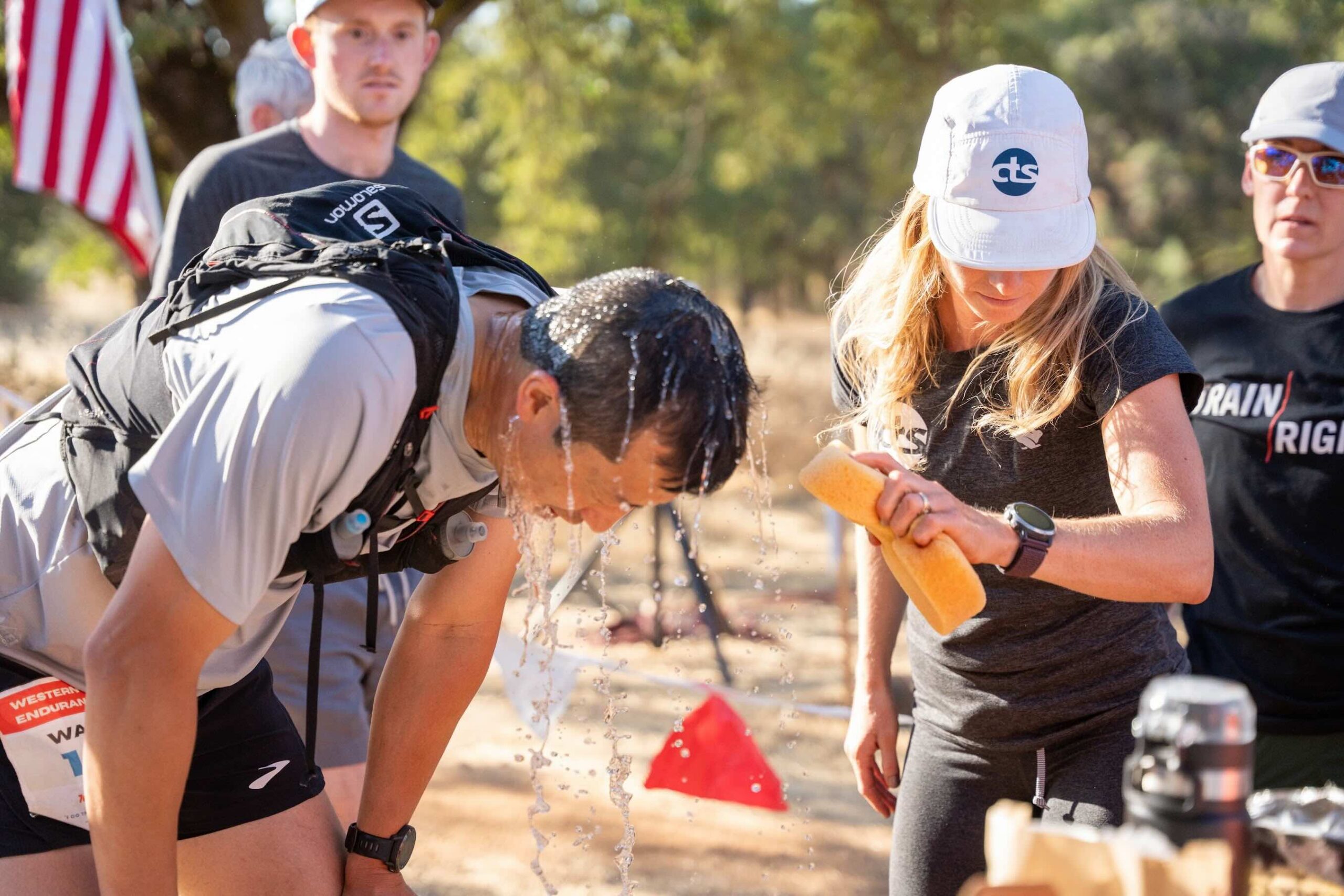
Effective cooling techniques is the second step. On race day, athletes need to manage core temperature by staying hydrated, dousing themselves with water, and carrying ice in bandanas/hats/vests. CTS even started bringing ice-filled kiddie pools to Western States aid stations so athletes could fully ice down. Just 30-60 seconds at a time makes a big difference.
Durability: Even More Important For Amateurs
Elite men typically finish Western States in approximately 14 to 15 hours. Elite women often finish between 16 and 18 hours. Most runners, however, spend 20 to 30 hours on the course. As duration increases, durability – your ability to maintain performance as fatigue accumulates – becomes increasingly important.
Durability develops over time from consistent training, including back-to-back long runs. These workouts simulate the cumulative fatigue experienced during an ultramarathon and help prepare the body for prolonged stress. Durability is also influenced by athlete behaviors, like staying well fueled and hydrated, and pacing appropriately (especially on downhills). Here’s an article on durability.
Fueling: Right-Sizing Carbohydrate Intake
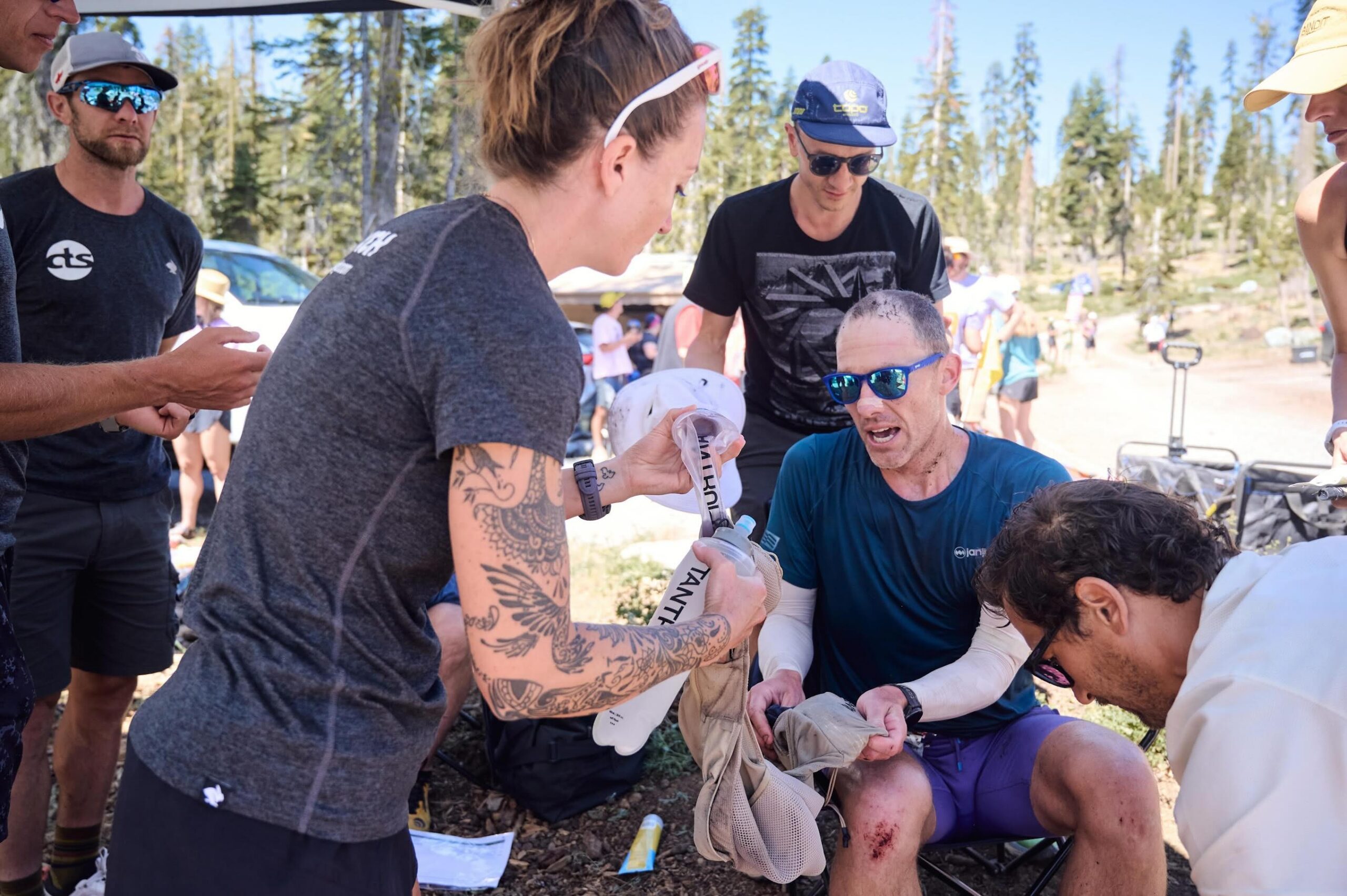
The evidence-based carbohydrate target for most ultrarunners is 60 to 90 grams per hour. Elite athletes consume more because their output demands it. More speed means burning more carbohydrate faster. On a percentage basis (i.e., hourly intake as a percentage of hourly expenditure), elites and amateurs replenish carbohydrates similarly. At their pace, pros might need 120 grams of carbohydrate per hour while you need 60-90 grams.
Enjoying This Article? Get More Free Running Training Tips
Get our coaches' best training advice, delivered straight to your inbox weekly.

Hydration is just as individual. Sweat rate and sodium loss vary significantly from athlete to athlete, and knowing your own numbers removes guesswork.
Every long run is an opportunity to practice:
- Carbohydrate intake
- Fluid intake
- Sodium intake
- Food selection
- Feeding timing
The gut is trainable and gut training minimizes the chances of GI distress, one of the leading causes of DNF.
Night Running: Essential Training for Western States
The winners of Western States sometimes finish before sunset (the race is held close to the summer solstice) but most people finish in the dark. However, few athletes practice running in the dark before race day.
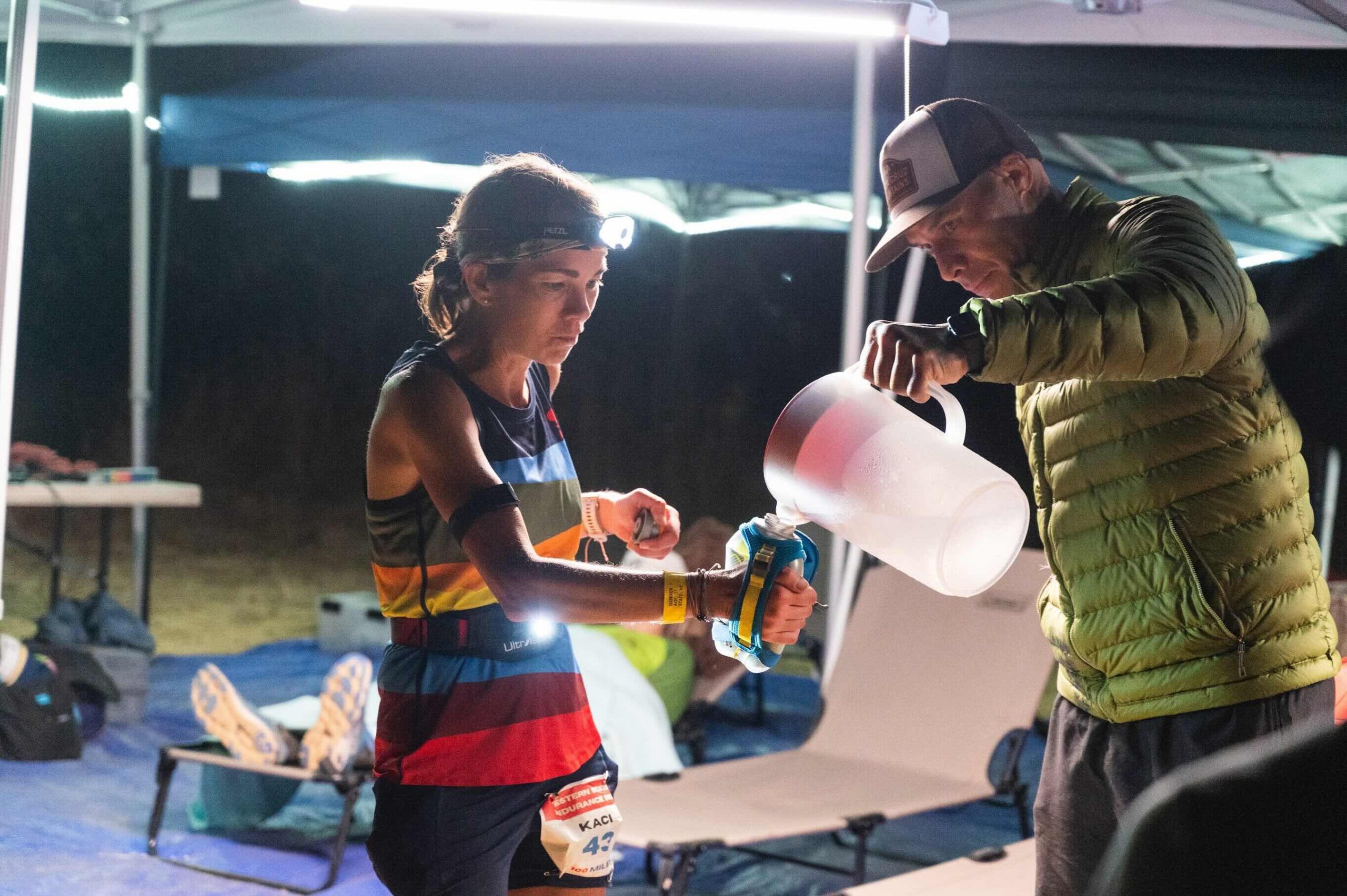
Night running introduces challenges that go beyond visibility:
- Altered depth perception
- Reduced pace awareness
- Increased mental fatigue
- Different nutrition and hydration habits
Night running is a trainable skill and a common feature in many ultramarathons, so incorporate occasional night-running sessions into your training so race day doesn’t become your first experience navigating trails in darkness.
What You Should Learn From the Pros
The biggest lesson from elite Western States athletes is their consistency. They arrange their lives so they can execute the fundamentals exceptionally well over long periods of time. Fundamental training principles don’t change whether you’re racing for the podium or trying to finish before the cutoff. Your ideal training volume may look very different from an elite athlete’s. You’ll run at different paces in training and races, your long runs may be shorter, and your race-day carbohydrate consumption may be lower. But the underlying training principles are the same.
About the Author
Cliff Pittman
CTS Pro Ultrarunning Coach
Cliff Pittman is the Coaching Development Director for CTS, where he expertly leads the Ultrarunning and Cycling Coaching teams. A passionate ultrarunner and active competitor, Cliff specializes in simplifying complex training concepts into actionable strategies, ensuring athletes at all levels—from beginners to elite competitors—can achieve their goals in prestigious events like the Western States 100 and Leadville 100.