
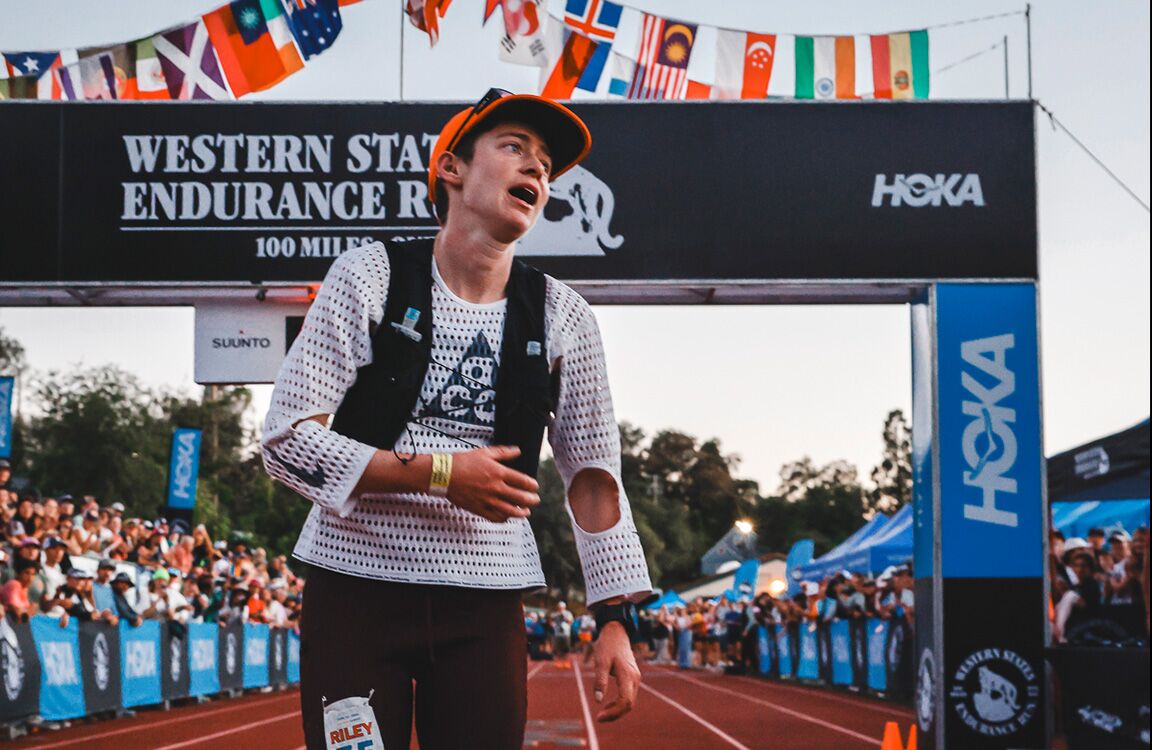
How They Did It: Riley Brady’s Western States Podium Performance
Updated On
July 9, 2026
Sometimes you find the keys to success where you least expect them. There’s a persistent myth that elite athletes must be ruthlessly efficient, sacrifice social connections, stay laser-focused, and generally live like monks. Pro ultrarunner Riley Brady thrives by taking a different approach. Running with their friends comprises a large percentage of their training. Between hanging with friends and genuinely loving running, I get the sense that even during their hardest training blocks, Riley is genuinely having a great time most days. If there is a secret sauce to Riley’s success as a runner, it has much more to do with their support network and community rather than training. Over the past eight months of working with Riley, we made significant progress by identifying and adjusting factors that may have contributed to their inconsistent results in previous seasons. It’s too early to say Riley has discovered the perfect formula for consistent success, but their second-place performance at the 2026 Western States Endurance Run is a good start! Here’s how they did it.
Note: Photo credit for header image: Luis Escobar/Western States Endurance Run
Riley Brady’s Hit Or Miss History
Riley Brady’s racing history has been a story of ups and downs. When they have a good day, Riley can win big races and set course records, like they did at the 2025 Black Canyons 100K. On the other end of the spectrum, Riley’s bad days often result in DNFs, like dropping out of the 2025 Western States.
At a superficial glance, Riley’s poor race performances and DNFs look like a nutrition problem. They tend to throw up in big races, and once the vomiting starts it can be quite disruptive to ongoing performance. On days when vomiting isn’t an issue, Riley can run away from the field and win.
When I started working with Riley in December 2025, I figured that sorting out their race-day nutrition would be a key to qualifying for the 2026 WSER at Black Canyons Ultra and subsequently having a great day at the 2026 WSER. I was only partly right.
Riley Brady’s Winding Route to the 2026 Western States
Reviewing an athlete’s training history is one of the first things I do when I start with a new athlete. Looking at Riley’s training history, it was clear they could handle a pretty high weekly training load and could stack consistent weeks of high-volume training when necessary. We started a relatively conventional build toward the Black Canyon 100K in February 2026, with the goal of capturing a Golden Ticket for the 2026 WSER.
Riley had a bad day at Black Canyon. Having won and set a course record in 2025, we were confident in their ability to have a comparable performance in 2026. Instead, Riley had significant issues with vomiting right from the start and completed the course nearly an hour slower than the previous year to finish ninth and without a Golden Ticket.
Now the pressure was on. The next chance to capture a Golden Ticket was at Canyons 100K in April. But between February and April we needed to solve the puking issue, so we brought in sports nutrition and sports psychology professionals. Black Canyon provided a new piece of the puzzle. Riley was healthy leading up to the race yet started throwing up before the race even started. The vomiting continued despite using nutrition products they used in training and had used successfully in previous races. This led to a new working theory that perhaps the vomiting was more a nervous system response than a nutrition problem.
Mind Over Stomach
Riley’s experience at Black Canyons suggested that their DNF experience at the 2025 WSER wasn’t a fluke, but rather evidence of a pattern. Early on, just after the climb up the escarpment in 2025, Riley started experiencing double vision, nausea, and dizziness. Those symptoms subsided as the race progressed, but vomiting became a problem that eventually led to their DNF. Working with Meredith Terranova for nutrition and a great sports psychologist from Boulder, Colorado, we worked on providing Riley with tools to reduce pre-race anxiety, keep their nervous system calmer during the early miles of an ultramarathon, and create a wider range of nutrition and hydration options in case their stomach started turning.
Of course, the issue is that you can’t replicate the nervous system response to race day on a calm Tuesday afternoon in Boulder. So, even though I might not have normally incorporated a lot of racing into Riley’s build for Canyons 100K or Western States, I proposed adding some races to their spring calendar. We needed to test the sports psychology and nutrition tools in race conditions to see if we could eliminate, or at least minimize, the race day vomiting. The timeline below illustrates the events on Riley’s Spring 2026 calendar.
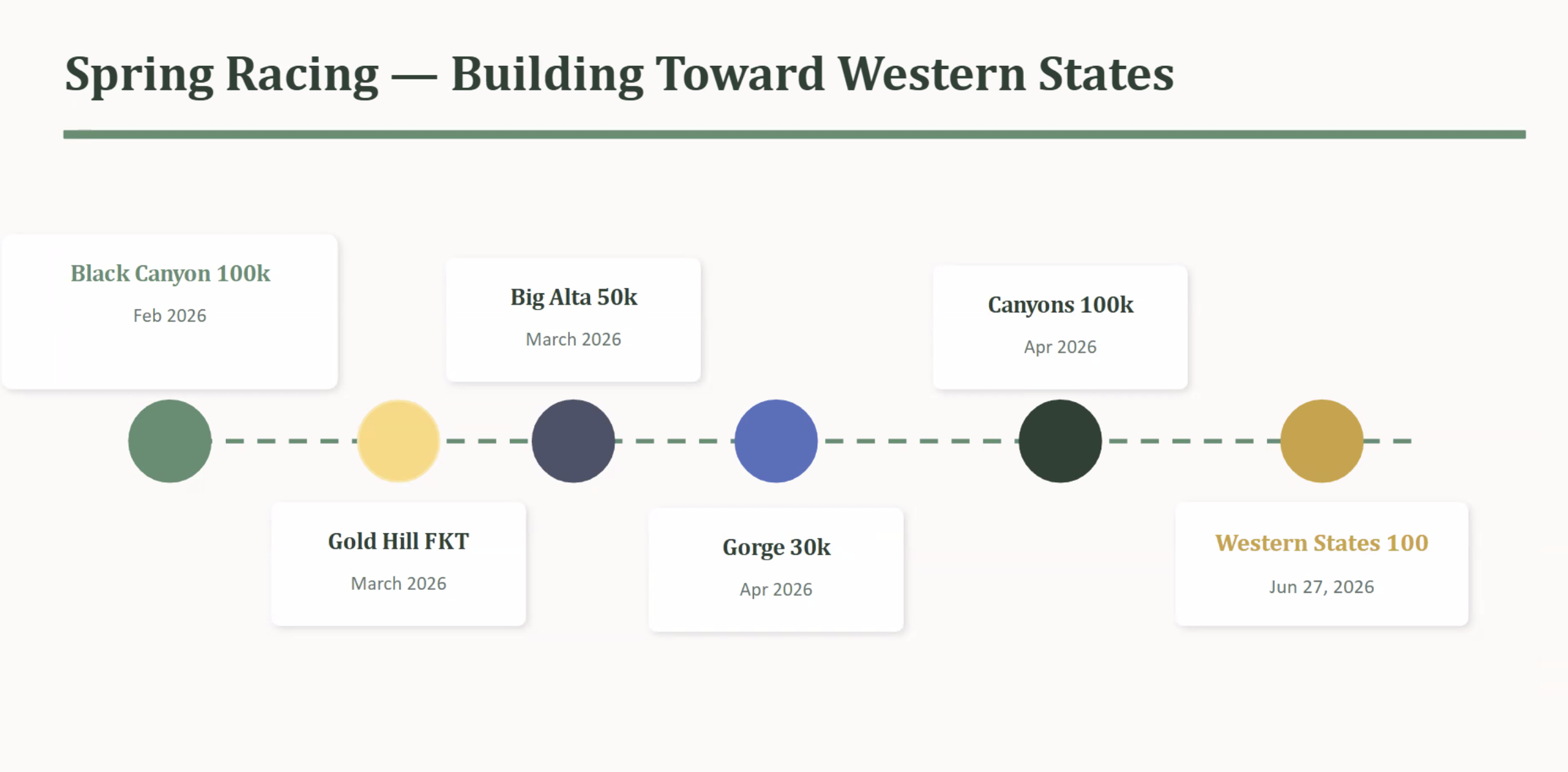
We started with an informal event, the Gold Hill FKT in Colorado. No media, no pack of competitors on the start line, just the self-imposed pressure to perform. Then Riley went to the Big Alta 50K and Gorge Waterfalls 30K, both trail races well within their physical capabilities but perhaps out of their usual comfort zone. Again, we wanted the main variables to be the pre-race routine and their ability to start the race off on the right foot.
The races and FKT before Canyons 100K proved one critical point: Riley thrives when the pre-race environment is low stress, high joy, and includes close friends. This point was driven home, by chance, at Gorge Waterfalls 30K. It was a low-key event and Riley went to the race with a small crew of friends. In the end, it wasn’t any of the 15 or so sports psychology tasks that got them to the start line with a settled nervous system. It was having fun with friends on the way to the race. That’s not to say the sports psychology tasks aren’t effective. Learning about those was beneficial but, for Riley, the added structure or regimen of needing to execute those steps likely added stress. Riley had a good day at Gorge, finishing 13th Overall and 3rd in the Female category.
Racing for a Golden Ticket at Canyons 100K
Armed with more information about how to create an environment conducive to success, Riley went to Canyons 100K to capture a Golden Ticket for Western States. The concern was, of course, that controlling pre-race nerves could be more difficult because the pressure and stakes were higher at Canyons than at Big Alta or Gorges.
Riley started Canyons in a good headspace and they were able to access their fitness and speed well throughout the early miles. By itself, that was a win! The next step was to manage nutrition and hydration as well as possible to minimize the chances of vomiting, or to best manage the consequences of vomiting. Riley did start vomiting during the race, and successfully pivoted their food choices to continue fueling and hydrating effectively. Thankfully, the vomiting subsided and Riley went on to win and earn their WSER Golden Ticket!
► Free Ultrarunning Training Assessment Quiz
Take our free 2-minute quiz to discover how effective your training is and get recommendations for how you can improve.
How the Race was Run: Riley Brady’s 2026 Western States Podium Performance
Riley’s training buildup before Western States progressed very well. The more I learned about Riley, the clearer it became that they thrive when the training environment is positive, fun, and collaborative. They mostly trained in Boulder, surrounded by a supportive running community, friends, and training partners. We did include one training camp on the Western States course, too. Riley takes training seriously, but is not like some elite athletes who seek isolation and hypervigilance.
Riley made a concerted effort to reduce pre-race stimulation in the weeks and days leading up to Western States. The vibe in Olympic Valley is electric. Some athletes find that energizing and inspiring, but it can also be overstimulating. Riley spent most of race week tucked away from the chaos reading books and doing crosswords somewhere in Truckee with their core group of friends and family.
On race morning, Riley made their way to the start with two good friends and had a largely enjoyable morning. Riley felt confident starting the race with a light pre-race snack rather than a larger pre-race meal. They also felt confident running the first 90 minutes or so with minimal nutrition on course, all to reduce the chances of vomiting in the early miles and then to only start fueling when they felt settled. While climbing the escarpment, Riley kept their head down, wore ear plugs and a wide-brimmed hat to minimize exposure to camera flashes and bright lights, and to minimize stimulation from the fans lining the course. Compared to their experience from 2025, Riley got through the first five miles in much better shape.
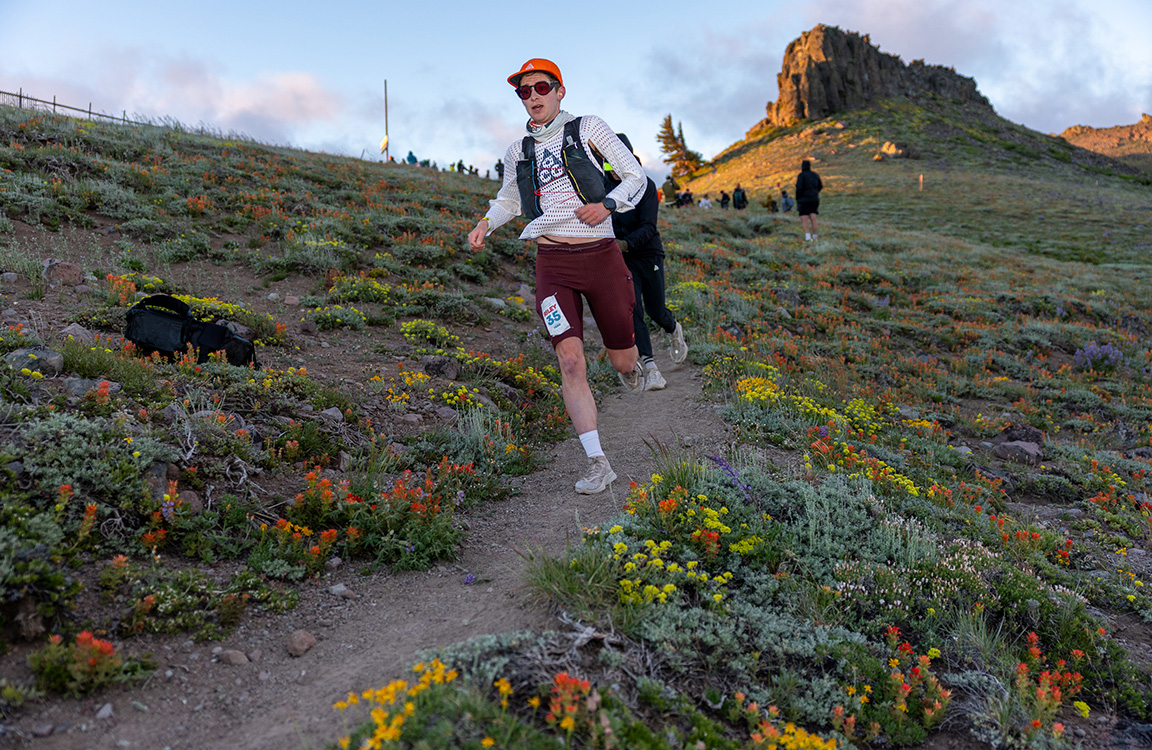
Credit: Gary Hughes/Western States Endurance Run
Enjoying This Article? Get More Free Running Training Tips
Get our coaches' best training advice, delivered straight to your inbox weekly.
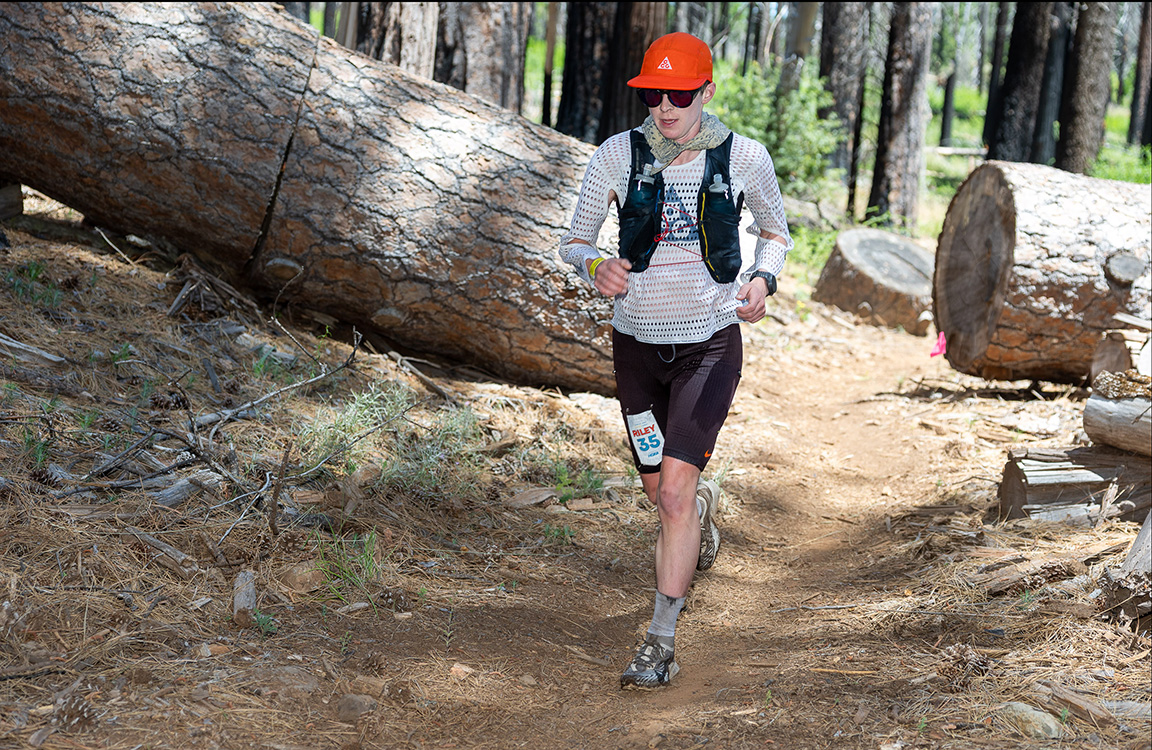
The rest of Riley’s 2026 Western States experience unrolled pretty smoothly, all things considered. They run on perceived exertion rather than time splits, and for most of the race Riley thought there was a leading group ahead of them. In truth, Riley and Jennifer Lichter were trading places at the very front of the race!
Eventually, Riley started having some vision issues around Michigan Bluff. Thinking that it could potentially be solved by consuming sodium, Riley sought sodium at Cal-1. Without having clear vision and with some well-intentioned but misinformed help from the volunteers, Riley inadvertently chomped down on a sports drink tablet that was meant to be dissolved in a bottle of water, triggering the first puke of the race. And once the vomiting starts, it sometimes takes a while, and several more vomiting episodes, to subside. Riley managed the puking and nausea very well for the final 30 miles or so of the race, which enabled them to stay fueled and hydrated enough to run some blazing fast splits all the way to a strong second place and third fastest time in history!
Credit: Gary Hughes/Western States Endurance Run
Post-Race Takeaway
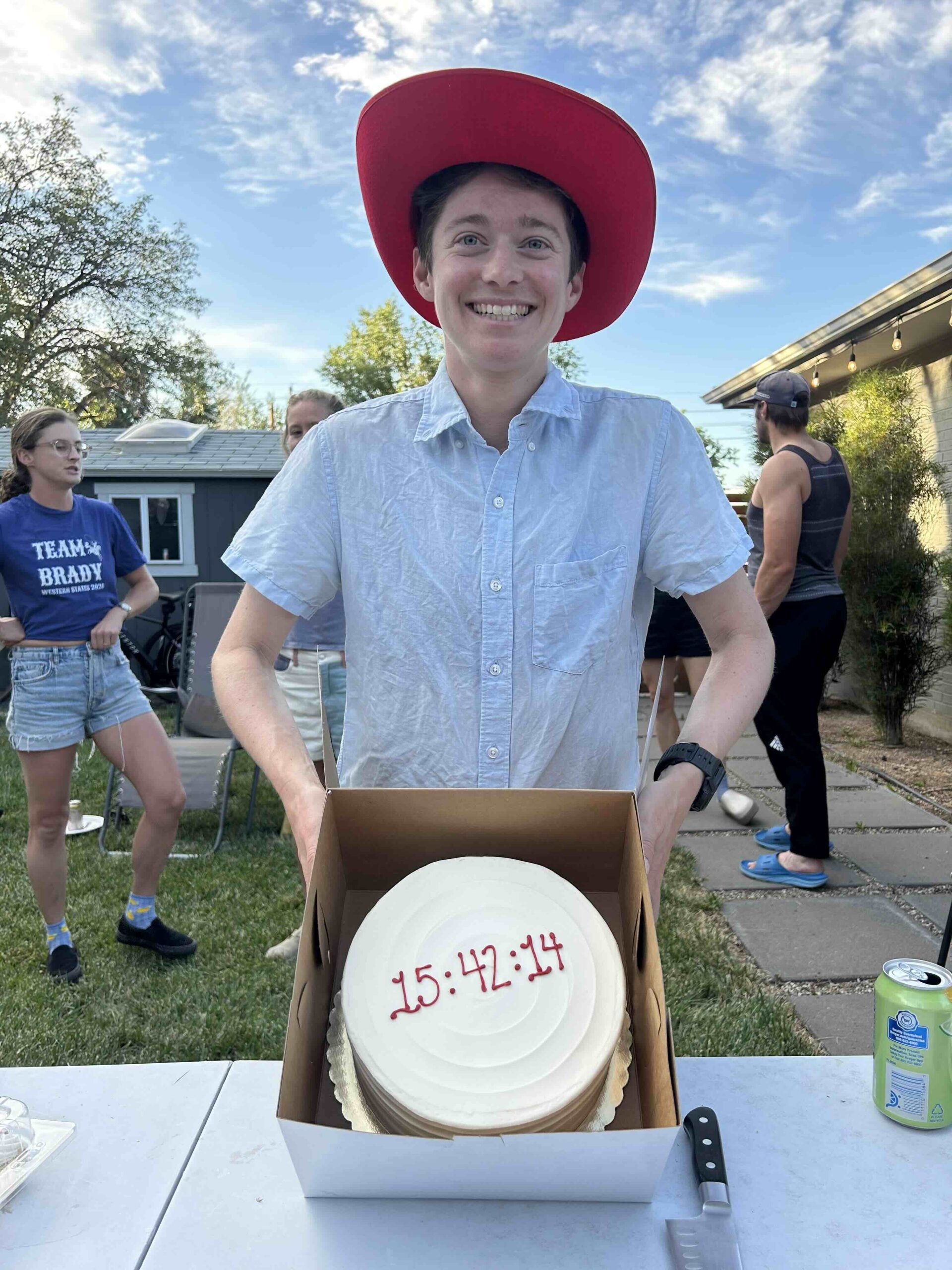
Sometimes coaching is about creating great training plans or helping athletes leverage the immense amount of training data they generate. The story of Riley’s success at the 2026 Western States isn’t really about workouts or training volume or course reconnaissance, although those things were definitely important. For me, coaching Riley has reinforced the fundamental idea that we must always coach the PERSON first and the ATHLETE second. Riley’s roadblock wasn’t their workouts or physiology. It wasn’t even nutrition, really. It was nervous system management and recognizing that a fun, supportive, low stress environment wasn’t just “nice to have”, but rather the essential scenario that significantly improved their chances of success.
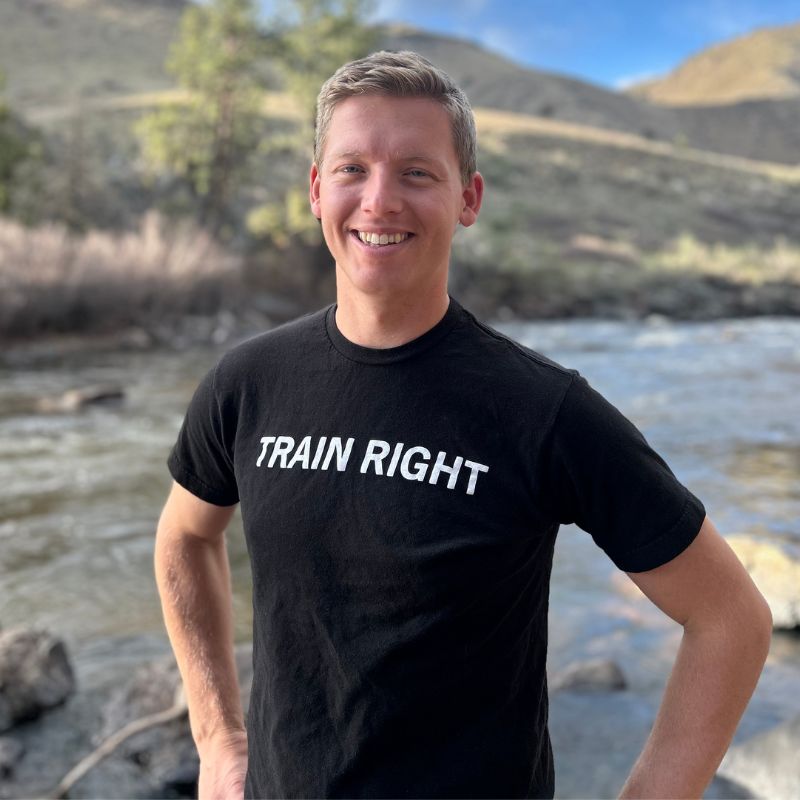
Credit: Riley Brady
About the Author
Adam Ferdinandson
CTS Senior Ultrarunning Coach
Adam Ferdinandson is a dedicated endurance coach passionate about helping athletes find joy in their training while preparing for the events that matter most to them. With a focus on personalized, enjoyable training methods and a commitment to understanding each athlete's unique journey, Adam combines his extensive experience in ultrarunning with a heartfelt investment in the success and well-being of those he coaches.
Comments 1
I’m now even more impressed with Riley’s performance! Thanks for an interesting look behind/beyond the miles, splits, and race prep. Way to go coach and athlete!