
3 Steps To Personalize Your Ultramarathon Hydration and Fueling Plan

Updated On
August 20, 2026
CHOOSE YOUR FORMAT
►WATCH THE VIDEO
►LISTEN TO THE PODCAST
►READ THE ARTICLE
3 Steps To Personalize Your Ultramarathon Hydration and Fueling Plan
Amateur athletes often try to copy what pros do and use – everything from run training to ultramarathon hydration and performance products. It’s an idea as old as time: if something works for the best, then it must be the best and I should do or use it, too. We even leverage this phenomenon in coaching; we hope our success working with top pros shows age group athletes they should trust CTS with their coaching, too. The principles behind training, nutrition, and other aspects of performance are the same for elite and amateur athletes, but there are important nuances. You should not copy everything about an elite ultrarunner’s training or nutrition plan verbatim, but there are important components you absolutely should use for yourself!
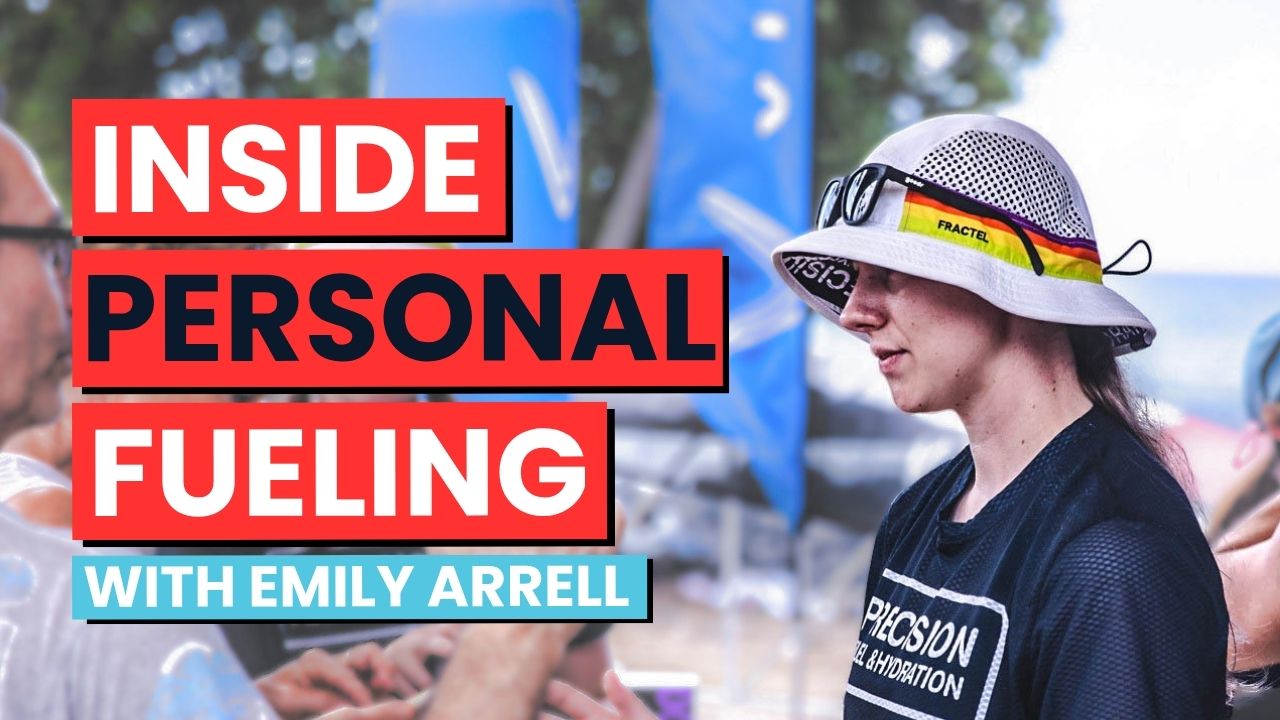
I recently sat down with Emily Arrell, a sports scientist at Precision Fuel & Hydration, to examine what separates fueling plans for elite athletes from fueling plans for age-groupers. Precision’s team builds individualized nutrition and hydration strategies for some of the best endurance athletes in the world, combining lab testing with insights garnered from years of practical race-day experiences.
Here’s the biggest takeaway, right up front: The process elite athletes use is identical to the one available to you. The numbers – how much they consume – are just personalized.
Here’s what we talked about in the video we recorded for the CTS Ultrarunning YouTube Channel, and what you can put into practice starting this week.
It’s the Process That’s Universal, Not the Numbers
The first thing Emily made clear: when she’s on a call with a top-level pro versus an age-group amateur, she runs the same process with both. The outcomes vary, including carbohydrate intake and targets for fluid and sodium intakes, but how those targets are derived, individualized, tested, and refined doesn’t change based on your projected finish time.
The process for creating your own nutrition and hydration strategy is the number one thing you can steal from the pros. All you need is to be willing to test, record your results, and adjust based on your individual responses.
Step 1: Learn Your Sweat Sodium Concentration
Precision’s at-rest sweat test is a simple 30-minute protocol: induce sweating using a small disc placed on the forearm, collect sweat in a small capillary tube, and analyze the sweat. The machine measures your sweat sodium concentration. Your sweat rate (the amount of sweat you secrete per hour) can change dramatically, but your baseline sweat sodium concentration is mostly established by genetics.
From person to person, baseline sweat sodium concentrations can vary dramatically, from 400 to 2,000 milligrams of sodium per liter of sweat! You can marginally shift sweat sodium concentration with heat training, which can increase sweat rate and trigger the body to reduce sweat sodium concentration to retain more sodium.
Your individual sweat sodium concentration provides a guide – at least a starting point – for your training and race day sodium intake. As an example, Emily pointed to Precision Hydration-sponsored athlete Rachel Entrekin, who loses just over 1,500 mg/L and therefore aims to match that concentration in her fluids during a race.
Can’t access a formal sweat test? If you can’t get tested, start in the middle. The average sweat sodium concentration sits around 950 mg/L, so aim for roughly 1,000 mg/L and adjust from there.
Step 2: Measure Your Sweat Rate
Sweat rate testing doesn’t require a lab or special equipment. Weigh yourself with no clothes on immediately before a run, head out for about 60 minutes, strip down, towel off, and weigh yourself again. That change in body weight is your sweat rate. In other words, if you lose 1/2 kg (500g) during an hour run, accounting for anything you drank during the run), then your sweat rate is 500 ml/hr.
Here’s the part many runners miss. Sweat rate varies based on intensity and environmental conditions! Therefore, it’s important to build a database of your personal sweat rates across different conditions and intensities. You must know how you sweat on a cool morning versus a hot afternoon, and during an easy run compared to a long hill climb or an interval session.
Tip: Fluid Volume and Sodium Concentration Both Matter
Here’s another nuance a lot of athletes miss. Research shows sodium replacement recommendations ranging anywhere from 40% to 100% of losses. Emily recommends consuming drinks that match your personal sweat sodium concentration and consuming enough fluids to to replace up to about 80-100% of your hourly sweat rate.
If your sweat sodium concentration is 1,000 mg/L and you’re sweating out 1 liter of sweat per hour, but you’re only drinking 200 mL of fluid per hour, then you’re failing to replenish enough fluids and you’re not consuming enough sodium – even if the drink concentration matches your sweat sodium concentration. A successful hydration strategy must address both fluid volume and sodium concentration simultaneously. It’s also important to recognize that you can meet some of your sodium intake goals through food products.
Step 3: Build Carbohydrate Tolerance Over Time
The idea of gut training or carbohydrate tolerance has received a lot of attention. The timeline for adaptation is something elite runners generally get right but that amateurs mess up. If you’re trying to increase your carbohydrate intake before a big race, the science supports an 8–10 week training protocol. Within that timeframe, you should commit to one to two dedicated sessions per week, wherein you progressively build from the carbohydrate intake you can currently tolerate comfortably. Start at your current baseline (say 60 g/hour), then nudge it up week over week.
► Free Ultrarunning Training Assessment Quiz
Take our free 2-minute quiz to discover how effective your training is and get recommendations for how you can improve.
It is important to note, though, that elite athletes hitting the eye-catching numbers you see online didn’t get there in 10 weeks. It can take years to dramatically increase the carbohydrates you can consume hour after hour during a long race. Rachel Entrekin, who Emily works with closely, started at around 30 g/hour a few years ago and gradually built up to her current race day intake of 60-75+ grams per hour.
Tip: Don’t Chase Maximum Carbohydrate Intake
There is an upper limit to the amount of carbohydrate anyone can absorb per hour. It may be more than we used to think (research from 20 years ago suggested 60g/hr was the upper limit), but it’s not limitless. Emily was direct about this: you won’t be able to absorb much more than 120 grams per hour, full stop.
More importantly, past a certain point, maximizing the amount of carbohydrate you can tolerate without gastric distress won’t necessarily improve running performance. You want to base your hourly carbohydrate intake on your hourly energy expenditure and running intensity rather than a big and arbitrary number of carbohydrate grams.
Pros aim for a higher hourly carbohydrate intake because their hourly energy expenditure and intensity on race days are higher than most age groupers. The fire is burning hotter, so they have to feed it fuel faster. Age groupers at slower paces are running at lower percentages of VO2 max (the average pace for an ultramarathon is about 60% of VO2 max), so it’s wiser to consume the right amount of carbohydrate rather than as much as you can cram in.
Race-Day Mistakes and Fixes
Symptom associated with fueling and hydration mistakes often overlap. Cramping, GI distress, fatigue, lightheadedness can point to dehydration, overhydration, sodium deficiency, or plain glycogen depletion. Emily’s advice: there isn’t a clean diagnostic framework you can use to pinpoint the problem. It’s not as simple as “cramping = sodium deficiency”. Instead, you must think like a detective.
Look back at the last hour or two: What have you actually consumed? How much sodium was in the foods and drinks you consumed? Have you been sticking to your carbohydrate fueling plan? Many times, there’s a discrepancy between what you planned to consume and what you really consumed. You may realize you haven’t touched the bottle containing drink mix in an hour, or you’ve fallen behind on gels.
Race-Day Mistake: Abandoning the Plan Because of How You Feel
This affects even well-prepared athletes. When they start feeling extremely thirsty or don’t feel like eating, they quietly abandon the plan they developed through trial and error during training. The plan that worked. Now, on race day they switch to plain water, skip gels, and leave flasks unfinished because of subjective feelings in the moment. More often than not, this reduces calorie and electrolyte intake compared to the plan, and that drift in intake catches up with them later in the race in the form of flagging energy.
The fix isn’t to ignore how you feel. You should absolutely listen to your body and adjust. But you shouldn’t abandon the baseline fueling and hydration plan, especially in terms of calories of fluid volume. Change the food and drink choices, but try to maintain a baseline, steady stream of carbohydrate, fluid, and sodium for replenishment.
Race-Day Fix: Adjust Hydration For Conditions
Heat, altitude, and humidity affect hydration status more than fueling needs. Your carbohydrate intake can stay fairly stable through a race, even as weather conditions change. In long events that stretch across all times of day and night, athletes might drink more during the hottest part of the day to match a higher sweat rate. Emily’s teams build this in ahead of time: a standard hot-weather plan and a more aggressive hot-weather plan for extreme heat (more fluid, more sodium), so athletes can shift between prepared plans rather than improvising on the fly.
Race-Day Overcorrection: Overloading the Gut
When it’s hot, athletes sweat more and get thirsty. According to Emily, many reach for an all-in-one carbohydrate-electrolyte drink mix. As the heat pushes them to drink more, they overcorrect and unintentionally taking in more carbs, too. The resulting overconsumption of carbohydrate increases the risk for GI distress.
Enjoying This Article? Get More Free Running Training Tips
Get our coaches' best training advice, delivered straight to your inbox weekly.

The fix: decouple your fuel from your hydration. Get carbs from a separate source (gels, chews, bars), and let your drink mix handle electrolytes and fluid replacement on its own. That way you can scale hydration up or down with temperature and humidity without dragging your carb intake along with it.
Tip: If Your Gut Quits, Scale Back But Don’t Stop Fueling
If your gut starts to cause problems (e.g., nausea, bloating, no interest in eating or drinking), sticking to a high calorie and/or high fluid volume strategy won’t fix it. Reduced gut motility is a big part of the problem, and piling more food and fluid into a gut that’s moving slower than normal will make it worse. Typically, the pathway out of GI distress is to slow down, cool down, and continue taking in small amounts of food and fluid.
Pre-Race Mistake: Overloading On Plain Water
A lot of athletes increase their plain water intake way above normal in the days and hours before a race. Their intentions are good, but the result is typically just more visits to the bathroom. Emily’s recommendation is to preload with a strong electrolyte drink (e.g., Precision Hydration 1500) about two hours before the start. The extra sodium helps retain fluid rather than diluting your blood plasma volume, so you start the race well hydrated.
The One Change to Make This Week
Emily’s single, practical advice for what athletes should do immediately answer was simple: start logging your fuel and hydration.
Every session, record two things:
- What you consumed per hour (e.g., calories, carbohydrate grams, sodium milligrams, fluid volume). Keeping your wrappers is the easiest way to keep track.
- How you felt in that hour. Note when your energy level was high or dropping, you’re your RPE seemed higher than normal, etc.
Pair the information gathered with your sweat rate. Over time, these logs form the foundation for your race strategy. You’ll know what’s worked, what hasn’t, and what quantities you can tolerate.
The Bottom Line
Fueling and hydration are trainable skills. Sodium replacement, carb tolerance, hydration strategy, none of it is fixed. The difference between the pros and age groupers is how much practice and precision the pros have devoted to dialing in fueling and hydration strategies across a variety of racing conditions.
About the Author
Cliff Pittman
CTS Pro Ultrarunning Coach
Cliff Pittman is the Coaching Development Director for CTS, where he expertly leads the Ultrarunning and Cycling Coaching teams. A passionate ultrarunner and active competitor, Cliff specializes in simplifying complex training concepts into actionable strategies, ensuring athletes at all levels—from beginners to elite competitors—can achieve their goals in prestigious events like the Western States 100 and Leadville 100.
Comments 2
Hi
For the calorie replacement based on expenditure, what percentage do you recommend replacing?
Hi, love the article but am looking for clarity in Step 2: Measuring your sweat rate. I’m assuming during the 60 minute run, one is to consume nothing? No water or fuel, as that would throw off one’s accurate weight after the run?