

Want a Huge Aerobic Engine? Try These 2 Cycling Workouts
Updated On
March 30, 2026
CHOOSE YOUR FORMAT
►WATCH THE VIDEO
►LISTEN TO THE PODCAST
►READ THE ARTICLE
Want a Huge Aerobic Engine? Try These 2 Cycling Workouts
Here’s a question I hear constantly from cyclists of all levels: “How do I build a bigger aerobic engine?” Most people default to the same answer: pile on more Zone 2 training.
I’m here to tell you there’s more to the story.
Zone 2 endurance riding is a fundamental component of any effective training plan. At some point, however, you need to add more intensity to increase your aerobic capacity so subsequent Zone 2 work occurs at a higher power output you can sustain for even longer. More challenging aerobic efforts, like the workouts described in this article, help to increase Functional Threshold Power (FTP) and even contribute to elevating VO2 max.
I’ve spent the last 20 years coaching everyone from ProTour riders to Time-Crunched age groupers, and I consistently come back to two workouts that build a bigger, more durable aerobic engine. They’re simple but not easy. They work wonders, but most athlete do them incorrectly.
Let’s walk through them.
Workout #1: Long Tempo (Zone 3) at Low Cadence
Long Tempo intervals are straightforward. You ride a steady Zone 3 effort (80-90% of FTP) at a deliberately low cadence of 70–80 rpm. These will feel moderate and sustainable at the beginning (rating of perceived exertion of 6 out of 10) and feel moderately uncomfortable (RPE of 7/10) by the end. Most athletes should aim for 45-60 minutes of total time-in-zone for a session. Advanced athletes can increase this to 90-120 minutes.
Interval progression should look like this, with 5-7 minutes of easy spinning recovery between intervals in all cases:
- Start with: 3–4 × 10 min
- Build to: 2 × 20 min
- Progress to: 4 × 15 min
- Advanced riders: 2 × 30 min leading to 1 × 60 min
Why Low Cadence?
Lower cadence increases force per pedal. By dropping to 70–80 RPMs, you challenge the neuromuscular system to recruit more motor units, including some Type 1 fast twitch muscle fibers. Over time, elevated force production can make some fast-twitch fibers more fatigue-resistant by stimulating the conversion of Type IIx muscle fibers to Type IIa. In terms of specificity, prolonged lower cadence efforts prepare you for the demands of long climbs and breakaways, softer surfaces like gravel racing, and higher torque efforts in mountain biking.
Workout #2: Long Low-Threshold Intervals (A.K.A. “Sweetspot”)
The second workout for building a giant aerobic engine steps up the intensity into the low end of Zone 4 (90-97% of FTP), which should feel like a 7/10 on the RPE scale and maybe creep up to an 8 by the end. Many people call these “Sweetspot intervals” but I prefer “Low Threshold” because I think it helps athletes gauge their intensity better.
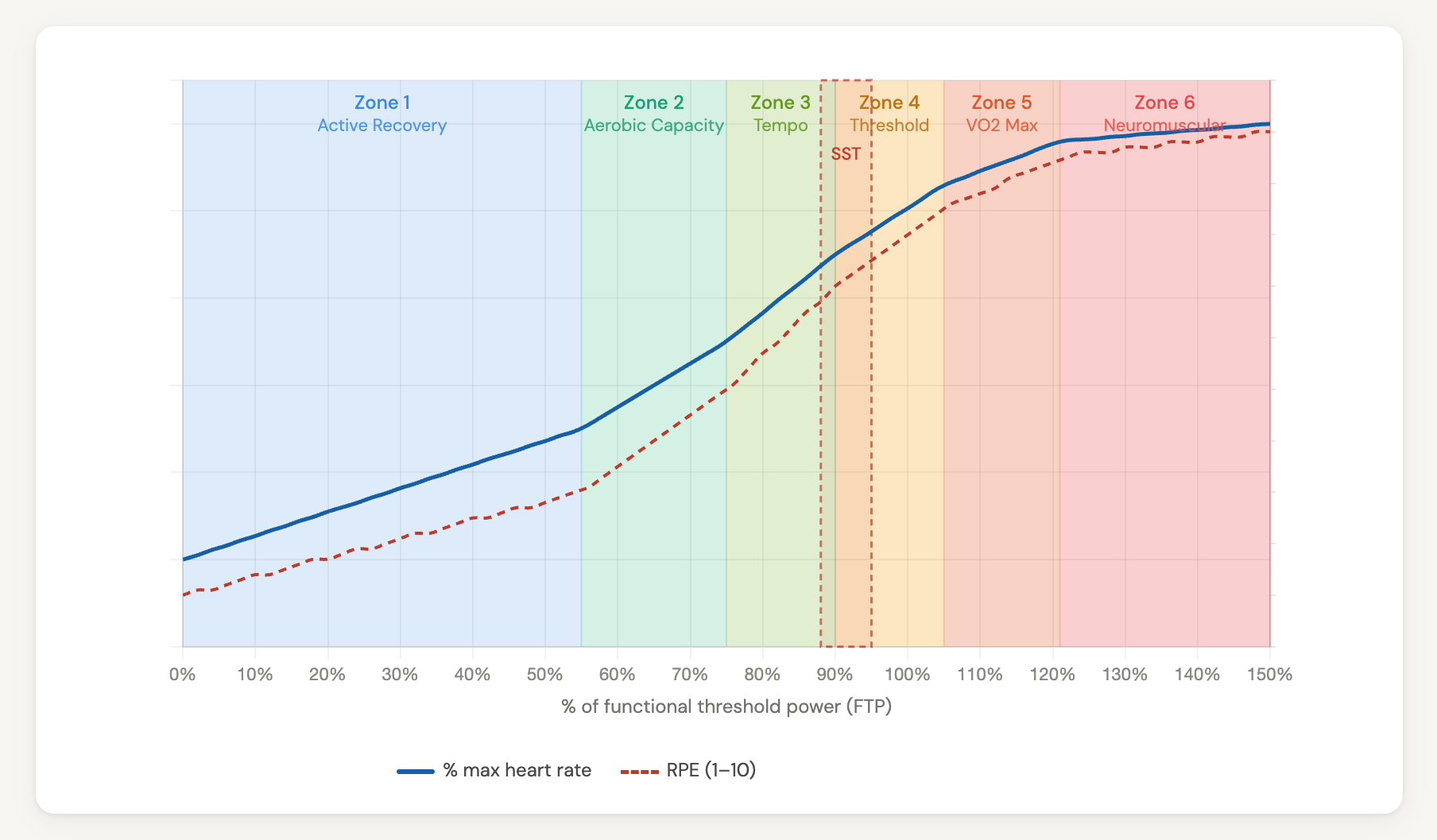
Low Threshold intervals are harder than Tempo, but you should also be more fit by the time you incorporate Low Threshold work into your schedule. As a result, the interval durations, total time-in-zone, and recovery periods between intervals are very similar. Aim for 45–60 minutes per session, but even advanced athletes should not expect to push beyond 75 minutes or complete continuous intervals longer than 60 minutes.
► Free Cycling Training Assessment Quiz
Take our free 2-minute quiz to discover how effective your training is and get recommendations for how you can improve.
Interval progression should look like this, with 5-7 minutes of easy spinning recovery between intervals in all cases:
- Start with: 2 x 20 min
- Build to: 4 x 15 min
- Progress to: 2 x 30 min
- Advanced: 1 x 60 min
Cadence and Recovery for Low Threshold Intervals
Cadence is self-selected rather than deliberately low. Most athletes gravitate toward 80–95 RPMs, but let your body find its preferred rhythm. Recovery periods are intentionally incomplete. You will not feel completely rested before starting the next interval. That’s purposeful because these efforts generate lactate, and a goal of the workout is to improve your ability to process lactate on the go.
When to Use These Cycling Workouts
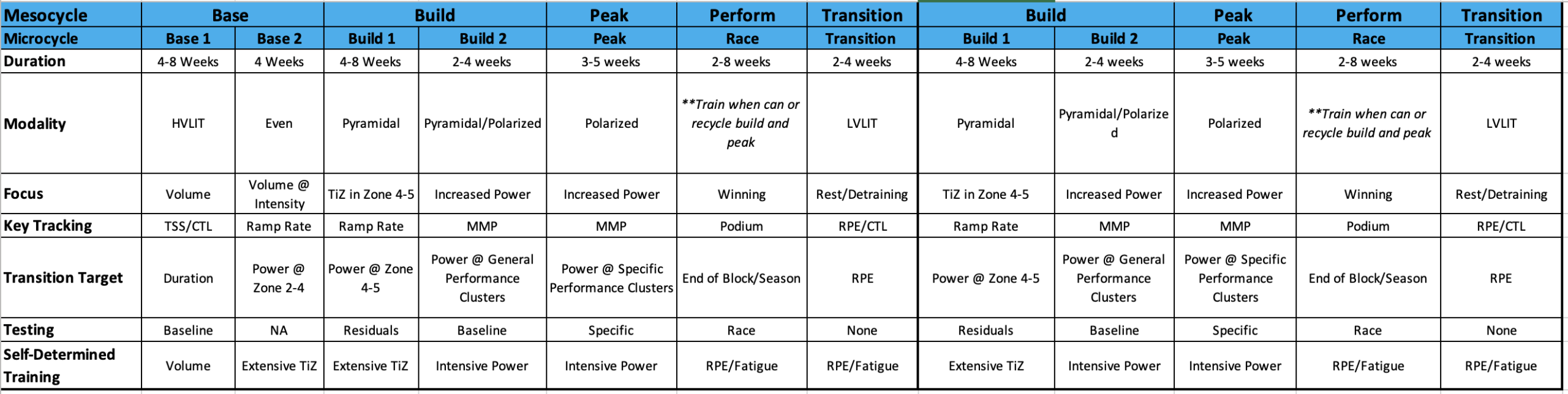
Long Tempo and Low Threshold workouts belong in your Build/Preparation phases rather than your Base/Foundation or Race/Specificity phases. For athletes peaking for summertime events, this typically means Long Tempo and Low Threshold workouts fall in late winter into spring. And if you’re preparing for two race seasons or two peaks during the year you may return to these workouts again.
I recommend doing Tempo work (Workout #1) earlier in the year, farther out from events, then shifting to Low Threshold work (Workout #2). This often translates to Tempo work about 12-16 weeks out from a goal event and Low Threshold work about 6-10 weeks out, both in the Build/Preparation phase. When incorporating these workouts into training, I recommend scheduling them twice per week as your key intensity sessions, complemented by at least one long Zone 2 ride and shorter rides if you’re riding 4-6 total sessions per week.
What’s the benefit of training “moderately hard”?
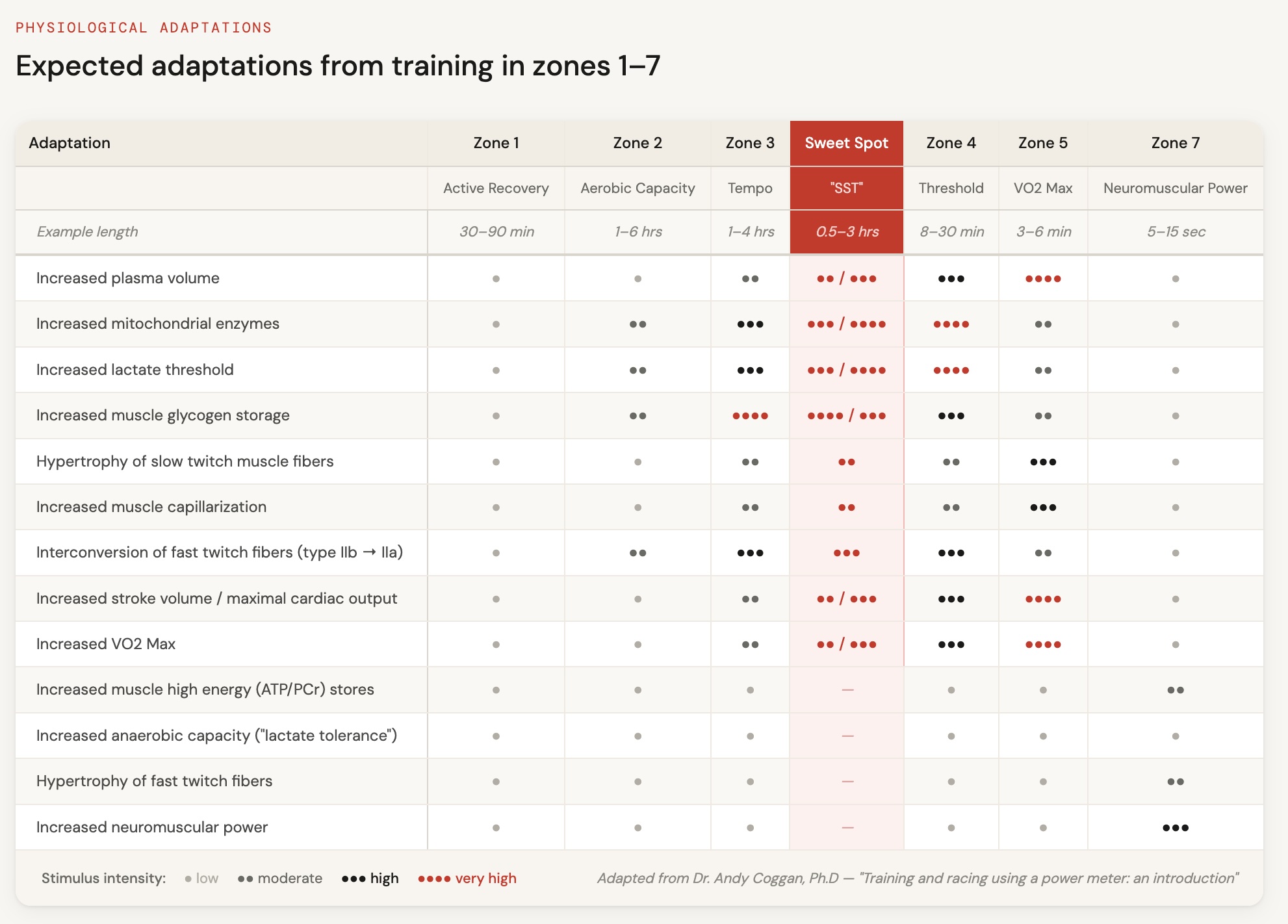
Longer, sub-threshold aerobic intervals produce significant and meaningful adaptations, especially for Time-Crunched Cyclists who have limited training time.
- Increased power at lactate threshold → Go faster at maximum sustainable intensity.
- Increased plasma volume → Deliver more oxygen to working muscles.
- Increased glycogen storage capacity → Delay glycogen depletion and/or increase carbohydrate available for high power efforts.
- Enhanced mitochondrial enzyme activity → Convert fuel to energy faster, including fat, carbohydrate, and lactate.
- Conversion of Type IIx to Type IIa muscle fibers → Make some fast-twitch fibers more fatigue-resistant.
- Meaningful contributions to VO2 Max improvement → The adaptations above help increase maximum aerobic capacity.
These aren’t marginal gains. They’re fundamental, measurable, and meaningful improvements.
Isn’t Zone 3 the dreaded “Gray Zone”?
You may have heard Tempo and Low Threshold work referred to as the “gray zone” meaning Zone 3 and even lower Zone 4 are both too hard to adequately recover from and not hard enough to make you fast. That framing is wrong.
The intensity is not wrong. The problem comes from spending too much time in these intensities week after week and all year long. Zone 3 and low Zone 4 can be time-efficient ways to increase aerobic workload, but they create sneaky, creeping fatigue. Even with a lot of Zone 3 and low Zone 4 work, your cardiovascular system can keep absorbing the load (especially if you’re sleeping and eating well). You don’t get a clear signal to rest, the way you do from a crushing VO2 max session. Nevertheless, the fatigue accumulates and before long you’re grinding yourself down without realizing it.
That’s why these two great workouts are used in the Build/Preparation phases of training rather than year-round.
The Bottom Line
Long Tempo and Low Threshold intervals are some of the most effective and underrated tools in an athlete’s training toolbox. They’re not a replacement for Zone 2. They’re not a shortcut. And they’re not meant to be done year-round. But done right, at the right time, over the course of 2-3 months, they help build the kind of aerobic engine that excels in breakaways, grinds through long climbs, and sustains a hard pace all day long on roads, trails, and gravel.
► FREE Mini-Course: Learn How to Maximize Your Limited Training Time
Learn step-by-step how to overcome limited training time and get faster. Walk away with a personalized plan to increase your performance.

About the Author
Adam Pulford
CTS Head Cycling Coach
Adam Pulford is a dedicated coach at CTS with a passion for elevating athletic performance through tailored, measurable strategies and a deep understanding of the “why” behind each athlete's goals. With nearly two decades of experience, a degree in Exercise Physiology, and a successful track record managing professional cycling teams, Adam also shares his expertise as the host of the Time-Crunched Cyclist podcast, providing actionable insights for endurance athletes.
Comments 1
Pingback: Carefully Curated Triathlon News for April 9, 2026 - TriathlonWire