
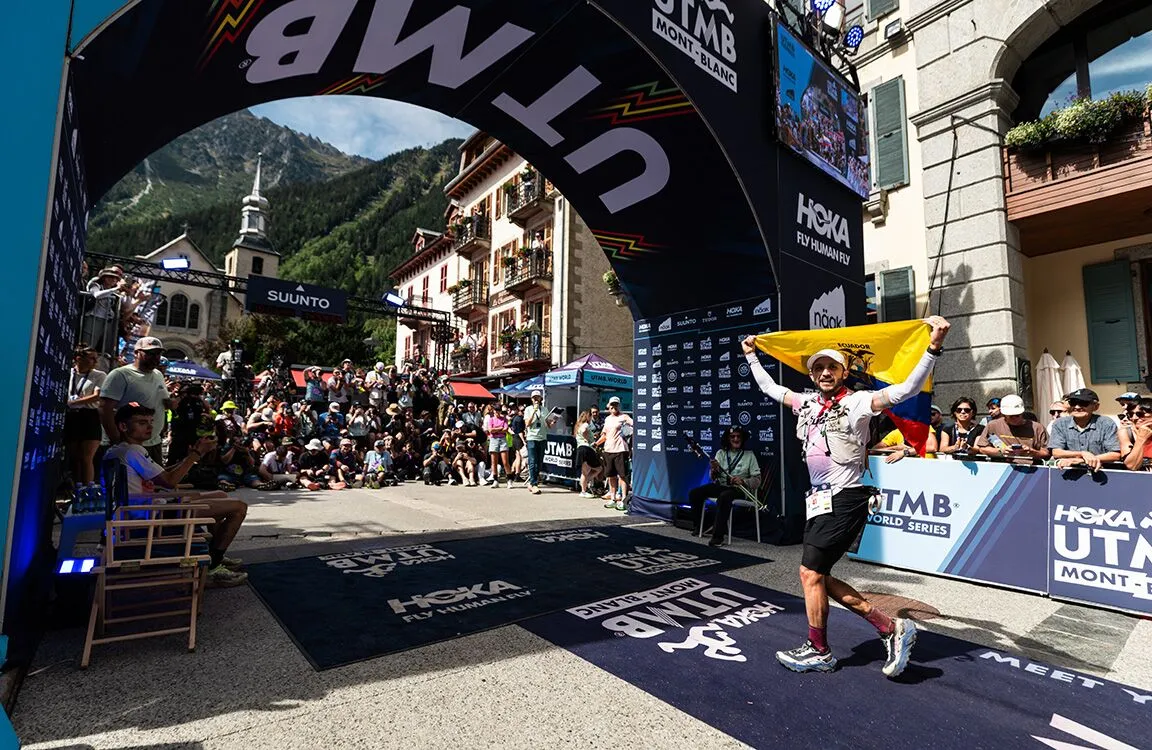
How He Did It: Joaquin Lopez Takes 80 Minutes Off His UTMB Time
Updated On
September 16, 2026
When Joaquin Lopez finished on the podium of 2024 Ultratrail du Mont Blanc it was a great personal accomplishment and a chance to showcase the talent of Latin American runners. As the professionalization of ultrarunning increases and races get more competitive, athletes must continually improve if they want to stay near the front of the field in major races. At the 2026 UTMB, Joaquin finished fifth overall, more than an hour faster than he ran in 2024 (more on that in a second). Here’s an inside look at what it took for Joaquin to run his fastest UTMB to date.
What Made UTMB 2026 Different
After becoming the first Ecuadorian and first runner from South America to finish on the podium of UTMB, Joaquin’s plan was always to return to UTMB and the battle for a podium finish in 2026. But the race wasn’t going to be the same as before.
The 2026 UTMB course was modified for weather, removing the ‘Pyramid’ section which accounts for approximately 40 min of run time for the elite men’s field. The course change and depth of the field suggested that 2026 was likely to be one of the fastest UTMB races on record, if not the fastest ever. Indeed, the top five runners finished well under 20 hrs, times that would have won any of the previous years with the exception of 2017. While UTMB Mont Blanc’s course has never been exactly the same, the 2017 course had two modifications which made it slightly shorter and less total elevation gain than the 2026 course. Regardless, the pace of this year’s race was the fastest on record, it was a race from the gun and the attrition rate in the men’s elite field attests to that fact. Joaquin finished with a time of 19:06 in fifth place.
The Plan After UTMB 2024
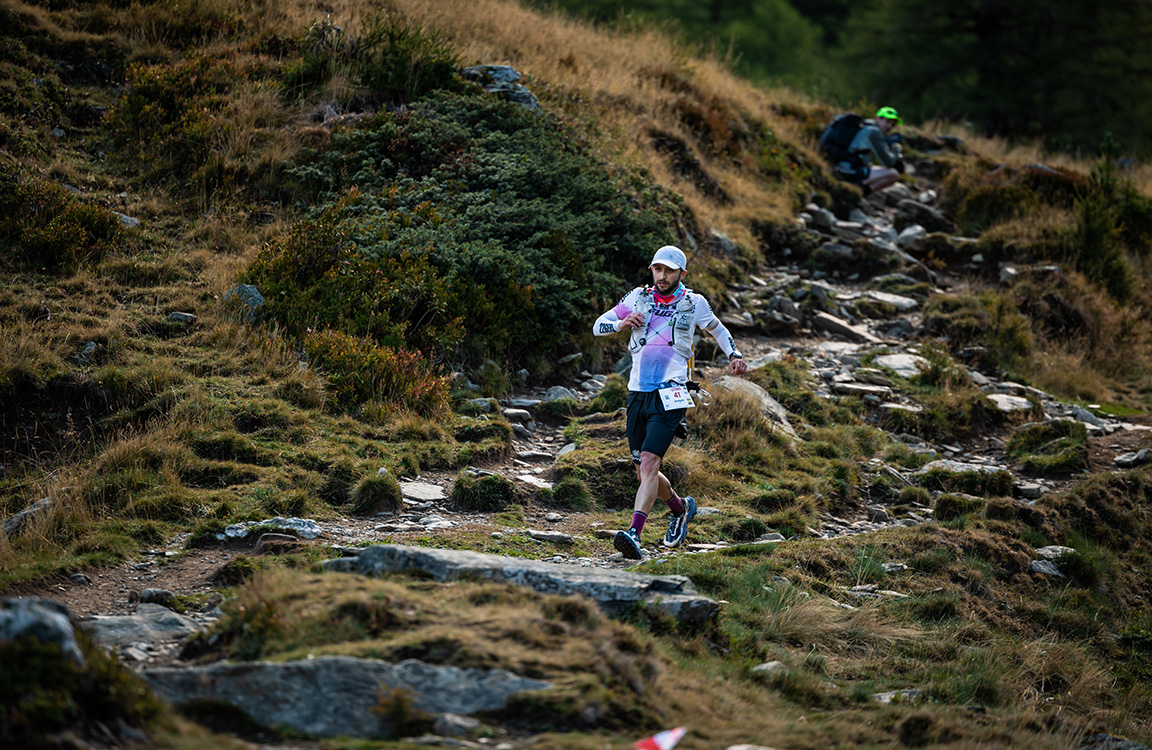
After Joaquin’s success in 2024 we pivoted to focus on shorter races in 2025. World Trail Running Championships are held biennially, so he shifted his goals to pursue the opportunity even though it was readily apparent that longer distances are his strength. It’s never been just about winning for Joaquin. He is curious, competitive and wants to continually improve all aspects of his running.
For 2025, our goals were to keep his training volume approximately the same as 2024, which had been a notable increase in volume over previous years. We integrated more high intensity blocks and he competed in only one 100-mile race, Mt Fuji, which he won and set the new course record. He competed in the 60-kilometer UTMB OCC in August and World Championships in Spain in September 2025, where he finished 13th overall. He wrapped up 2025 with a fourth place finish in the 100k Ultra-Trail Cape Town, where he gained a full appreciation for being prepared for hot temperatures.
Learning Heat Training Lessons the Hard Way
After Ultra-Trail Cape Town, Joaquin told me, “I suffered in the heat so much more than everyone I was competing against. Now I understand why we need to use passive heat protocols sometimes in training.” Prior to that race Joaquin had been resistant to utilizing this as a tool. He thought it would be too stressful to manage the logistics and he thought he usually handled hot conditions well. Some lessons are best learned the hard way.
Moving to Altitude Full Time
Joaquin and his wife decided to move back to Quito in Ecuador at the end of 2025 after having lived at sea level in Barcelona, Spain, for several years. Quito sits at 2850 meters above sea level (>9,000 feet). More than a short-lived altitude training camp, moving to altitude requires a significant adjustment period – several weeks to a few months – before an athlete can resume normal training. This affected his programming for the entire season. It’s not realistic or even possible to reach high intensity efforts at that altitude, even when an athlete is fully adapted to living at that elevation.
There was very little time spent above Zone 2 for the entire year. The exceptions were the weekends when Joaquin and his wife would travel to a family farm several hundred meters lower and when he traveled to Europe for a couple of summer races. As a result, we really couldn’t use the blueprint from his 2024 build up to UTMB as our guide for 2026.
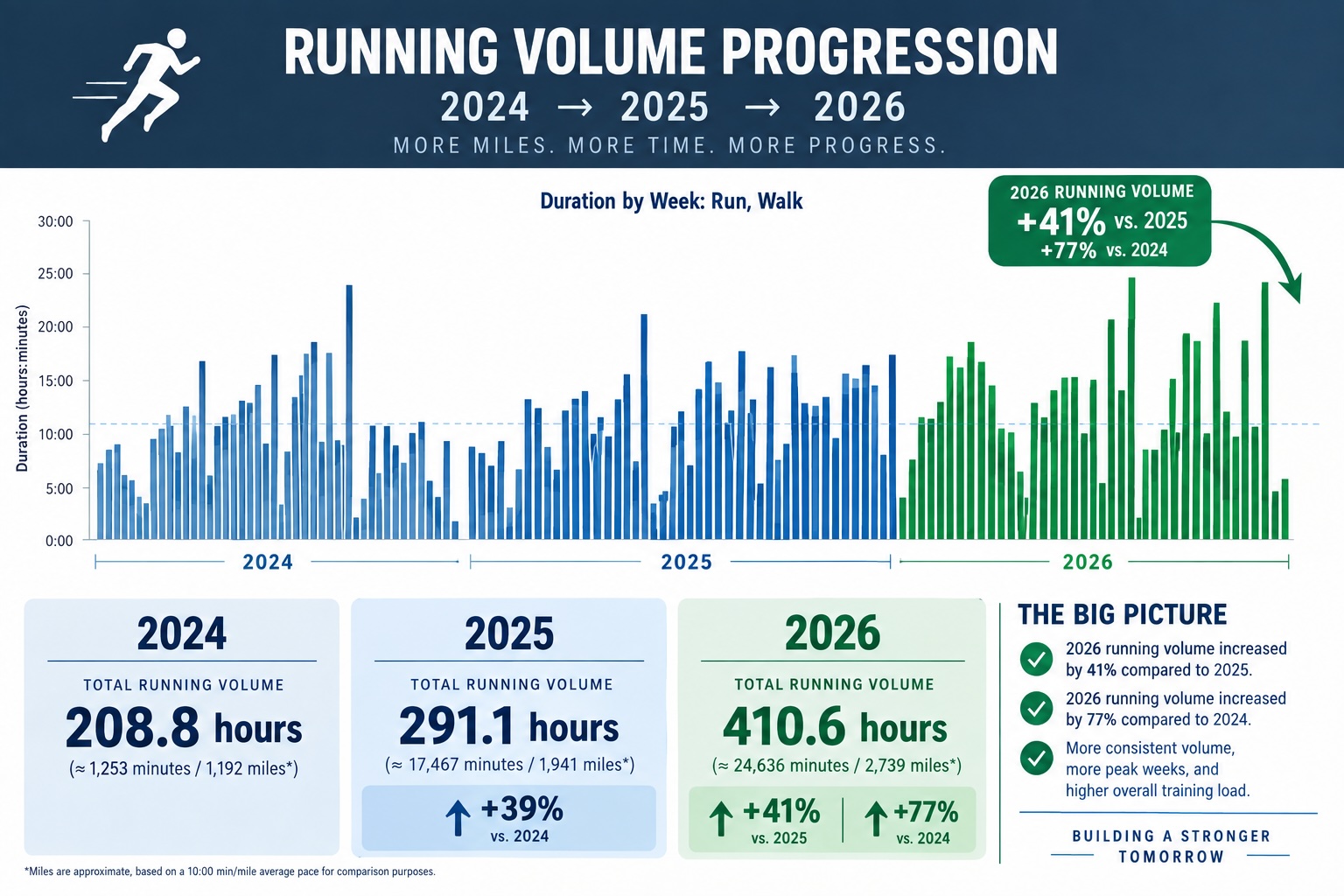
We largely reinvented Joaquin’s plan to match living at a very high altitude. While the intensity was lower, the volume was higher. Like many ultrarunners, Joaquin progressed over several years to being able to handle more weekly volume. For comparison, he averaged 9.5 hours/week in 2024 from January through UTMB in August. In 2025 that average increased to 10 hrs/week for the same period, and in 2026 that average was 11.75 hrs/week.
Joaquin’s Pre-UTMB Race Plan
In the first half of 2026, Joaquin raced one 100-mile race and a handful of others, including Snowdonia, where he placed second and beat the previous course record time. Snowdonia is a very technical race, so he was forced to move slowly. This reduced the muscle damage compared to a faster race, which meant he recovered relatively quickly and was back to training within a couple of weeks. He competed in Skyrace Ibarra at the end of June and the Quito Trail 80km race in early August. He had raced the 50k distance at Quito Trail in 2024, and he stepped up in distances because we decided the longer race more closely matched the demands of UTMB. In addition, he had recovered quickly from Skyrace Ibarra, potentially because of the increased training volume and reduced overall training intensity after his move to Ecuador. He won the Quito Trail 80km race with ease and without going too deep.
Training and Nutrition Changes for 2026
More training volume and more time at Zone 2 seemed to help with Joaquin’s durability and even his speed. But there were some other race-specific aspects to his UTMB preparation that needed attention. We added a new nutritionist to his team, Meredith Terranova, to dial in some slight adjustments. We also continued to lean more heavily on strength training as a fundamental component of his training and utilized some uphill treadmill work, both of which represented significant changes from his 2024 training.
The idea behind the uphill treadmill training was to improve his uphill economy while removing some of the muscle damage results from downhill running. Basically, we emphasized training the adaptations that take longer to develop but reduced the recovery time needed by removing some of the descending from his weekly training regimen. We also utilized a passive heat protocol and he spent about three weeks before UTMB in Europe, the first two at a relatively high elevation so he could maintain his high-altitude adaptations and also be away from the hustle of the Chamonix valley.
Training for Speedy Start to UTMB
The last major focal point was improving his UTMB race start. The course begins with an approximate 6-kilometer flat, fast asphalt start before it begins climbing and resembles the more better-known aspects of the race: lots of mountainous single track. In training, we purposely had Joaquin complete a warmup an athlete would typically use for a much faster 10k road race, then had him rest for 15-20 minutes after the warmup to mimic UTMB’s pre-start staging.
► Free Ultrarunning Training Assessment Quiz
Take our free 2-minute quiz to discover how effective your training is and get recommendations for how you can improve.
After that, he practiced a fast, flat 10k distance, usually with a fully loaded running vest. The last time he did this was one week before UTMB and he followed that with another 14 kilometers, which took him well past the first 20k of the course. He finished that training session saying he had never felt so good on that section of the course. Needless to say this was a terrific confidence boost for both of us.
Joaquin’s Fastest UTMB Race Day
I had the opportunity to be in Chamonix this year and our pre-race conversations played out as perfectly as they could have. A few days before the race, Joaquin’s level of confidence was unmatched. I remember him saying, “It means so much to me that you will be there, that I will have an entire team on the course this year, just like my competitors around me always have. It’s always just been Maria (Joaquin’s wife). Now I will have a full team and it will be amazing.”
I told him that I knew he had all the tools to reach the podium again, and we both fell silent. A younger Joaquin would have doubted it, but this time he quietly acknowledged that he knew it was possible, that he saw how it could be this time. It was a really powerful moment for both of us.
I was able to be part of the crew throughout the entire race and Joaquin put himself in the mix from the beginning. In 2024, he was 34th at the first timed checkpoint. In 2026, he was 10th at the same point he was never any farther back than 12th at any point in the race.
“Is this okay?!” Maria asked me as we waited at the first aid station. “Yes,” I assured her, “We practiced this.” Races are raced from the beginning these days, you have to take those risks right away if you are going for a podium spot. Admittedly I was a little nervous, but it was our plan so we went with it.
Enjoying This Article? Get More Free Running Training Tips
Get our coaches' best training advice, delivered straight to your inbox weekly.

At the second crewed aid station, Joaquin entered in seventh place and left in fifth place, picking up two spots by being incredibly efficient in the aid station. The next section was historically his best, with plenty of climbing and night running, his two key strengths. He absolutely went to battle there, making it up to the third position and running with Baptiste Chassagne, who went on to finish in second place. He was able to maintain his third-place position through Trient, approximately 144km into the 174km race.
He had slipped into fourth place when we saw him at the last crewed aid station in Vallorcine. “I am suffering so much Darcie,” he said to me. He is not an athlete who is overly dramatic, so to hear him say that evoked a lot of emotions. I think most of us can’t imagine that level of self-imposed suffering. His plan from that point was to keep racing to the finish, no matter what. He was starting to cramp, it had been warm. Even though we had utilized a heat training protocol, warm temperatures still affect all athletes. He continued to battle and was caught by just one other competitor before reaching the finish line in Chamonix.
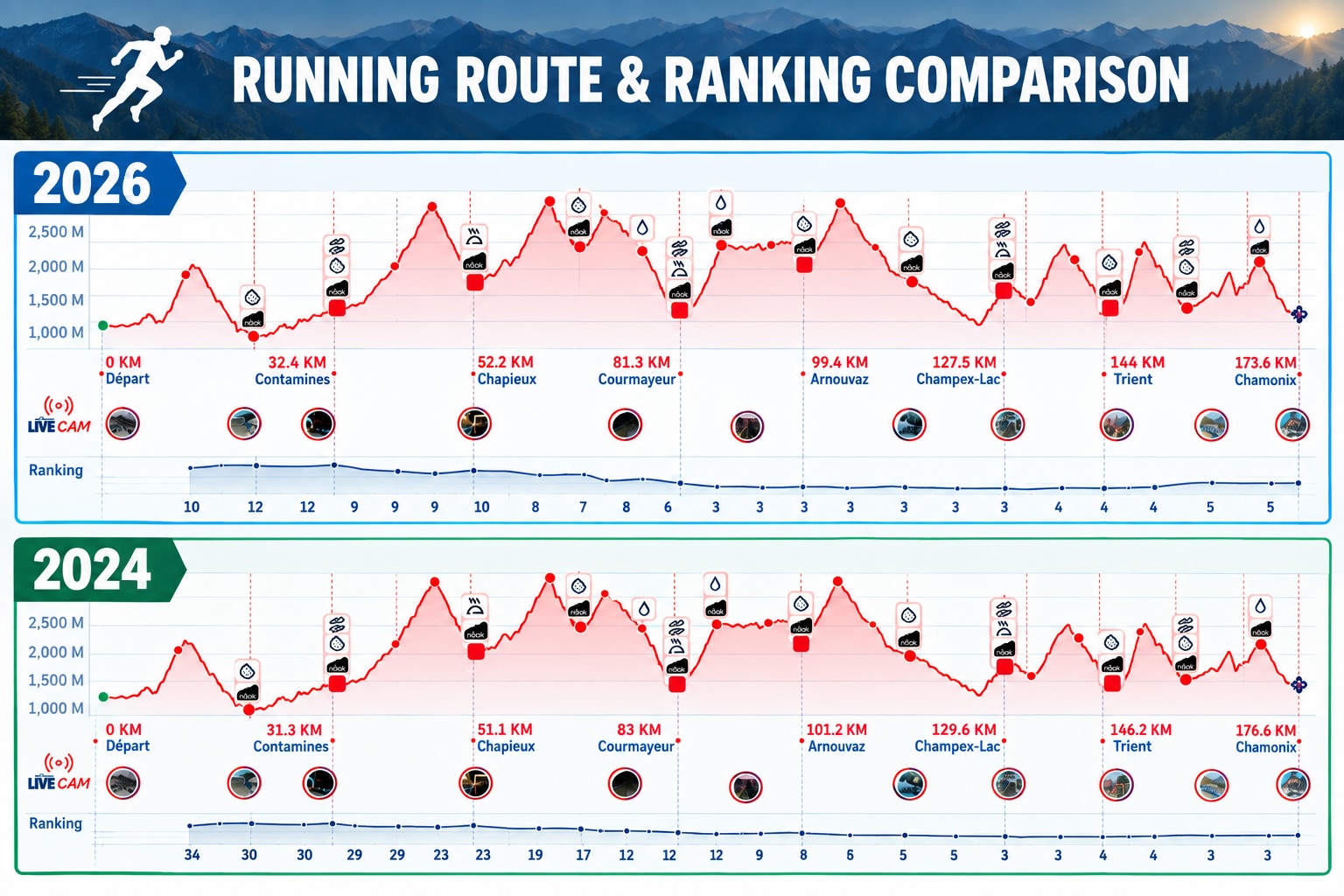
After forcing my way through to the finish area, I was overcome with pride for Joaquin. He said to me with tears, “I tried my very best, I really gave all that I had.” I realized part of him just wanted me to know how deep he went for this race. I was humbled to tears. We hugged and I told him, “I know, I watched you all the way.” He said that he was prouder of that 5th place finish than he was of his 3rd place two years ago. He ran 80 minutes faster. Without the Pyramids section, which had been removed due to weather, we estimate the race was 40 minutes faster than the 2024 race. How could you not be proud of that result?
Without a doubt, Joaquin’s 2026 UTMB was an incredible performance. There is never a perfect build up to any race, but his preparation went incredibly well. We are still learning as a team and we have big plans for the future. In a way, this was as much a beginning as it was a capstone to a tremendous year of dedication and growth.
About the Author
Darcie Murphy
CTS Pro Ultrarunning Coach
Darcie Murphy is a seasoned CTS Pro Coach with a deep passion for endurance sports, blending her extensive competitive experience in cycling and trail racing with a degree in Health Education to guide athletes toward their peak performance. With a unique focus on balancing the demands of life with athletic aspirations, she fosters a collaborative coaching environment that empowers individuals to push their limits and thrive both physically and mentally.