
Event Cancelled? Here’s How to Win Cycling Segment Challenges
Updated On
March 7, 2025
By Chris Carmichael,
Founder and Head Coach of CTS
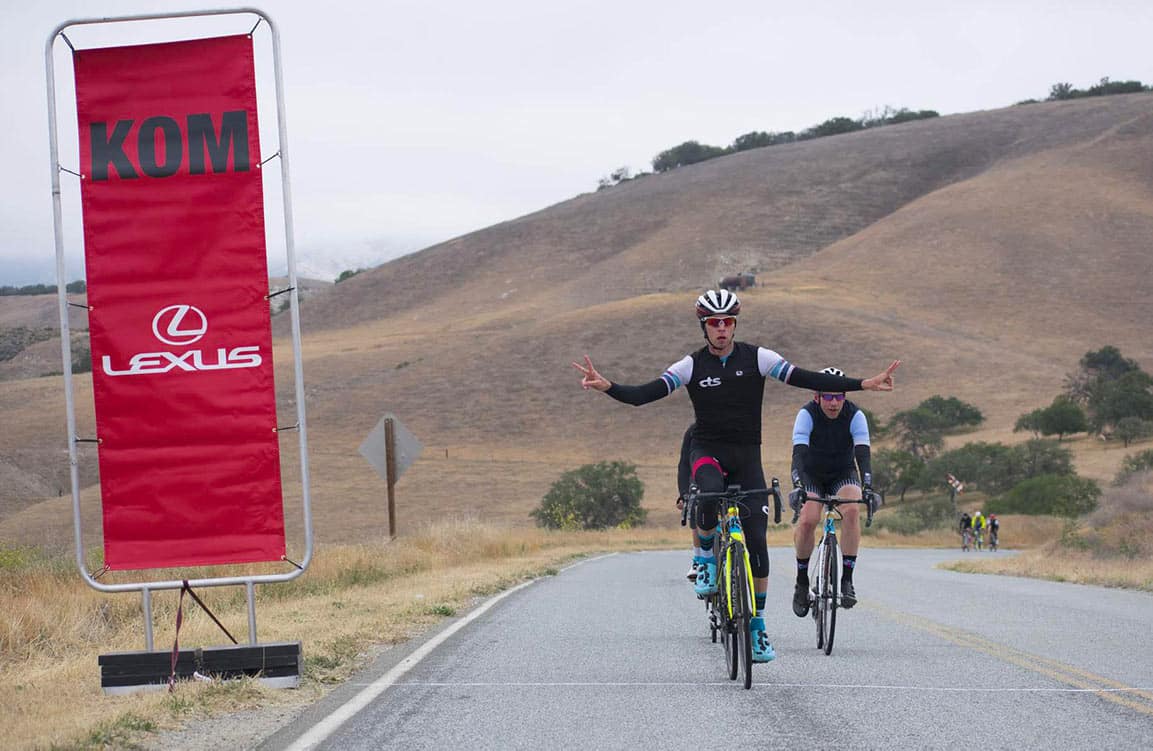
With in-person bike races and gran fondos cancelled due to the pandemic, event directors are getting creative to keep the community engaged, motivate people to ride, and offer cyclists opportunities to compete. Some are hosting virtual races and challenges, and others are creating cycling segment challenges on known race and gran fondo courses, or a local climb or time trial segment. If you’re getting ready to go for the win or set your personal best time on the route, here are some tips to go faster.
Cycling segment challenges can be set up multiple ways. For legacy events with known courses, riders might be challenged to ride the whole route or portions of the route, with the leaderboard based on times recorded via Strava or RidewithGPS on a specific day or within a date range. Other challenges may be on a popular local climb or traffic-free stretch of road. The great thing about these challenges is that they can be done while respecting physical distancing guidelines.
Here’s how to set your fastest time and get to the top of the leaderboard.
Rest up so you’re fresh
The day after a hard interval workout might not be the best time to go record your time for a segment challenge. It’s better to pick a day when you are more rested. This could mean waiting until the end of a rest week, or at least after a few days of light training. If the segment is part of a longer ride, try to arrange the ride so you hit the segment early, when you are less fatigued.
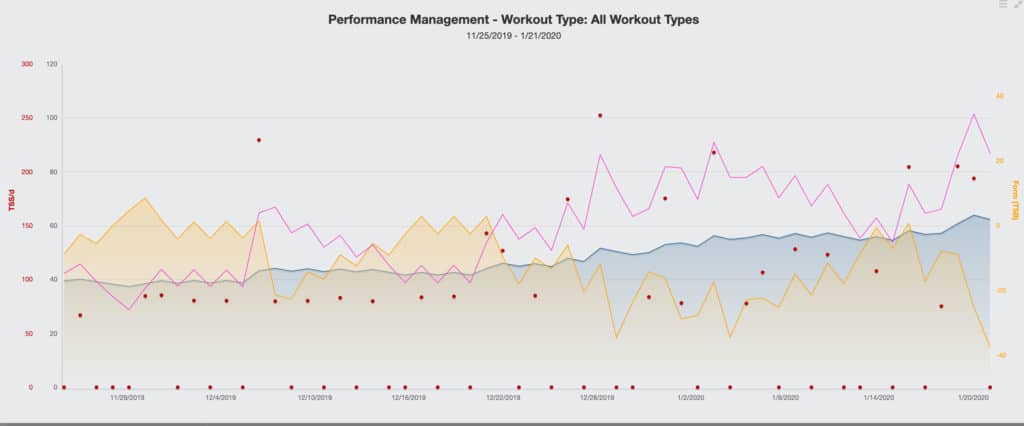
Some segment challenges are set on a specific day, in which case it’s important to adjust your rides in the preceding days to reduce fatigue. If you are using Training Peaks to track your fitness, take a look at the Performance Management Chart. The pink line represents fatigue (Acute Training Load), the blue area represents fitness (Chronic Training Load), and the yellow line represents form, or how you’ll feel and perform (Training Stress Balance*. Today’s CTL minus today’s ATL gives you a number for tomorrow’s form). Your best performances are likely to occur when your Training Stress Balance© is between zero and +15.
Get the wind behind you
When the wind is in the right direction to give you a tailwind on the challenge segment, that’s a good day to go for it! In many places, winds gradually pick up during the afternoon. On canyon climbs in the mountains the temperature gradient often leads to a tailwind going up.
When you know the weather patterns in your area you can use them to your advantage. For instance, Cheyenne Canyon is one of the popular local climbs in Colorado Springs. The route ascends 1200 feet in elevation over 3.1 miles, averaging 7% with a few steep ramps in the double digits. I’ve been riding it for more than 20 years and found that if you have a tailwind at the bottom you’re likely to have a headwind on the steepest section, and that headwind halfway up costs you more time than you gain with a tailwind early on.
Feel Stronger in 6 Weeks — No Matter Your Age
Climbs feel steeper? Recovery slower?
You’re not done getting faster — you just need a smarter plan.
The 6-Week Masters Power Build Coaching Program is designed for cyclists 50+ who want to boost power, recover faster, and ride stronger — all with expert 1:1 coaching.
- Personalized 6-Week Training Plan
- 1:1 Coaching + TrainingPeaks Premium
- Mobility & Strength Bonus Guides
💪 Guarantee: Stronger or free.
Start your 6-week journey for $149► Free Cycling Training Assessment Quiz
Take our free 2-minute quiz to discover how effective your training is and get recommendations for how you can improve.
Warm up, but ride when it’s cool
Cool weather helps slow the increase in core temperature that will eventually cause you to slow down. Get an early start and set your time in the morning when temperatures are cooler and winds are likely to be calm. However, remember to warm up your body before you reach the segment. Particularly for Masters riders over 35 years old, I recommend riding 20-30 minutes before the segment and including a few efforts that get you to lactate threshold power for about 5 minutes and some shorter 30-60 second efforts above threshold. You want your aerobic system warmed up and your body primed for producing processing high amounts of lactate before you really hit the gas for a long, hard effort.
Get a rolling start
For a better chance of setting a great segment time, start with speed! Getting up to speed at the beginning of a segment robs you of precious seconds. Strava or Training Peaks can show you where you’re losing and gaining time. At the same time, be careful not to work too hard before the segment starts. With climbing challenges, I see a lot of people attack the bottom of climbs so aggressively that they blow up and slow dramatically halfway up.
Ride smarter, not just harder
If you’re riding a favorite segment, you’ve likely ridden it many times. Learning where to drive the pace and where to ease up is crucial. Finding the right balance can take time, but you can lose more time slowing at the end of a segment – whether it’s a climb or on flat ground – than you will gain by going harder at the beginning. Take a look at your cadence, too. Some people get so focused on the effort they stay in a given gear too long, not realizing that perceived exertion is sky high but cadence and power have both dropped. Get your feet moving and you may be able to pick the power back up, or at least keep it from dropping further. It’s also important to know exactly where the start and finish points are and to roll all the way through the end of the segment; don’t give up early.
* Training Stress Score (TSS), Acute Training Load (ATL), Chronic Training Load (CTL) and Training Stress Balance (TSB) are registered trademarks of TrainingPeaks.
► FREE Mini-Course: Learn How to Maximize Your Limited Training Time
Learn step-by-step how to overcome limited training time and get faster. Walk away with a personalized plan to increase your performance.
"*" indicates required fields
About the Author
Chris Carmichael
CTS Premier Cycling Coach
Chris Carmichael, the Founder and Chief Endurance Officer of CTS, has revolutionized endurance coaching since 2000, making world-class performance strategies accessible to athletes of all levels. A former Olympic cyclist and the U.S. Olympic Committee's Coach of the Year, Chris combines decades of innovative coaching experience with a commitment to educating a network of elite coaches, ensuring that CTS remains the go-to authority in personal fitness and nutrition.