
Top 3 Advanced Cycling Skills for Group Rides and Races
Updated On
March 7, 2025
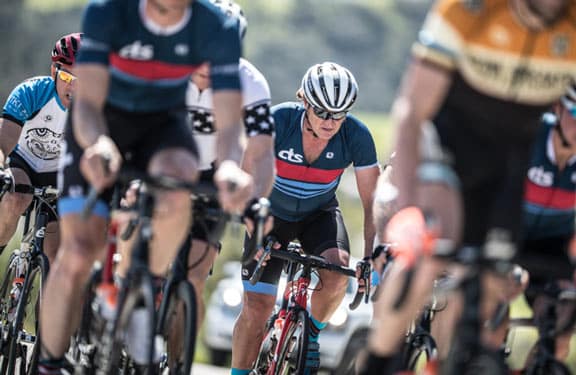
I have talked before about proper group ride etiquette and skills that make you a welcome rider in the group, but there are more advanced skills you can utilize to drop your new riding mates on race-like group rides, and also drop your competitors in races. I want to emphasize these tactics are meant to be practiced at aggressive group rides that act as practice races, not your local group coffee cruise – don’t be “that guy.”
Local group rides are the heart and soul of amateur cycling. These Saturday morning and Tuesday evening rides are where new riders learn to draft, where juniors cut their teeth, and where local bragging rights are earned. Most of all they are a ton of fun and a great place to practice race tactics, without the pressure and expense of pinning on a race number.
1. How to Make Someone Take a Pull
There are plenty of reasons why riders skip pulls by sitting on at the back of a paceline, and in some cases it’s perfectly acceptable and the right thing to do. For a rider who is challenging himself/herself to ride with a group of faster athletes, sitting on may be all they can do. If they’re learning to ride a wheel and getting a great workout, people should be encouraging them and complimenting them for doing exactly what they’re doing. But…
If you’re in a more competitive group ride situation and someone who is strong enough to pull is simply refusing to, there are ways to get them into the rotation. As you drift to the back of the recovery line after taking your pull at the front, slow down more rapidly than you normally would. You’re trying to get behind the hanger-on, but if he sees you coming back gradually, he’ll slow down to open a gap he wants you to fill. If you slow down more and go backward more quickly, he’ll stay on the wheel he has and you can get on his wheel. From this position you can encourage him to get into the pull line.
There’s a chance the rider you’re trying to get back into the rotation will counter your efforts by dropping off the back of the paceline to pressure you into coming around him. He’s banking on the fact you don’t want to risk getting dropped yourself, and when you come around he’ll regain his tail-gunner position and continue skipping pulls.
That’s when the next group ride skill comes into play.
2. How to Ditch a Wheel-Sucker
If you can’t get someone to work with the group and you don’t want to pull them around all day, you have to find a way to snap them off the end of the group. But because you’re working with a larger pack and not a small breakaway you can’t just attack the wheel-sucker and accelerate away from them. The draft at the back of a big group is too big; if the speed isn’t enough to drop them, then you have to get them out of that draft to make them vulnerable.
Keep in mind, I’m specifically talking about a competitive, aggressive group ride or race in this example. I’m don’t mean to suggest that everyone in a group ride has to do equal work or otherwise be labeled a wheel-sucker. There are plenty of great group rides where some riders work hard at the front while a lot of others follow behind to chat and socialize. And even in races, there are times when you’re SUPPOSED to sit on and be the one who doesn’t pull through. When that’s the case, expect these strategies to be employed against you, too.
But back to how to drop the wheel-sucker. Instead of dropping behind him when you reach the end of the paceline, move into the normal position in front of him, right where he wants you to go. Then open up a gap and start dropping off the back of the paceline instead of continuing in the rotation. It’s often referred to as “taking someone off the back”. Sometimes taking someone off the back is accidental, in that a rider couldn’t hold the wheel ahead of them and a gap opened that they couldn’t close. As a result, the person or people behind that unfortunate rider were “taken off the back”. In this case, you’re doing it on purpose.
The key to taking someone off the back is to let a sizeable gap open, but not a gap so sizeable you can’t accelerate across it. If the wheel-sucker gets nervous he’ll come around you and then both of you accelerate back to the group. This isn’t a failure, it is just part of the process. Those accelerations will wear out the wheel-sucker and make him easier to drop. If the rider doesn’t come around you, but instead sticks to your wheel, accelerate hard to cross the gap and get back into the draft. When the tactic works, you leave the wheel-sucker out in the wind. He might be able to accelerate back onto the tail of the group a few times, but eventually you’ll snap him off the back.
► Free Cycling Training Assessment Quiz
Take our free 2-minute quiz to discover how effective your training is and get recommendations for how you can improve.
Bonus tip: it’s best to make this acceleration in the saddle if you can. When you stand to accelerate, the wheel-sucker knows exactly what you’re about to do. But when you rev your cadence to bridge the gap seated, you can catch him off-guard.
3. How to Break Into the Line
Sometimes it will be you who gets caught out in the wind and there’s a long line of riders all strung out. You may not want to go all the way to the back of that line, because the riders at the back are the ones who are most likely to let a gap open up. You don’t want to get caught behind the eventual split. That means you have to break into the line somewhere in the top 10-20 riders.
Often in competitive group rides – and certainly in races – the riders in the line aren’t going to want to let you in. The maneuver you have to perform to break into the line is kind of like parallel parking. When you get alongside one rider (let’s say the drafting line is on your right) and want to end up on his wheel, you have to gradually move right as that rider passes you. You’re moving over on the rider behind, ideally while your saddle is still well ahead of his handlebars. At this point, that rider behind you doesn’t have a lot of choices. You’re too far ahead for him to realistically reach out and put a hand on your hip (and most riders won’t want to, anyway), and he will be motivated to protect his front wheel from going into your spokes and derailleur. The only option you’re really leaving him is to coast for a second and let you in.
Just be careful not to move over on someone too quickly. The goal is not to take out their front wheel; you just want to assert the fact that you’re coming in. Some riders will defend the space by accelerating to get their elbows even with your hips, a position from which they can bump you safely. At that point, you have to decide if it’s worth fighting for that wheel or moving back to find someone less eager to defend their position. Be quick about it, though, because you don’t want to be hanging out in the wind any longer than you have to.
Obviously, tactics like these are only appropriate for races, training races, and certain types of group rides. If you’re on a social group ride at a moderate pace, it’s not cool to take people off the back or break into the line. But if you’re going to participate in race-like group rides or competitions, these are essential skills you need to master.
Have a great week!
Chris Carmichael
CEO/Head Coach of CTS
► FREE Mini-Course: Learn How to Maximize Your Limited Training Time
Learn step-by-step how to overcome limited training time and get faster. Walk away with a personalized plan to increase your performance.

About the Author
Jim Rutberg
CTS Pro Endurance Coach
Jim Rutberg is a seasoned coach and endurance athlete with over two decades of experience, having co-authored ten influential books on training and nutrition, including “The Time-Crunched Cyclist”, "Training Essentials for Ultrarunning", and "Ride Inside." His unique blend of academic knowledge, elite racing experience, and hands-on coaching at CTS positions him as a leading expert in endurance sports, dedicated to helping athletes reach their highest potential while balancing family life and personal passion for cycling.
Comments 3
Pingback: Cycling Group Rides: How to Stop Getting Dropped - Chris Carmichael
A couple of other suggestions. one is too gutter the wheel sucker this will make the draft disappear and they will have to work harder and eventually they will drop. If you are working and they try to gutter you or you can’t get a draft from the group you can move to the front of the pace line and move back and you will then start getting a draft.
Thanks Chris, always a learning experience when I read your articles.