

How to Scale Pro Cyclist Training To Your Ability Level
Updated On
November 9, 2026
CHOOSE YOUR FORMAT
►WATCH THE VIDEO
►LISTEN TO THE PODCAST
►READ THE ARTICLE
How to Scale Pro Cyclist Training To Your Ability Level
If your social media feeds look anything like mine, you’ve seen a wave of posts lately breaking down the “key workouts” of WorldTour riders. One getting a lot of attention is 2026 UCI Road World Champion Brandon McNulty’s 3×60-minute “metabolic” session. Pro cyclist training posts are fun and provide insights into what the pros are capable of, but it’s important for age-group athletes to understand the context of their training before applying similar workouts to their own programs.
A pro’s key workout is not the secret to their success. There is no one magic workout that makes you fast or turns you into a world champion. Fitness comes from a lot of workouts, over a lot of years, at all intensities. That doesn’t mean you can’t learn from what works for the world’s top athletes. Below, I’ll analyze three posts about elite athlete workouts, one each from: Brandon McNulty, Mathieu van der Poel, and Mads Pedersen. We’ll look at the pros and cons and considerations behind a few of these sessions, and what you should apply to your own training.
Always Remember Individuality and Specialization
There are general physiological principles that apply training, but at the individual level there’s a lot of variation, especially on the anaerobic side. Coaches Andy Coggan and Tim Cusick have shown this nicely in their presentations about the WKO software. At FTP intensity and longer duration efforts, maximal pacing is fairly predictable from one rider to the next. In other words, the more aerobic the effort, the more predictable it is. But during short, highly anaerobic efforts, two riders with identical FTPs can look completely different.

That’s why individualization and specialization matter, and why the idea of “one workout to rule them all” is an oversimplification. What works for your athlete phenotype and personal characteristics (muscle fiber type distribution, etc.) and applies to the sporting goals you have (criteriums vs. time trials vs. epic gravel races) may be different than what works for another athlete.
The examples below of pro cyclists’ “key workouts” fit into this paradigm. Mads Peterson excels in group sprints at the end of Grand Tour stages and Spring Classics. Brandon McNulty, although an all-arounder and threat to win in a lot of different races, was a World Champion and multiple-time US National Champion in the Time Trial before winning Road Worlds. And Matthie Van Der Poel is, well… MVDP. Their key workouts reflect their strengths, their roles within their respective teams, and their career goals.
Pro Cyclist Training Example 1: Brandon McNulty’s 3×60-minute metabolic session

The workout
- Instagram post from sisu_endurancelab
- Warm-up, a main set of 3 x 60 minutes with 10 minutes of recovery between, then a cool-down
- About four hours total
- Intensity around 75% of FTP, roughly 310–320 watts for him, described as high Zone 2 or Low Tempo
- Moderate effort, RPE 6–7 out of 10.
It’s a great workout. There’s nothing wrong with it. The problem is how it’s being presented.
Problem #1: Zone 2 is getting over-hyped
The breakdown accompanying this session leans hard on the benefits of Zone 2: lactate control, fat oxidation, mitochondrial stimulus, low recovery cost. None of that is wrong, it just overemphasizes one part of the picture.
Here’s the reality: you stimulate mitochondrial development at all intensities, not just Zone 2. Many of the benefits associated with Zone 2 intensity happen from training at other intensities too. Zone 2 matters, and every WorldTour rider does a lot of it, but it isn’t the only place adaptation happens. This is important for age-group athletes who don’t have as much time available for training. You can make great progress with lactate control, fat oxidation, mitochondrial stimulus, and more with a higher percentage of training time spent at higher intensities. The key for age groupers is to incorporate enough recovery between training sessions because the recovery cost is higher when the intensity increases.
Problem #2: Zone 2 intervals aren’t better than steady Zone 2
McNulty’s metabolic workout is an example of “Zone 2 Intervals”, as opposed to three hours of steady Zone 2 riding. There’s nothing wrong with taking a few breaks during a steady Zone 2 ride, but I haven’t seen compelling evidence that those breaks improve the training session or impact the adaptation. For the age grouper, six 10-minute blocks at Zone 2 intensity with a minute between them are not superior to an hour of steady riding. They’re two ways of doing the same thing.
I get why this one went viral. A world champion’s training session packaged as a slick, structured “metabolic workout” sounds a lot more exciting than “go ride steady for four hours.”
► Free Cycling Training Assessment Quiz
Take our free 2-minute quiz to discover how effective your training is and get recommendations for how you can improve.
The Data Behind Zone 2 Intervals vs. Steady Zone 2
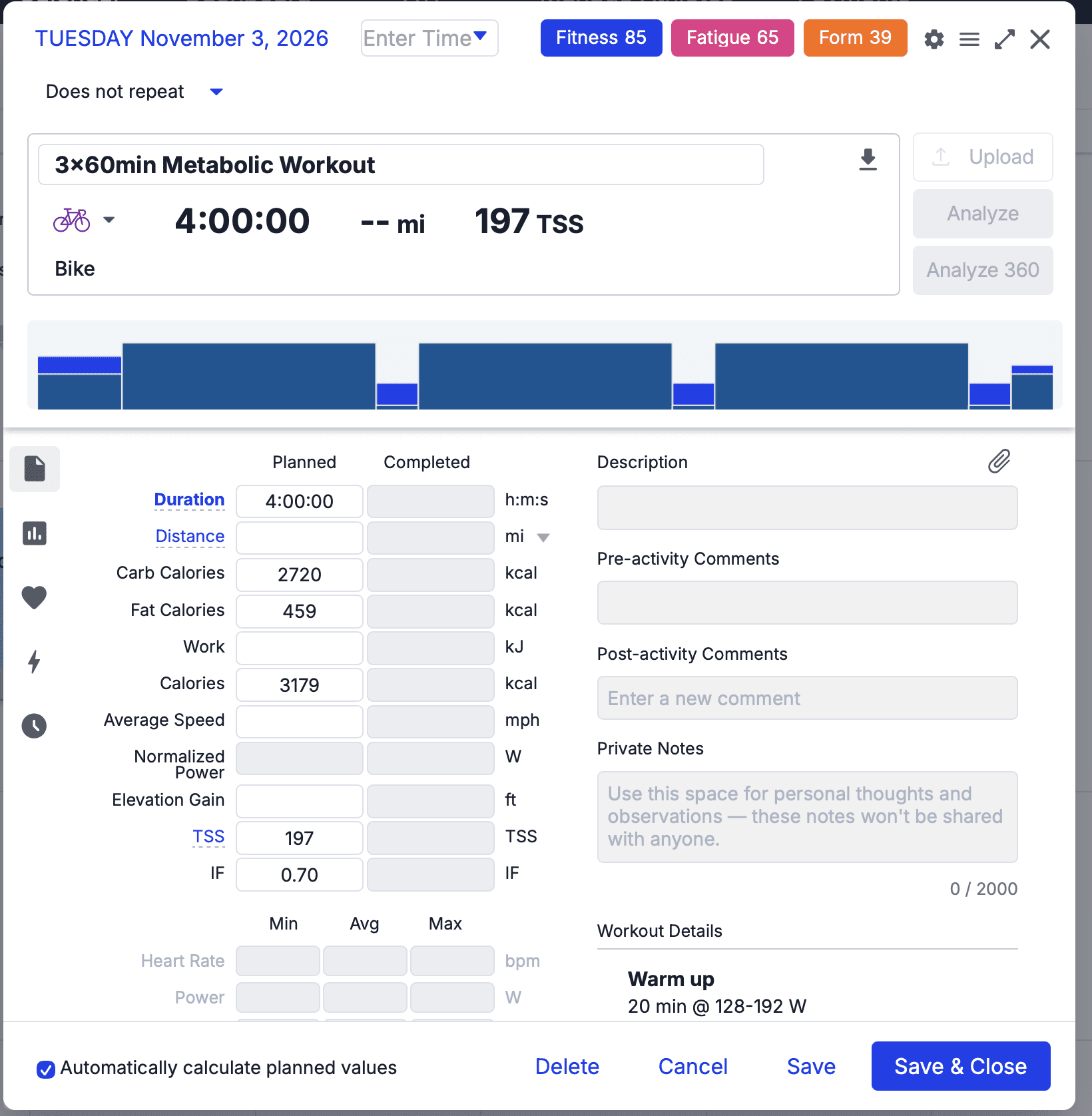
I built two workouts in my training software, both at the same average intensity:
- The 3×60, as written: warm-up, three 60-minute blocks at 75% of FTP with 10 minutes recovery between, cool-down.
- A steady endurance ride: the same warm-up (40–60% of FTP), then 3.5 hours continuous at 70–80% of FTP, averaging 75%, then a cool-down.
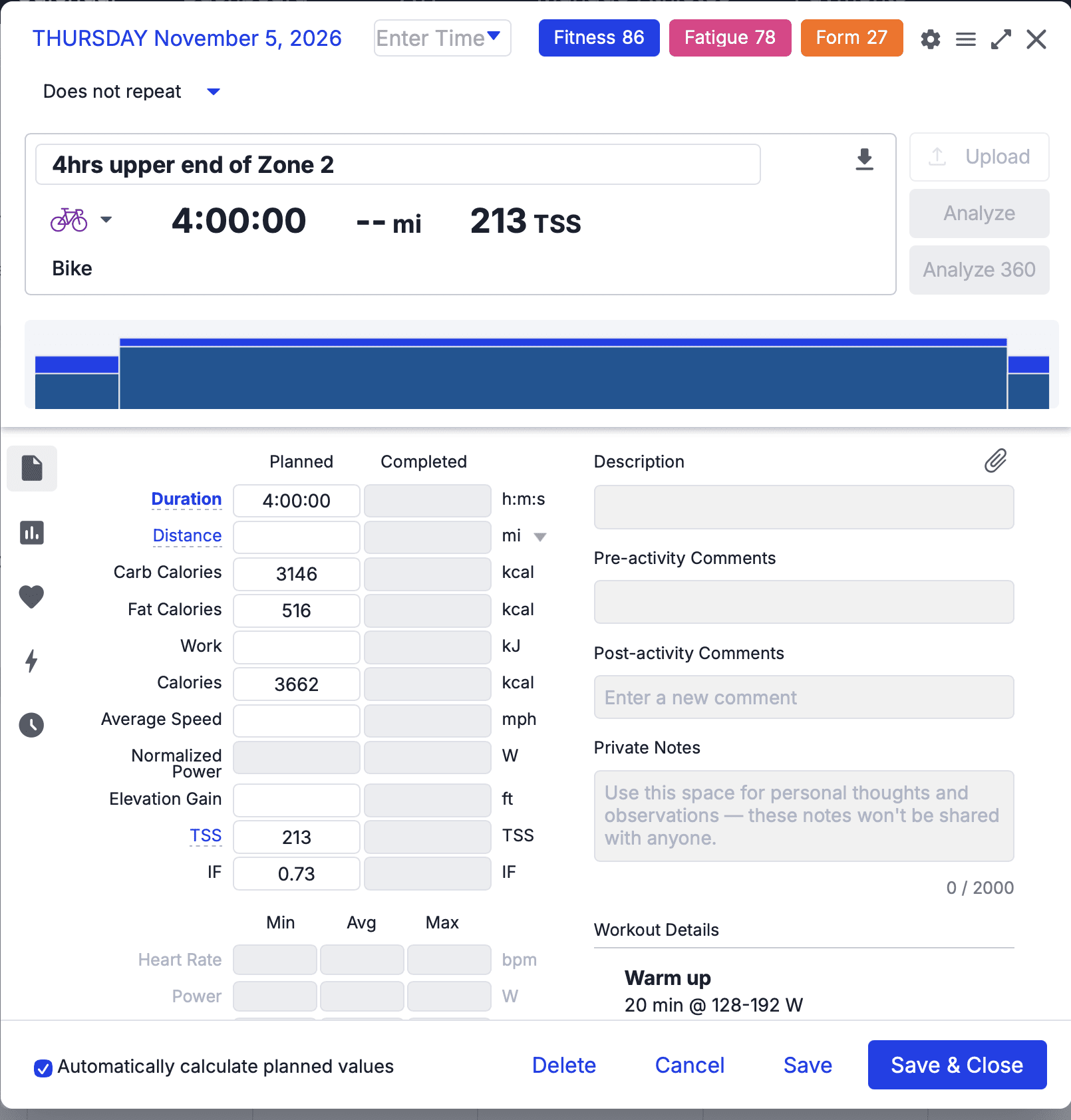
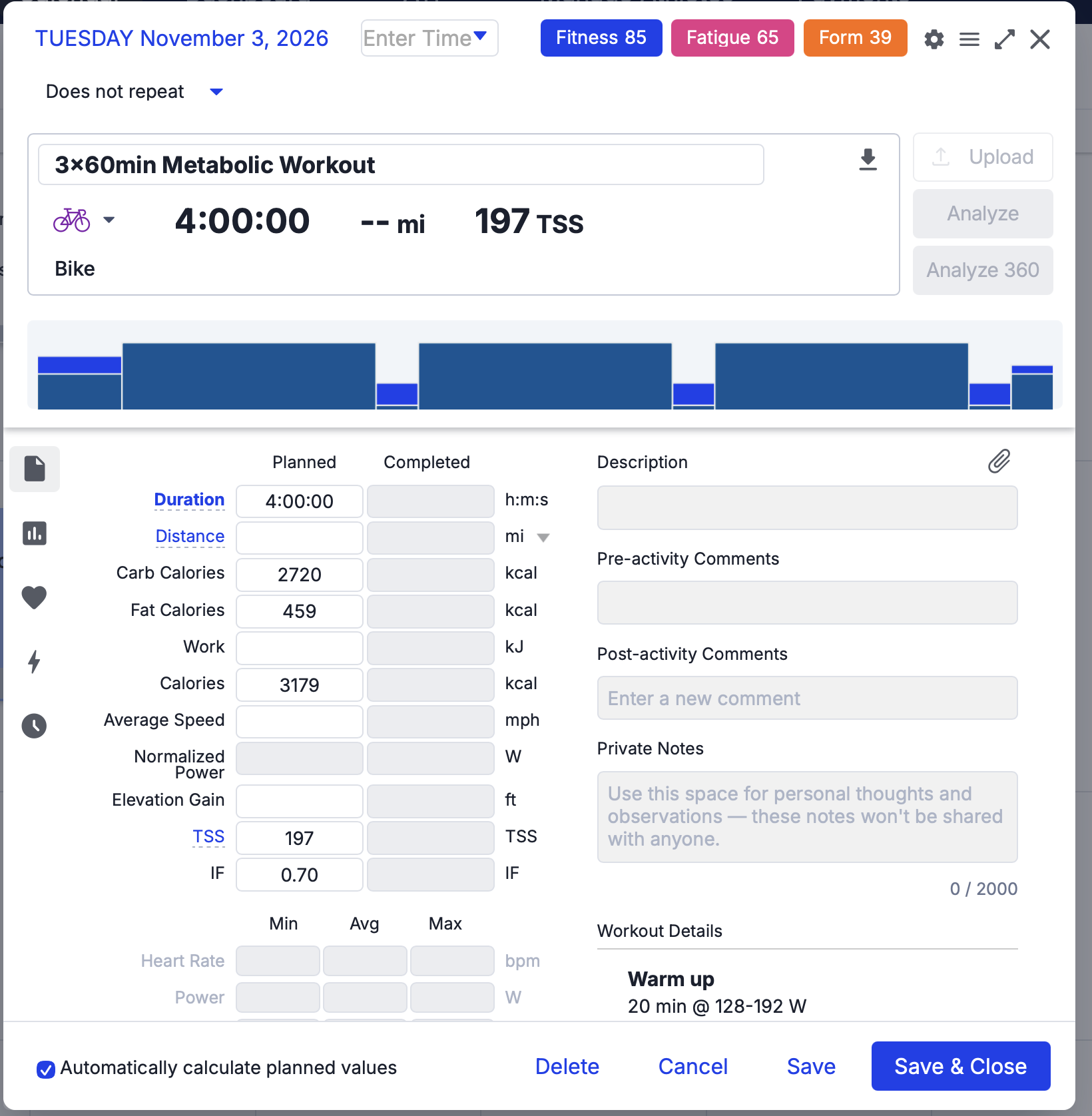

The steady ride came out with higher TSS, a higher intensity factor, and more kilojoules and calories over the session, simply because there are no recovery breaks. On paper you could argue that riding steady is more effective than the 3×60, particularly for the age group athlete who needs to be more time-efficient with limited training availability.
The Best Takeaways for Amateur Cyclists
The best lesson to take from McNulty’s workout is the value of power discipline during long, sustainable efforts. This is what many of the athletes, especially my middle-aged Masters men, struggle with the most. When you blast up every roller, spike your blood lactate, blow up at the top and then coast down the other side, that’s the opposite of pacing discipline. It isn’t Zone 2 riding. Power discipline means pace will slow down on climbs and increase on descents as you work to maintain steady pressure on the pedals. Here are a couple of tips to improve your power discipline:
- Use the whole range, rather than trying to stay at the top of Zone 2 the whole time. And on rolling terrain, drifting into low Zone 3 on an uphill is fine.
- Pedal over the top of the climbs and keep tension on the pedals on the descents instead of sitting up and coasting. This is one of the most common habits I see, and it costs riders endurance.
- If your terrain or city traffic won’t allow for a steady outdoor ride, bring your Zone 2 days indoors. You’ll get plenty of intermittent intensity on your outdoor rides.
- If your climbs are so steep you can’t stay under about 75% of FTP, consider using your gravel or mountain bike and use the lower gearing to stay in zone.
- If you’re a beginner, don’t start with 3×60. Use smaller doses, or better yet, just ride steady.
Pro Cyclist Training Example 2: Mads Pedersen’s hard interval day
The workout described in the social media post is an excellent and brutal session tailored for a workhorse of an athlete who clearly thrives on heavy training. By several accounts Mads Pedersen trains well over 1,000 hours a year. That training volume and intensity distribution works for him but it won’t work for most other pros, let alone age group athletes.
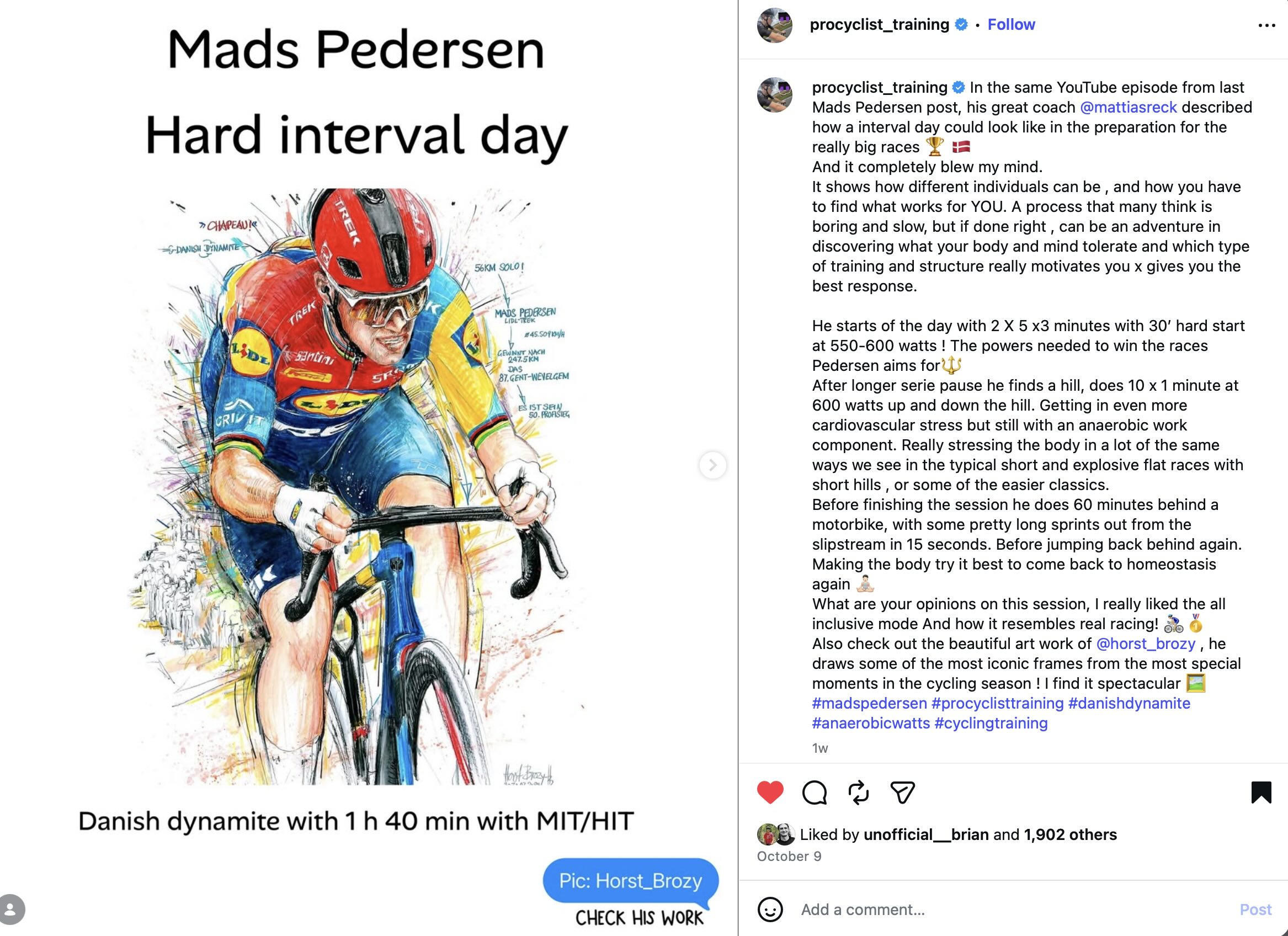
The workout
- Instagram post from @procyclist_training
- Block 1: 10 x 3 minutes, split into two sets
- Block 2: 10 x 1 minute at around 600 watts, with 1 minute recovery between
- Plus motor-paced work
A lot of people will see “600 watts” and think, “I can’t do that for one minute, let alone ten times.” The power value is only relevant to Mads. Ignore the wattage and look at the structure, how the efforts, recoveries and blocks are put together. Then scale it to your own power numbers and training volume.
On motor pacing
Motor pacing is a fantastic training tool, but it’s not accessible for many age group riders. Sitting in during a fast group ride is the closest thing most age groupers get to motorpacing, but it’s not the same thing. For riders who are training for racing, but who don’t have much opportunity to train at high speed for long durations, motorpacing can be helpful for sharpening handling skills at race speed, simulating the high-power micro-accelerations necessary at high speed, and allowing you to produce high power at high cadence in the draft. It doesn’t need to be a structured workout, but it needs to be safe. Look for a local coach or service that offers motorpacing, or ask around among your training partners.
Pro Cyclist Training Example 3: Mathieu van der Poel’s on-off intervals
This is my favorite of the three workout posts from social media. It’s informative, clearly laid out and practical. Some people in the comments were confused by the workout structure, but if you slow down and read it through, it makes sense.
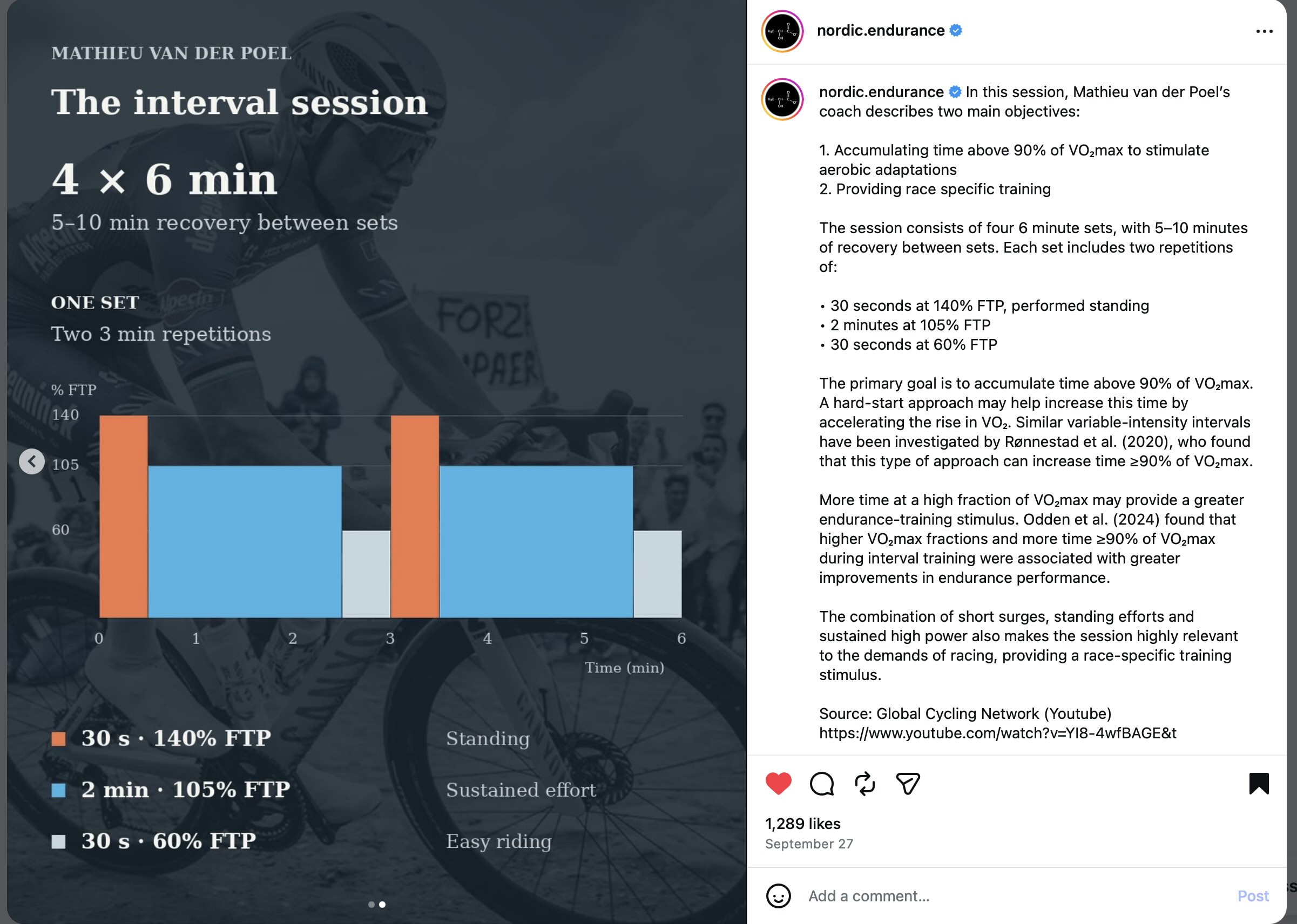
The workout
- Instagram post from @nordic.endurance
- 4 x 6 minutes, with 5–10 minutes recovery between sets
- Each 6 minutes is two back-to-back 3-minute sequences: a 30-second hard start, 2 minutes steady, then 30 seconds of easy riding
- Includes standing (out of the saddle) efforts, sustained seated efforts, and easy riding
The core idea is: a hard start, a steady middle and a brief break, which is the opposite of the habit many riders have of finishing intervals with a spike.
Why it works for amateurs:
- It’s approachable. Scaled to your FTP, anyone can do this one.
- It’s race-specific. On-off efforts mimic the surges and settling of real racing.
- It includes out-of-the-saddle work. That’s an often-overlooked element I prescribe for my own athletes. A good workout isn’t only about maximum power. There’s tactical and technical skill built into a session like this.
The Bottom Line
It is great to draw inspiration from peeking behind the curtain and learning about the workouts pro cyclists rely on. It’s also a huge mistake to copy a pro’s training. Most age group cyclists would break under their volume and intensity, even if you could match their training time availability. Remember that what you’re seeing is based on capacity built from years of cumulative training, supported by favorable genetics, and leverages skills developed through countless race repetitions. When you want to apply pro workouts to your own training, identify the key concepts rather than getting hung up in power numbers or durations. Then individualize the dose for your ability, available time, available terrain and training volume.
► FREE Mini-Course: Learn How to Maximize Your Limited Training Time
Learn step-by-step how to overcome limited training time and get faster. Walk away with a personalized plan to increase your performance.
"*" indicates required fields
About the Author
Adam Pulford
CTS Head Cycling Coach
Adam Pulford is a dedicated coach at CTS with a passion for elevating athletic performance through tailored, measurable strategies and a deep understanding of the “why” behind each athlete's goals. With nearly two decades of experience, a degree in Exercise Physiology, and a successful track record managing professional cycling teams, Adam also shares his expertise as the host of the Time-Crunched Cyclist podcast, providing actionable insights for endurance athletes.