
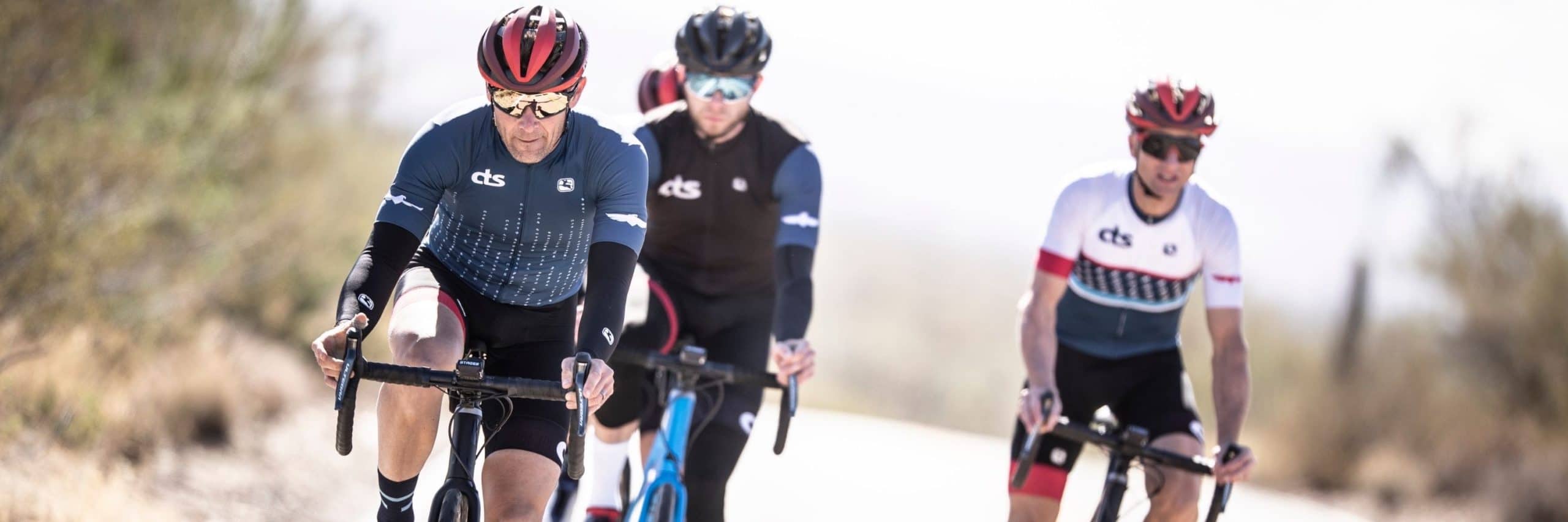
Weekend Reading: 5 Reasons You’re Not Losing Weight

Weight loss has been a hot topic around the office in recent weeks. Not only is this the time of year when athletes are diligently working to lose their Holiday muffin tops, but we also just rolled out the Raceweight Weight Loss Program. The response has been tremendous and we’re looking forward to seeing athletes drop significant amounts of weight over the next few months! As I mentioned last weekend, I’m going to be bringing you more content from the CTS Coaches. My friend and frequent co-author Jim Rutberg has been focused on the Racweight project for a while and for this week he came up with a great list of 5 reasons you’ve stopped losing weight, despite your relatively high activity level.

Check it out, and have a great weekend!

Chris Carmichael
CEO/Head Coach
Carmichael Training Systems


5 Reasons You’re Not Losing Weight

By Jim Rutberg

 - co-author “The Time-Crunched Cyclist” and “Chris Carmichael’s Food for Fitness”

You probably already realize that being leaner will help you go faster, the trick is how to get there. One common scenario we see is a time-crunched athlete who has reached the point where his or her weekly workload (kilojoules) isn’t high enough to casually melt off pounds anymore, but it’s not realistic to increase caloric expenditure through additional training.

What difference does this extra weight make? A hefty one. Dragging around excess weight increases the energy cost of every mile and every effort, no matter whether you’re climbing or not. That means less energy for big efforts and race-winning moves. Essentially it reduces the number of matches you have to burn, whether you’re a competitor or a frequent flyer at the local training ride.

When athletes reach this plateau, fixing one or more of the following issues typically kickstarts the weight loss process again:

Weight Loss Roadblock: You eat too much on the bike

I’ll take some of the blame for this one. In years past I think I pushed during-workout calories on athletes too heavily. The longer we work with athletes using power meters, the clearer it becomes that you only need to replenish 20-30% of your hourly kilojoule output. For an athlete riding at 600 kilojoules/hr (a moderate intensity endurance ride for most moderately-fit adults), that means 120-180 calories/hr. But it’s not uncommon to see an athlete during a moderate-intensity 3- to 4-hour ride consume 240-260 calories per hour. It’s too much, and those extra calories are preventing you from utilizing more stored calories. What’s more, if you’re only going to be on the bike for 60-75 minutes, you don’t need any calories during your workout. You start with enough stored carbohydrate to have a high-quality workout, and all you need is fluids and maybe some electrolytes.


FEATURED LINKS

  • Power Meter Payment Plans: The industry’s only no-interest, no-fee payment plans on power meters. Plus unbeatable prices on SRM and PowerTap units.
  • Raceweight Weight Loss Program: Our new weight-loss centered nutrition service, included with Premium and above coaching packages, as an add-on at Select, and as a stand-alone service.
  • Dirty Kanza 200: Are you tough enough to ride 200 miles over gravel roads in the flint hills of Kansas? This is an event you should really look into!
  • Club/Team Coaching Package: Coordinate your training with your group, save tons of money, and start winning together! View video synopsis.
  • Epic Climbing Video Download: 85 minute climbing workout featuring USA Pro Challenge footage! Hard and effective, it’ll make you faster!

Weight Loss Roadblock: You’re combining calories and fluids during workouts

I’m a big fan of sports drinks, because they are incredibly efficient in terms of delivering fluids, carbohydrates, and electrolytes. And the combination is better than the sum of its parts, in that the sodium facilitates the absorption of the carbohydrate and also increases an athlete’s desire to consume more fluid. The thing to be conscious of, however, is that consuming a carbohydrate-rich sports drink when what you’re really after is the fluid can lead you to consume more calories than you need or want. When you separate your caloric intake from your fluid intake (calories in your pocket, fluid in your bottles), you can increase your fluid intake in response to intensity or air temperature without overloading your gut with calories.

Weight Loss Road Block: You’re eating after 7pm

For me the 7 o-clock rule has less to do with potential hormonal implications to eating before sleeping, and more to do with the fact that the motivating factor for most evening eating is habitual rather than nutritional. If you’re eating sufficient calories throughout the day to support your activity level, then extending your overnight fast (dinner to breakfast) by a few hours isn’t likely to negatively impact your recovery. You might be a little hungrier at breakfast but in the long run that’s not a bad thing, as you’ll see in the next section. Stop eating earlier in the evening, go to bed a bit hungrier, and you can achieve a meaningful decrease in your daily caloric intake.

Weight Loss Road Block: You’re eating too little for breakfast

If you’re doing things right as an athlete, you’ll wake up hungry in the morning. Satisfy that hunger with a substantial breakfast. The beginning of an active day isn’t the time skimp on calories. That doesn’t mean you should shovel greasy diner food down your throat every morning, but it does mean that active athletes need to do more than grab a Pop Tart and coffee as they run off to work. Add eggs and lean proteins, heftier carbohydrates from vegetables and even rice and potatoes, etc. Try to give yourself more time in the morning so you can prepare and sit down for a real breakfast. It will sustain you longer through the day, reduce your craving for mid-morning empty-calorie sugar snacks, and potentially reduce the calorie content of your lunch.

Weight Loss Road Block: You’re eating too much before short workouts.

I’m not talking about the size of the bar or snack you eat an hour before you head out the door or get on the trainer. I’m talking about the increased size of every meal and snack throughout the day, in anticipation of a 60-minute trainer workout in the evening. If you’re training 60-90 minutes after work, even if you’re doing a hard interval workout, you’re glycogen stores are completely replenished within 24 hours of completing the workout (most likely sooner, especially for experienced athletes). Those glycogen stores are what will power your relatively short workouts, even if you start the workout feeling hungry. Just by eating normally, the energy will be there. You don’t need to load up throughout the day for a one-hour trainer ride in the evening. Eat a substantial breakfast, keep your portion sizes normal or a bit light throughout the rest of the day, and you’ll have a killer evening workout and create a caloric deficit for the day.

Jim Rutberg is a Pro Coach with Carmichael Training Systems and co-author, with Chris Carmichael, of seven books on training and sports nutrition. For information on CTS coaching, training camps, and nutritional services, visit www.trainright.com.

Posted in Blogs, Cycling, Nutrition, Training, Triathlon | Tagged , , , , , , , , , , | Leave a comment

Weekend Reading: Tips and Workouts for Going Long on the Indoor Trainer

The greatest strength of Carmichael Training Systems is the incredible team of professional coaches that work here. So instead of always hearing from me, I want to start bringing you blog posts and articles from the men and women who you are – or who you could be – working with directly.

First up is Clayton Feldman, who works in our Colorado Springs office. Not only is he a dedicated and enthusiastic coach, but he also has an incredible training drive himself. Over the past month he’s been putting in double-days on the indoor trainer, and in a few cases he’s done our 70-mile mid-morning “Staff Meeting” ride and then done an hour on the trainer with 4x8min SteadyState Intervals that same evening. If you’re someone who wants to push yourself and you need someone to help you stay on that razor’s edge of workload/recovery balance, Clayton’s your man.

Chris Carmichael
CEO/Head Coach
Carmichael Training Systems


Going Long on the Indoor Trainer

By Clayton Feldman

While many of you are familiar with working with a CTS Coach, you may not realize that as coaches we work together in “pods”. Basically it’s a mentorship program where coaches of varying experience levels and areas of expertise work collaboratively for the benefit of all our athletes. During these cold months it also means we spend a lot of time trading ideas about indoor training.

This week our attention has turned to keeping athletes engaged during longer, aerobic endurance rides on the indoor trainer. Some time-crunched athletes focus on two or three short, high-intensity interval workouts on the trainer each week, but there is also a lot to be said for putting in longer, moderate-intensity rides on the indoor trainer. This is especially true for athletes who are preparing for longer road races, multiday cycling tours, endurance mountain bike events, and half- and full-Iron distance triathlons.


FEATURED LINKS

  • 3-Month Trial: Take advantage of our best long-term pricing without the long-term commitment!
  • Raceweight Weight Loss Program: Our new weight-loss centered nutrition service, included with Premium and above coaching packages, as an add-on at Select, and as a stand-alone service.
  • Dirty Kanza 200: Didn’t get into the Leadville 100 yesterday? Come to the Dirty Kanza 200 with CTS, where the first 100 miles are just the warmup!
  • Club/Team Coaching Package: Coordinate your training with your group, save tons of money, and start winning together!
  • Epic Climbing Video Download: 85 minute climbing workout featuring USA Pro Challenge footage! Hard and effective, it’ll make you faster!

Here are some of tips and workouts you can use to make the most of your longer (1-3hour) indoor trainer rides.

  1. Base your rides on Kilojoules, not time: If you’re using a power meter, you can monitor your progress with kilojoules rather than minutes. Kilojoules represent the amount of mechanical work you’re producing (kilojoules/time yield power in watts), and the stimulus from an endurance ride can be measured by the amount of work you produce. Out on the road during a conversational-pace endurance ride, most riders do about 600 Kj of work per hour. On the trainer, aim to increase this to 800/hr with a combination of efforts (Tempo, SteadyState) and a reduction in your non-pedaling time, compared to outdoor riding. You or your coach can look at your outdoor rides to determine a goal kilojoule workload for your session (perhaps 1200-1500 kilojoules) and you’re done when you reach that number, whether that’s after 90 minutes or 2 hours.
  2. Combine DVDs with TV: One way to get a great workout and have the trainer time pass quickly is to complete a Train Right DVD or video download in the first hour, and then continue with 2-3 long Tempo intervals while watching TV for a second hour. If you choose this route, do the harder interval workout first so you’re fresh for those efforts, then back down the intensity for the second hour. This is a favorite strategy for CTS Athlete Services guru and 24Hr National Champion Cameron Chambers.
  3. Try Aerobic OverUnder Intervals: Many of you are familiar with OverUnders, where you start out at threshold intensity and then alternate between threshold intensity and above-threshold surges as the interval progresses. There’s an aerobic version of this workout as well, where you start out at EnduranceMiles pace for 5 minutes, go to Tempo intensity for 5 minutes, return to EM for 5min, Tempo 5min, etc. We’ll often have athletes continue alternating like this for 45-60minutes. You can also make the Tempo portions longer (5min EM, 10min Tempo). To make it more interesting you can throw in 5minute SteadyState intervals every few cycles as well (5min each EM/T/EM/T/SS/EM/T/EM/T/SS/EM for instance).

The important thing to remember about longer indoor trainer rides is that you need to have a goal and a way to stay focused. Lollygagging along for three hours watching the Lord of the Rings isn’t worth your time, but pumping out 800 kilojoules an hour for 2+ hours and piling up 45-60 minutes at Tempo intensity along the way, that’s a great day’s work!

Posted in Blogs | Tagged , , , , , , | Leave a comment

2013 CTS Super Bowl Trainer Workout

By Jim Rutberg, CTS Pro Coach & Co-Author “The Time-Crunched Cyclist”

If you’re looking for a good time to have the roads and trails to yourself, go for a ride or run during the Super Bowl, the afternoon of Thanksgiving, Christmas Day, or New Year’s Day. During these times, the majority of drivers and trail users in the US are inside a building and otherwise occupied. City streets that are normally clogged with cars look like supersized bike paths, and you could ride blindfolded down Main Street without hitting anything (not that I would suggest trying it…).

On the other hand, it’s often bitterly cold on Super Bowl Sunday so an outdoor workout might not be your best option. That’s why we’ve created the “CTS Super Bowl Trainer Workout”!

The instructions are simple, it’s basically modeled after a drinking game. Get on your trainer and start watching the Super Bowl. Ride at EnduranceMiles intensity (your normal, moderate, conversational ride pace, or a 5-6 on a 10-point perceived exertion scale), then go to one of the intensity levels described in the top row (grey boxes) when the action on the screen matches one of the blue boxes in that column.

Click on the image below for a full-size image. You can also download and print out the board here. For best results, right-click the link and select “Save Target As…” or “Save Linked File As…”. You can also download workout descriptions here.

SuperBowlTrainerWorkout_2013

For example, if you’re riding along at EnduranceMiles intensity and watching the game when the announcers mention Ravens’ player Ray Lewis, you sprint for 20 seconds and then return to EnduranceMiles intensity. Then the game goes to commercial and you see a beer commercial, so you ride a FastPedal interval for the duration of the commercial. It’s followed by a car commercial, so you continue with FastPedal. Then the game comes back on and you return to EnduranceMiles intensity until a penalty flag gets thrown and you have to do a 1minute PowerInterval. And so forth…

Though technically the Super Bowl is no longer than any other pro football game, the whole extravaganza with commercials and time outs and penalties can run 4+ hours. I wouldn’t recommend trying to do the “CTS Super Bowl Trainer Workout” for the entire Super Bowl. I think one quarter would be a good start, and one half would make for a really hard workout. Someone even suggested doing the workout for the first half, showering during Half Time, and using the board for a drinking game in the second half. Probably not the best option for post-workout recovery, but it might be fun nevertheless.

Whether you go out to enjoy some alone time on the roads or trails, or you stay in and try the “CTS Super Bowl Trainer Workout”, we hope you have a fun, safe, and productive Super Bowl Sunday!

Jim Rutberg is a Pro Coach for Carmichael Training Systems and the co-author, with Chris Carmichael, of “The Time-Crunched Cyclist” and six additional books on fitness, training, and sports nutrition. For more information about CTS Coaching, Camps, and Bucket List Events, visit www.trainright.com.  

Posted in Cycling, Training, Triathlon | 2 Comments

Weekend Reading: Harden Up or Ride Inside? 5 Tips and My Favorite Cold Weather Workout

When it’s cold outside there’s always a question about whether to go out or stay in. And now that we’re in the middle of January, it’s getting pretty cold in a lot of areas throughout the northern hemisphere. So today I have some tips to help you with your “in-or-out” decision, and a great and quick workout you can do outdoors on a cold day.

My Cold Day Outdoor Workout

When it’s cold out and I still want to do an interval workout outside, I stay close to home and focus on short, hard uphill intervals. Why? Hill Sprints are slower than PowerIntervals or sprints on flat ground, so you don’t get as chilled from the speed. They’re max-intensity efforts, so they generate plenty of lactate – the stimulus I’m after – and plenty of heat. And since the hill is short, the descent is quick so you don’t freeze (like you sometimes do descending from long ClimbingRepeat intervals on a cold day).

Check out the video of my workout here.

The workout described in this video is 10x90seconds HillSprints. Find a steep hill (6% grade or more, preferably) you can climb in about 90 seconds. Start accelerating about 100 meters before the pitch steepens and use your shifting to stay on top of the gear (don’t bog down). You can stand or sit; I like to start out standing and then sit about halfway through. The recovery should be at least 90 seconds, but can be longer it takes longer to circle back to the base of the hill. For me, it takes about 3 minutes to get to the base of the hill, so I’m doing 10x90seconds with 3min recovery between intervals.

Inside or outside?

There are a few questions you need to ask yourself when you’re deciding whether to venture out for a ride on a cold day:

How cold is it outside?
Temperature isn’t everything, but it’s a good place to start. There are some people who ride no matter what the temperature is, but I’m not one of them. My minimum is about 30 degrees; below that I feel like I’m going through the motions but that I could get more high-quality work done indoors. Your minimum temp might be higher or lower than mine, but I’d encourage you to consider your effectiveness on the bike (as well as your safety) when establishing your minimum.

How are the conditions, aside from the temperature?
In Colorado, when it’s sunny and calm, you can ride comfortably at 30 degrees. However, 30 degrees and a 20mph wind gets cold and miserable quickly. In areas where the humidity is higher (ours percentage is in the teens), like the East Coast, a 30-degree day feels colder – even if it’s sunny – than 30 degrees in a drier climate.


FEATURED LINKS

  • Dirty Kanza 200: Registration is this morning, starting at 8:00AM Central Time on http://www.bikereg.com. If you don’t get in, CTS has an entry for you. Check it out at http://trainright.com/dirty-kanza-200.
  • Team & Club Coaching Package: You already train together. It’s time to start winning together! Plus, you get great savings as a group and CTS reinvests 5% of your group’s coaching fees in your group.
  • CTS Lean & Mean Challenge: Sign up for coaching and purchase a CTS Kit, and when you lose weight in 2013 and need a new (smaller) cycling or tri kit, it’ll be FREE!
  • Triathlon School: Join us in Tucson, AZ for “dawn-to-dusk” training, coach-led workouts, on-site chef, athlete housing, and more, make your reservations now!
  • PR Bar: Grab a PR*Bar after your next workout. It’ll give you the nutrients you need for recovery and curb your hunger so you don’t gorge yourself on your post-workout meal.

Will it get warmer or colder while you’re out there?
A cold start can turn into a nice ride if the air temperature increases as your working out. This is especially true if you’re going out for an interval workout, because you’ll work up a sweat during the intervals and be riding home at a lighter intensity level. Cruising home while the temperatures are plummeting (late afternoon, incoming cold front, etc.) isn’t the end of the world, but it’s not great either. If temps are going to fall, be sure you’re carrying additional layers (preferably wind resistant) to put on.

Do you have the right gear for the conditions?
If you don’t have the gear for cold rides, do yourself a favor and ride inside. You’ll be more effective on the bike, more comfortable, and you won’t get yourself in trouble with either hypothermia or frostbite. Looking for great winter gear? Check out Hincapie Sportswear. From jackets and knickers to gloves and shoe covers – and everything else – George has you covered.

What’s your goal for the day?
If you’re goal is to go out for a moderate-intensity endurance ride, then going out on a cold day can be great. You might not have as much “spring in your step” as you might on a warmer day, but you’ll stay warm and you don’t have to worry about the power or pace very much. If you have a very specific interval workout planned, I often recommend doing it indoors when it’s bitterly cold outside. The results are typically better. Now, if you’re racing cyclocross (Good luck to everyone racing US Nationals Championships in Madison, WI this weekend!) or preparing for an even that’s going to be cold, then you have to get out there an do race-pace efforts in the cold. But if you’re going to be racing in the summer, you’re better off completing higher-quality intervals indoors compared to mediocre ones outside on a 25-degree afternoon.

Keep Warm and Have a Great Weekend!
Chris Carmichael
CEO/Head Coach
Carmichael Training Systems

Posted in Blogs, Chris Carmichael | Tagged , , , , , , , , | Leave a comment

Training: How to do something nice and improve your workout at the same time

By Chris Carmichael

Sometimes a great ride is all it takes to make you feel like you’re on top of the world.

Continue reading

Posted in Chris Carmichael, Cycling, Training | Tagged , , , | Leave a comment