

Is High-Carbohydrate Fueling Actually Unhealthy?

Updated On
April 6, 2026
CHOOSE YOUR FORMAT
►WATCH THE VIDEO
►LISTEN TO THE PODCAST
►READ THE ARTICLE
Is High-Carbohydrate Fueling Actually Unhealthy?
Endurance athletes and the general public hear completely contradictory messages about sugar. Athletes are encouraged to consume massive amounts of sugar, from 60 to up to 120+ grams per hour, during exercise. At the same time, health officials encourage the (largely sedentary) public to reduce sugar consumption because excess sugar is fueling rising rates of obesity, Type 2 diabetes, and a host of other metabolic disorders. These two recommendations are completely at odds. So naturally, athletes want to know whether high-carbohydrate fueling is actually unhealthy.
The short and direct answer is that high-carbohydrate fueling is NOT UNHEALTHY because your body processes sugar differently during exercise than it does at rest. Once you understand the distinction, high-carbohydrate fueling during exercise stops being scary and starts being a powerful tool.
How The Body Metabolizes Sugar Differently During Exercise And Rest
The mechanisms and hormones that regulate carbohydrate metabolism are fundamentally different during exercise than at rest.
Feel Stronger in 6 Weeks — No Matter Your Age
Climbs feel steeper? Recovery slower?
You’re not done getting faster — you just need a smarter plan.
The 6-Week Masters Power Build Coaching Program is designed for cyclists 50+ who want to boost power, recover faster, and ride stronger — all with expert 1:1 coaching.
- Personalized 6-Week Training Plan
- 1:1 Coaching + TrainingPeaks Premium
- Mobility & Strength Bonus Guides
💪 Guarantee: Stronger or free.
Start your 6-week journey for $149Exercise: “Use Now” Mode
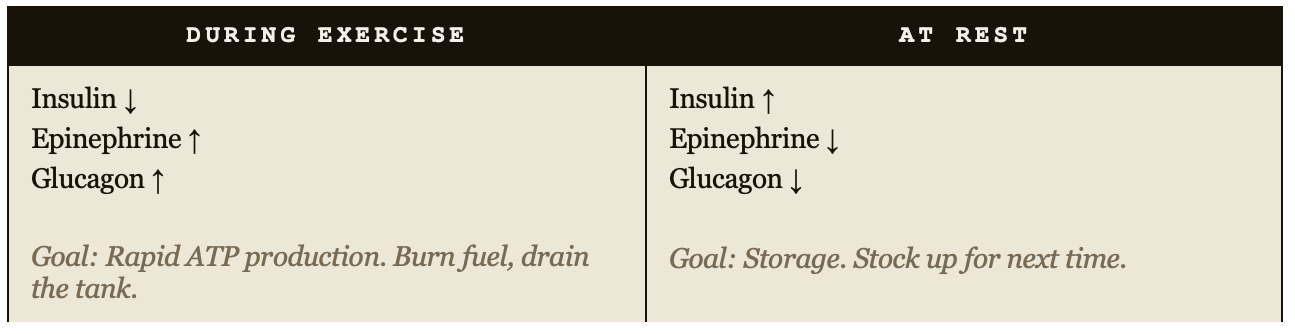
During exercise, your body enters “use now” mode. Exercise activates your entire body to make fuel available for working muscles. Your brain ramps up energy expenditure, hormonal pathways change, and blood vessels dilate to deliver fuel and oxygen to muscles faster. The way you process incoming food changes, too. During exercise, your body shuts down the hormonal pathway that encourages the storage of sugar (insulin) and ramps up the hormonal pathway that directs sugar to working muscles (glucagon). Epinephrine (a “fight-or-flight” hormone) increases availability of muscle glycogen and increases cardiac output to prepare you for activity.
Rest: “Use Later” Mode
At rest, your body shifts to “use later” mode. Insulin activity increases to encourage storing carbohydrate and replenishing muscle glycogen stores. Glucagon activity decreases because the muscles aren’t demanding energy and epinephrine levels decrease because you don’t need elevated cardiac output. The body goes into storage mode to replenish the energy stores you depleted while exercising and prepare for your next workout.
The scary outcomes people associate with sugar (i.e., insulin spikes, fat storage, metabolic dysfunction) are phenomena of the resting state. During exercise, those pathways don’t govern what happens to the carbohydrate you take in. Your body is in a different operating mode.
Here’s an important difference between athletes and sedentary people: Replenishment and storage are healthy processes when you partially or completely deplete your carbohydrate energy stores on a regular basis. They can become unhealthy when you are not active enough to use or deplete the energy you’ve already consumed.
How Many Carbohydrates Should Athletes Consume During Exercise?
There’s a simple guideline answer and a more advanced framework calibrated to exercise intensity and duration. Super high-carbohydrate fueling is not necessary nor recommended for all athletes during all exercise sessions. However, that’s not because of a risk for diabetes or weight gain. The real risk associated with high-carbohydrate fueling during exercise is GI distress, meaning nausea, bloating, vomiting, and diarrhea.
Let’s start with the recommendations, and then talk about how to avoid the GI distress.
Basic Carbohydrate Intake Guidelines
Long-standing position statements from the American College of Sports Medicine (ACSM), International Sports Sciences Association (ISSA), Australian Institute for Sport (AIS), and National Academy of Sports Medicine (NASM) recommend consuming 60 to 90 grams of carbohydrate per hour during moderate to strenuous endurance exercise sessions lasting 60 to 90 minutes or longer. At easier intensities, this can be dialed back to 30-60 grams per hour. And during short exercise sessions lasting less than an hour, carbohydrate consumption is generally not necessary. Adjust all the above based on what your gut tolerates and how you feel during exercise. Simple enough.
Personalized Framework for Carbohydrate Intake
There’s a far more precise way to personalize your carbohydrate intake based on the intensity and duration of your rides. This framework is based on your actual energy output, measured in kilojoules from your power meter.
► Free Cycling Training Assessment Quiz
Take our free 2-minute quiz to discover how effective your training is and get recommendations for how you can improve.
The kilojoules displayed on your power meter represent the mechanical work of pedaling, and your hourly kilojoule output is roughly equal to the calories you burned to produce that work. So, the best way to adjust your calorie intake is to base it on your energy expenditure per hour and the intensity of your ride.
Why does intensity matter here? The higher your exercise intensity, the faster you burn carbohydrate. This means that carbohydrate contributes a higher proportion of your total energy expenditure during hard efforts, like interval workouts, races, group rides, and anything above Zone 2.
Fueling Performance Rides vs. Easy/Endurance Rides
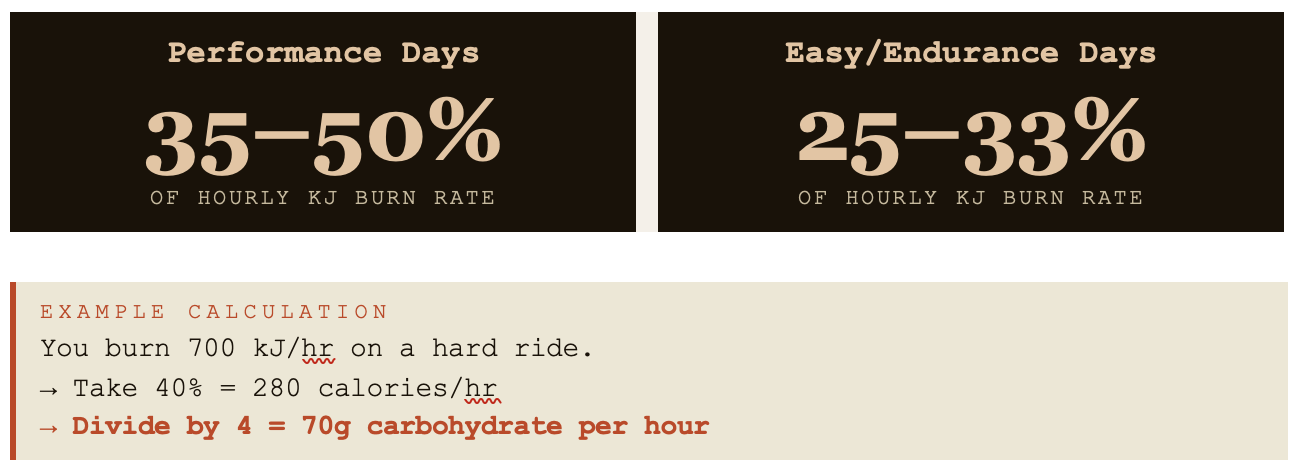
I recommend fueling differently on “performance rides” vs. “easy/endurance rides”. During performance rides (interval workouts, races, group rides, long endurance rides, and anything above Zone 2), aim to consume carbohydrate calories equivalent to 35-50% of your hourly kilojoule value. During shorter and easier rides, you’re burning more fat and relying less on carbohydrate for energy, and you’re burning less total energy per hour. During these rides, aim to consume carbohydrate calories equivalent to 25-33% of your hourly kilojoule value.
Fast Fuel vs. Slow Fuel: A Lifestyle Framework
Stephanie Howe is a CTS Coach with a PhD in Nutrition and one of the people I lean on heavily for sports nutrition guidance. She has a framework I find genuinely useful for athletes who get confused about when to eat what.
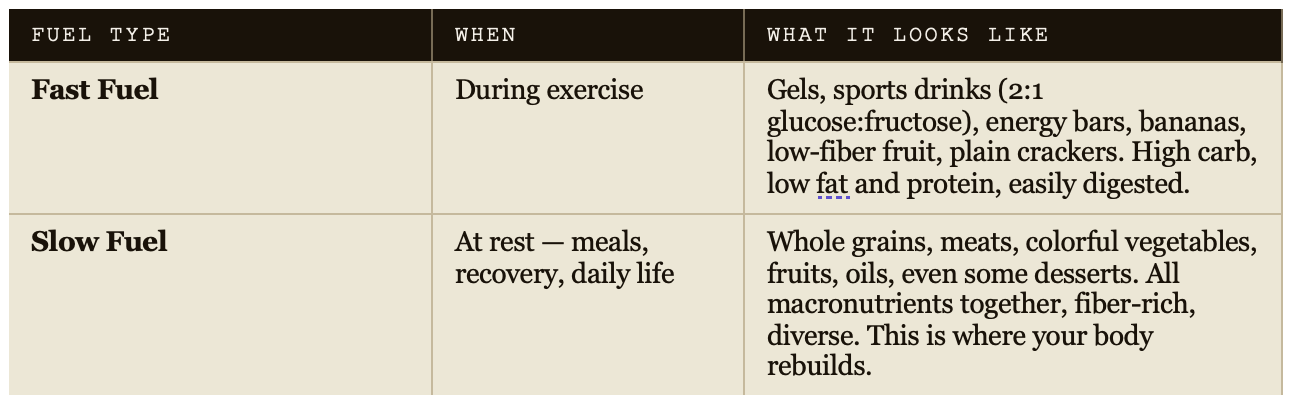
The logic maps neatly onto the physiology: fast movements require fast fuels, metabolized quickly and efficiently. Slow movements — and rest — benefit from slow fuels, the kind that digest and absorb gradually alongside protein and fat, supporting recovery and day-to-day function.
During exercise, eating primarily carbohydrate makes sense because that’s what your body is using. During the rest of life, isolating a single macronutrient is generally counterproductive. Your digestive system, hormones, and microbiome function better with the full picture.
Coach Insights
It’s important to remember that your gut can be trained. The mechanisms that govern how fast you digest and absorb sugar into your bloodstream can become more receptive to carbohydrate uptake over time, but it takes time and purposeful practice. If you’re struggling with GI distress consuming 60g of carbohydrate per hour now, you can gradually train your gut to process more sugar per hour.
It’s also worth noting that consuming more carbohydrate than you need doesn’t help you perform better. Pro athletes consume 100+ grams of carbohydrate per hour during races because their energy expenditure is extreme. During an easy endurance ride or a short ride that’s not long enough to meaningfully deplete glycogen stores, consuming excess carbohydrate is a waste of food and money, and it won’t improve the quality or effectiveness of that easy or short ride. Save the high-carbohydrate fueling for the high-energy work days on the bike.
The Bottom Line
Train properly. Sleep a lot. Keep stress low. Fuel your hard rides with the carbohydrates your body is asking for. You will not develop diabetes or gain weight from the carbs you eat during exercise. Your body is simply not in a state where that’s the outcome. The real risk is GI stress if you push past what your gut can handle, and the solution to that is gradual, consistent gut training.
Advisory: Hormonal conditions (Hashimoto’s, type 2 diabetes), genetic predispositions, and certain body types may require individualized guidance beyond these frameworks. Consult your physician or a certified nutrition coach.
► FREE Mini-Course: Learn How to Maximize Your Limited Training Time
Learn step-by-step how to overcome limited training time and get faster. Walk away with a personalized plan to increase your performance.
"*" indicates required fields
About the Author
Adam Pulford
CTS Head Cycling Coach
Adam Pulford is a dedicated coach at CTS with a passion for elevating athletic performance through tailored, measurable strategies and a deep understanding of the “why” behind each athlete's goals. With nearly two decades of experience, a degree in Exercise Physiology, and a successful track record managing professional cycling teams, Adam also shares his expertise as the host of the Time-Crunched Cyclist podcast, providing actionable insights for endurance athletes.