
How She Did It: Jennifer Lichter’s Record Breaking Western States Win
Updated On
July 2, 2026
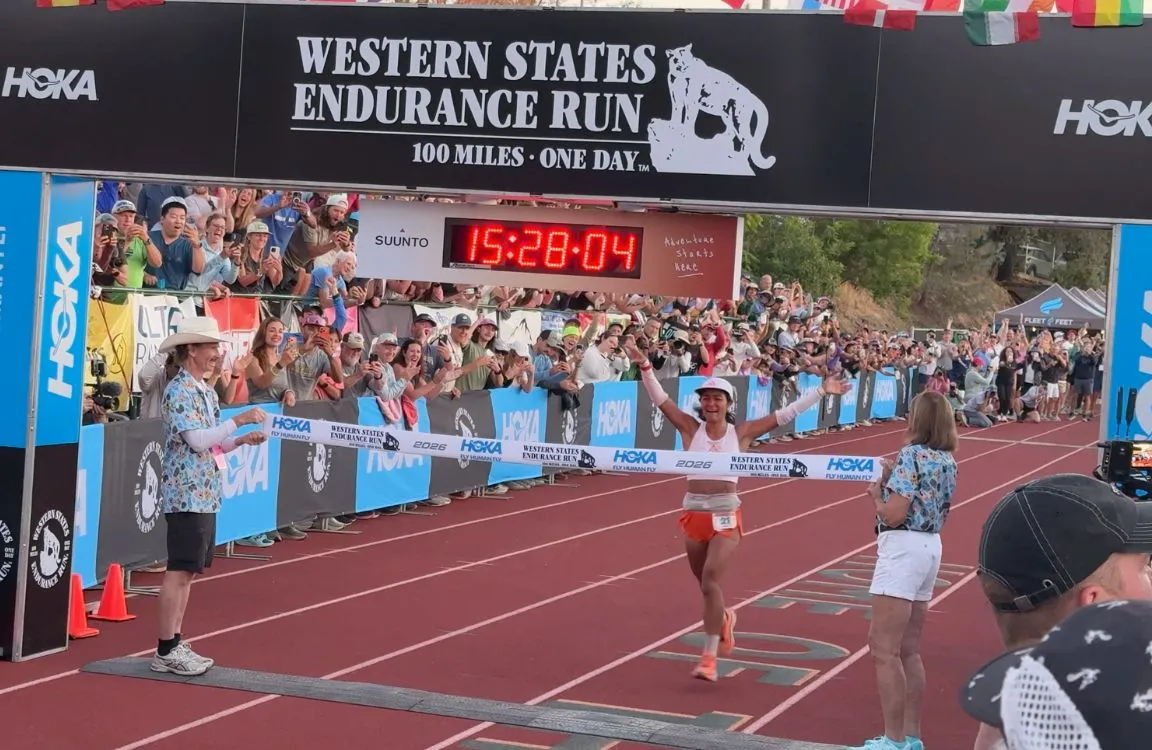
Jennifer Lichter’s debut 100-mile race, a course record-breaking victory at the 2026 Western States Endurance Run, ended with a lap of the Placer High School track at a 5:20 mile pace. In fact, it was only on the climb up to Robie Point, mile 98.9, that her partner, Nick Cornell, asked if she wanted a course record. Up to that point, she’d been pacing by effort and not concentrating on split times. With the course record on the line, though, she tapped into the intensity that is the hallmark of her running career and powered to the win! Although I only started working with Jennifer in October of 2025, the finale of the 2026 Western States encapsulates the changes, work, and progress she made to step up to the 100-mile distance in championship fashion.
Reframing the Foundation
By now, running fans are familiar with Jennifer’s childhood (summarized well by Runnerworld) in Colombia and eventual adoption by a wonderful family in Lacrosse, Wisconsin. When we started working together, I looked back through her detailed training history and intensity was the recurring theme. Even as she progressed through the ranks as a collegiate runner and then into the trail running scene, she leaned on her ability to run fast, absorb high training loads, and execute high-intensity intervals. Even her “easy” runs tended to gravitate into paces and intensities that were not actually easy. Her training history included interruptions due to repeated injuries. She struggled with anorexia around high school and then struggled through RED-S (relative energy deficiency in sport) caused by chronic underfueling when she was a collegiate athlete.
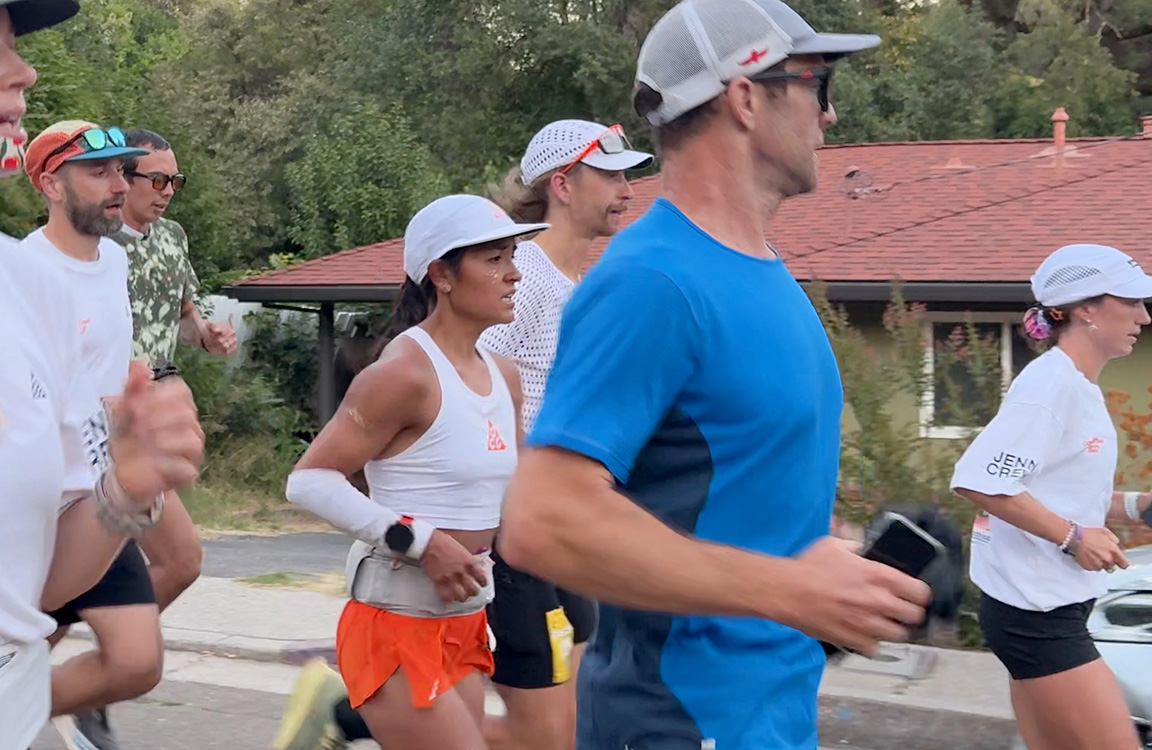
A hamstring injury was the reason we met in the first place. Jennifer suffered the injury a few weeks before the 2025 World Mountain and Trail Running Championships, which forced her to withdraw from the race. Back in Missoula, Montana, she knew two athletes I already worked with, Jeff Mogavero (M7 at 2026 WSER) and Adam Peterman (M6 at 2026 WSER), and they, along with her agent Kelly Newlon, helped connect Jennifer and me. After meeting Jennifer, learning her story, and reviewing her training, I was excited for the opportunity to coach a Missoula-based training group that would provide a collaborative environment where she could thrive.
A Mentality Shift
Along with colleagues and mentors at CTS, I take a lot of inspiration from triathlon coach Joel Filiol. In particular, I admire the way he creates a supportive, collaborative training environment where each athlete’s unique strength raises the collective success of the team, and where the athletes celebrate consistency and the ability to independently make good decisions in the daily training process. In such an environment, the athletes’ mentality about training is as important as the workouts they actually complete.
From Miles to Hours
With Jennifer, I wanted to shift her mental model from a focus on distance and intensity to duration and durability. Her background in collegiate running and her early training for 50K races (which she described as “marathon training ramped up”) meant she was accustomed to basing training on daily and weekly mileage goals. Her interval workouts were often things like mile repeats. However, training by time rather than distance (hours instead of miles) works better for trail and ultramarathon runners because it compensates for variability in terrain.
Making the shift wasn’t a flip of a switch. I started incorporating duration-based runs into her training while still including 1-2 workouts based on miles or intervals based on distance. The execution of workouts wasn’t difficult to adapt to, but it takes time for an athlete’s mentality to shift away from evaluating performance by minutes per mile pacing.
From Intensity to Durability
In addition to the practicality of training by hours instead of miles, shifting Jennifer’s mental model for training helped her adapt to a new intensity distribution. To successfully transition from 50K training to 100K and 100-mile training, Jennifer had to learn to go slow. Her previous training was characterized by a lot of higher-intensity runs and interval sessions. That served her well at the 50K distance, but the weekly distribution was too heavily weighted on the higher intensity end of the spectrum. That paradigm left her nowhere to go. We couldn’t add training volume because she wouldn’t be able to recover from the combination of elevated hours and intensity.
By stepping away from language Jennifer was accustomed to using around training (i.e., miles and distance-based intervals), she quickly became the “queen sloth” of easy running amongst the group. The result was that her intensity distribution became far more polarized. We added in weekly rest days, her easy runs were easy, and she completed a large volume at low intensity. Her high-intensity work was higher quality because she was leaving plenty on the table at the end of workouts, and she had more time to recover. As expected, her durability (i.e., ability to maintain pace even as fatigue accumulates) grew and she was able to train at a higher volume consistently week after week.
The Missoula Squad Effect
“There must be something in the water in Missoula!” I’ve heard that a lot over the past year as I’ve onboarded Jeff Mogavero, Adam Peterman, Jennifer Lichter, Makena Morley, Zach Perrin, and Erin Clark. The water in Missoula is pretty good, but no, it’s not the water. I think we’ve built a great training culture in Montana and we’re just starting to see the fruits of that labor. It all starts with the athletes themselves. They are a supportive group that naturally encourages one another to achieve more. They root for each other with genuine enthusiasm. There are no ego contests about smashing each other on local segments or being the top dog in a group training session.
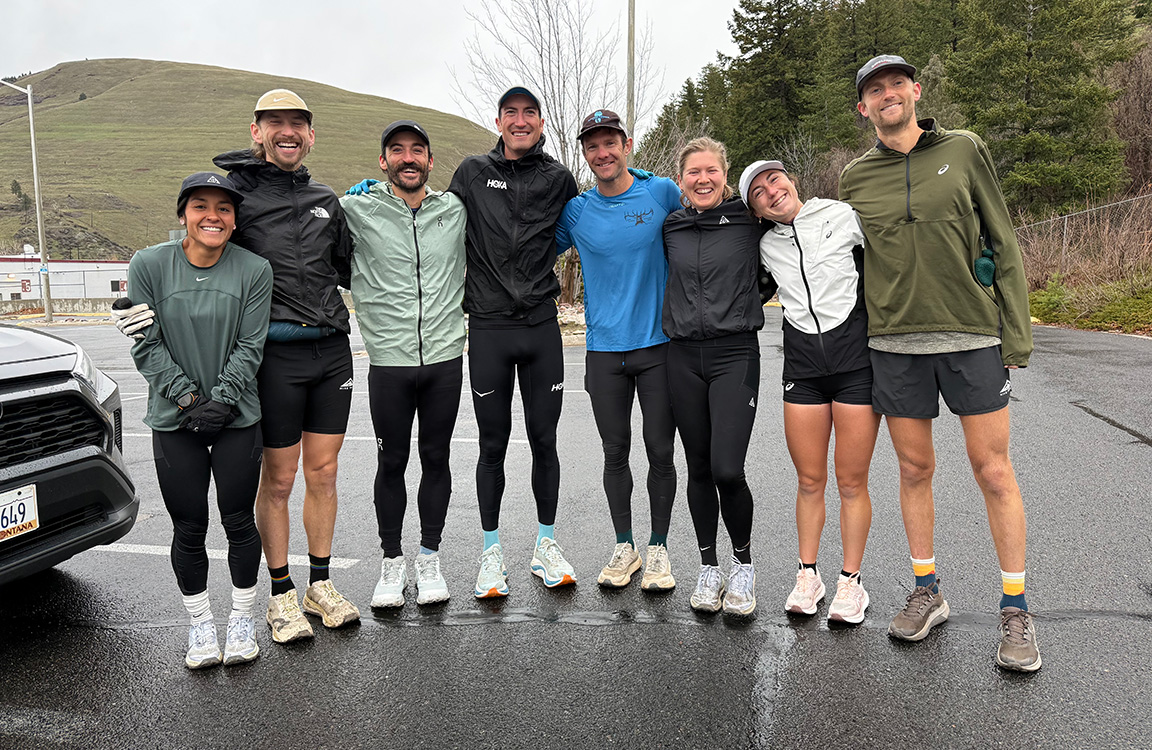
I wish I could take credit for creating the training culture in the Missoula Squad, but it’s more that I recognized there was something special about this group and environment and worked to foster that culture. For me, Jennifer’s progression from a 50K runner to 2026 Black Canyons and Western States winner is proof that culture and environment can cultivate greatness. Yes, the training shifts were the right decisions, but her journey was fully embraced by the entire community surrounding her in Missoula and beyond. And in the end, her performance was truly more than the sum of its parts.
How The Race Was Won: Western States 2026
Okay, so how did everything come together for a record-breaking Western States victory? Obviously, the foundation was built on injury-free consistency, which enabled her to stack a lot of training volume and training load over several months. We kept intensity in the mix but with a “minimal effective dose” approach, placing less of an emphasis on running faster and more on keeping effort controlled, with more to give. She had speed from her previous running experience, so we kept running speed in the mix but did not emphasize it, despite Western States’ reputation as a “runner’s ultra”. Looking back now that the race is over, two Western States-specific aspects of Jennifer’s training stand out.
Learning to Fuel for Ultra
One of the first things I did when I started working with Jennifer was to recommend Meredith Terranova work with her on fueling. We were going to be ramping up Jennifer’s training volume and extending her long runs, so ramping up her fueling would be essential. I also wanted Meredith’s help in making changes to Jennifer’s eating habits in a way that was respectful and considerate of her history with eating disorders and RED-s. Working together as a team, we were able to increase Jennifer’s daily energy intake and her hourly carbohydrate intake during longer runs and workouts to adequately support her training and recovery. Jenn has become more flexible with her race day fueling and that has come from all the hard work in training.
► Free Ultrarunning Training Assessment Quiz
Take our free 2-minute quiz to discover how effective your training is and get recommendations for how you can improve.
Training Camps
A lot of the specific work on race-day nutrition strategies occurred at training camps on the Black Canyons (Black Canyon Training Camp video) and Western States courses. At both camps, we got to about Day 3 before the cumulative training stress surfaced a nutritional challenge in training. The benefit was that we had the opportunity to experiment and adapt Jennifer’s nutrition strategy in a low-pressure, zero consequences environment.
Our training camp on the Western States course also gave me the opportunity to create race simulation challenges that I thought might prove prescient (and they did). One of Jennifer’s greatest strengths is the ability to tap into that intensity that drove her for so many years as a younger runner. She’s a little bit like The Hulk in that sense; the intensity is always there, just under the surface, ready to emerge.
I thought that the climb to Devil’s Thumb might be a crucial part of the race (and it was… she took the lead there), so Jennifer, Jeff and Will ran that section three times during our training camp. Then, on the last day of the training camp, on a 20-mile stretch from Green Gate to Robie Point, I asked them to really push the pace for the last 10k.
Enjoying This Article? Get More Free Running Training Tips
Get our coaches' best training advice, delivered straight to your inbox weekly.
Finishing With Speed!
On race day, Jennifer ran with self belief. She trusted that the training process had given her the fitness and durability to handle the climbs and descents in the first half without sacrificing her ability to run fast in the second half. I was also proud of her adaptability when it came to nutrition. Three days before the start of Western States, Jennifer caught a stomach bug. Meredith was a great resource to help navigate the stomach troubles and keep Jennifer on track to start the race, but we knew there might be a fueling consequence at some point. The plan B pivot we prepared for was surprisingly low-tech: Wonder Bread and Coca-Cola. Specifically, Wonder Bread soaked in Coca-Cola so it was easier to ingest.
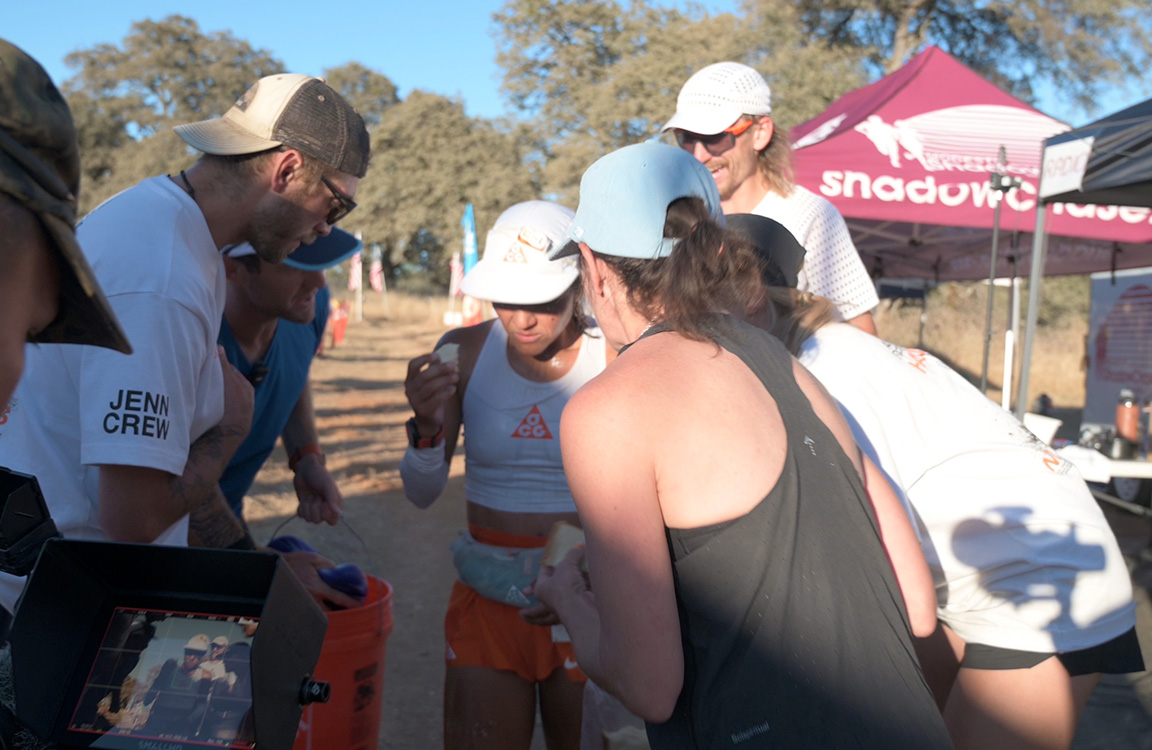
Jennifer Lichter pivoted her race day nutrition to Wonder Bread soaked in Coca-Cola, showing her adaptability in the face of adversity.
When it came to the climb to Devil’s Thumb and the final 20 miles, Jennifer drew confidence from the familiarity of the terrain and the effort. Although the commentators and spectators were all aware of the potential for a record-breaking finish time, Jennifer was blissfully unaware. She doesn’t run by splits or pacing calculations, but rather by feel and a very well-tuned internal intensity gauge. That’s part of the reason it made perfect sense that Nick asked, “Do you want a course record?” when she reached Robie Point. To me, it was a thoughtful and nuanced choice of words. Going for it was a choice, not an imperative, and it was Jennifer’s choice to make. But then her pace quickened and she reached somewhere inside for a surge of intensity that powered her from a :36 second advantage at Robie Point to a course record by 1:28 just a little more than a mile later.
About the Author
John Fitzgerald
CTS Pro Ultrarunning Coach
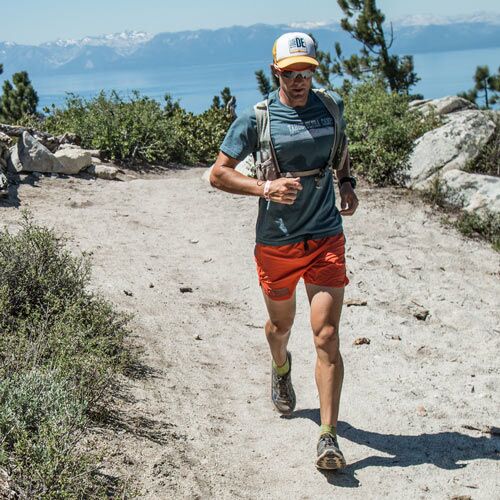
John Fitzgerald is a dedicated ultrarunning coach and the founder of the Tahoe Ultra Camp, recognized for his personalized approach that prioritizes meaningful communication and the mental aspects of training. With a wealth of experience ranging from completing over 16 100-mile races to mentoring athletes globally, John uniquely adapts his coaching to fit individual learning styles and life demands, bridging the gap between physical and mental endurance for every athlete he works with.